
Hawkins / Bibel
Inhaltsverzeichnis: (verbergen)
|
༺·❄·༻

Erste dänische Übersetzung der Bibel
༺·❄·༻
|
|
|
Die Bibel ist eine Sammlung aus historischen Berichten, Lebensbildern, Gedichtesammlungen, Prophetien oder Briefen, die insgesamt 66 verschiedene Bücher umfasst (39 Bücher des Alten Testaments und 27 des Neuen Testaments). Sie ist etwa
3400 Jahre alt oder älter. Mehr als 40 Schreiber, die sich größtenteils gegenseitig nicht kannten, verfassten die Bücher der
Bibel innerhalb eines Zeitraums von mindestens 1500 Jahren.
Die Septuaginta (lateinisch für siebzig, altgriechisch 'die Übersetzung der Siebzig', auch griechisches Altes Testament ge-
nannt), ist die älteste durchgehende Übersetzung der hebräisch-aramäischen Bibel in die altgriechische Alltagssprache, die Koine. Die Übersetzung entstand ab etwa 250 v. Chr. im hellenistischen Judentum, vorwiegend in Alexandria. Die meisten Bücher waren bis etwa 100 v. Chr. übersetzt, die restlichen Bücher folgten bis 100 n. Chr.
Eine komplette Urfassung der Bibel existiert nicht, nur diverse Codices und die Biblia Hebraica.
Bei der Bibel handelt es sich um eine Sammlung aus unterschiedlichen Büchern aus mehreren Epochen.
Der offizielle biblische Kanon wurde erst im 4. Jahrhundert festgelegt.
Einige biblische Urfassungen, genannt "Codices", verfasst in griechischer Sprache, übernommen aus der Septuaginta,
sind wie folgt:
Moderne Bibelübersetzungen durch Expertengremien sind letzten Endes eine Puzzlearbeit aus einer Reihe von Bibelfassungen.
Die bedeutende englischsprachige Enzyklopädie Encyclopædia Britannica bezeichnet die Bibel als die wahrscheinlich einflussreichste Büchersammlung aller Zeiten.
Die Bibel besteht aus 66 Büchern, gefüllt mit Gesetzen, Prophezeiungen, Geschichte/n, Poesie, Ratschlägen und anderem mehr. Die ersten 39 Bücher, zumeist in der hebräischen Sprache, bilden das Alte Testament.
Das Neue Testament besteht aus weiteren 27 Büchern. Nach vorherrschender Sicht von Gelehrten und Wissenschaftlern wurden die Bücher des Neuen Testaments in Griechisch geschrieben. Dr. George Lamsa widerspricht dieser Aussage.
Er ist davon überzeugt, dass das Neue Testament ursprünglich in aramäischer Sprache verfasst wurde.
Der Bewusstseinswert des Neuen Testaments der Lamsa Bibel (die Übersetzung der Peshitta ins Englische) ist BW 750. Dies übersteigt den Bewusstseinswert der King James Version [BW 640] um 110 Punkte, was wiederum für die Vorrang-
stellung der aramäischen Sprache [Aramaic primacy] gegenüber der griechischen Sprache im Neuen Testament spricht.
| Altes Testament | Neues Testament |
| 1. Mose 1, 1 - 1. Mose 50, 26 (Genesis) 2. Mose 1, 1 - 2. Mose 40, 38 (Genesis) 3. Mose 1, 1 - 3. Mose 27, 34 (Genesis) 4. Mose 1, 1 - 4. Mose 36, 13 (Genesis) 5. Mose 1, 1 - 5. Mose 34, 12 (Genesis) | Matthäus 1, 1 - Matthäus 28, 20 (Evangelium) |
| Josua 1, 1 - Josua 24, 33 | Markus 1, 1 - Markus 16, 20 (Evangelium) |
| Richter 1, 1 - Richter 21, 25 | Lukas 1, 1 - Lukas 24, 53 (Evangelium) |
| Ruth 1, 1 - Ruth 4, 22 | Johannes 1, 1 - Johannes 21, 25 (Evangelium) |
| 1. Samuel 1, 1 - 1. Samuel 31, 13 2. Samuel 1, 1 - 2. Samuel 24, 25 | Apostelgeschichte 1, 1 - Apostelgeschichte 28, 31 |
| 1. Könige 1, 1 - 1. Könige 22, 54 2. Könige 1, 1 - 2. Könige 25, 30 | Römer 1, 1 - Römer 16, 27 |
| 1. Chronik 1, 1 - 1. Chronik 29, 30 2. Chronik 1, 1 - 2. Chronik 36, 23 | 1. Korinther 1, 1 - 1. Korinther 16, 24 2. Korinther 1, 1 - 2. Korinther 13, 13 |
| Esra 1, 1 - Esra 10, 44 | Galater 1, 1 - Galater 6, 18 |
| Nehemia 1, 1 - Nehemia 13, 31 | Epheser 1, 1 - Epheser 6, 24 |
| Esther 1, 1 - Esther 10, 3 | Philipper 1, 1 - Philipper 4, 23 |
| Hiob 1, 1 - Hiob 42, 17 | Kolosser 1, 1 - Kolosser 4, 18 |
| Psalm 1, 1 - Psalm 150, 6 | 1. Thessalonicher 1, 1 - 1. Thessalonicher 5, 28 2. Thessalonicher 1, 1 - 2. Thessalonicher 3, 18 |
| Sprüche 1, 1 - Sprüche 31, 31 | 1. Timotheus 1, 1 - 1. Timotheus 6, 21 2. Timotheus 1, 1 - 2. Timotheus 4, 22 |
| Prediger 1, 1 - Prediger 12, 14 | Titus 1, 1 - Titus 3, 15 |
| Hoheslied 1, 1 - Hoheslied 8, 14 | Philemon 1, 1-25 |
| Jesaja 1, 1 - Jesaja 66, 24 | Hebräer 1, 1 - Hebräer 13, 25 |
| Jeremia 1, 1 - Jeremia 52, 34 | Jakobus 1, 1 - Jakobus 5, 20 |
| Klagelieder 1, 1 - Klagelieder 5, 22 | 1. Petrus 1, 1 - 1. Petrus 5, 14 2. Petrus 1, 1 - 2. Petrus 3, 18 |
| Hesekiel 1, 1 - Hesekiel 48, 35 | 1. Johannes 1, 1 - 1. Johannes 5, 21 2. Johannes 1, 1-13 3. Johannes 1, 1-15 |
| Daniel 1, 1 - Daniel 12, 13 | Judas 1, 1-25 |
| Hosea 1, 1 - Hosea 14, 10 | Offenbarung 1, 1 - Offenbarung 22, 21 |
| Joel 1, 1 - Joel 4, 21 | |
| Amos 1, 1 - Amos 9, 15 | |
| Obadja 1, 1-21 | |
| Jona 1, 1 - Jona 4, 11 | |
| Micha 1, 1 - Micha 7, 20 | |
| Nahum 1, 1 - Nahum 3, 19 | |
| Habakuk 1, 1 - Habakuk 3, 19 | |
| Zephanja 1, 1 - Zephanja 3, 20 | |
| Haggai 1, 1 - Haggai 2, 23 | |
| Sacharja 1, 1 - Sacharja 14, 21 | |
| Maleachi 1, 1 - Maleachi 3, 24 |
Der alexandrinisch-griechische christliche Kirchenvater, Mystiker, Gelehrte, Theologe und Kirchenschriftsteller Origenes [BW 515] (184/185-253/254) war nach dem bedeutenden ägyptischen Philosophen und Denker des hellenistischen Juden-
tums Philo von Alexandria [Philon] (~20 v. Chr.-41 n. Chr.) unter den Ersten, der fünf verschiedene Arten der Auslegung der Heiligen Schrift beschrieben hat:
Bei René Descartes [BW 490] und dem Philosophen Baruch de Spinoza steht jedoch nicht Gott als das zu bedenkende Objekt im Mittelpunkt, sondern der Mensch, das denkende Subjekt und seine Bedürfnisse. Der "Universale Zweifel" wird
in der Bibelinterpretation zum Prinzip erhoben. Ab dann kommt zur Bibelauslegung auch Bibelkritik hinzu.
| ||||||||||||||||||||||||||||||||||||||||||||||||||||||||||||||||||||||||
|
|
| Siehe auch: ► Lehre von den vier Elementen |
In Todesagonie rief Jesus die Worte des Psalm 22, 2 in aramäischer Sprache aus.
| Quelle: ► George M. Lamsa (1892-1975) assyrischer Schriftsteller, Übersetzer der Bibel aus dem Aramäischen ins Englische, Die Evangelien in aramaeischer Sicht, 1936, Neuer Johannes Verlag, 4. Auflage 2005 |
| ||||||||
| ||||||||
|
Die Menschheit ist in der großen Hauptsache psychologisch noch in einem Kindheitszustand – eine Stufe, die nicht übersprungen werden kann. Weitaus die meisten bedürfen der Autorität, der Führung und des Gesetzes. Diese Tatsache darf nicht übersehen werden. Die paulinische Überwindung des Gesetzes fällt nur dem zu, der es versteht, anstelle des Gewissens die Seele zu setzen. Carl Gustav Jung [BW 520/540] (1875-1961) Schweizer Psychiater, Psychoanalytiker, Tiefenpsychologe, Autor, Die Beziehungen zwischen dem Ich und dem Unbewussten [BW 520], Walter Verlag, 2. Auflage Februar 1984 |
|
Sowohl den Pirschern (1) als auch den Träumern (2) ist es bestimmt, sobald die Zeit erfüllt ist (3), eine schöpferische Einheit (4) zu bilden.
 Handabschlagen im Mittelalter, Bamberger Kreuzweg-Station
|
| Siehe auch: ► Stufenmodelle |
Psalmen kontemplieren
Personal avowals
When contemplating Psalm 91 Dr. Hawkins found a snake sitting at his doorstep. In view of the serpent he recontextualized Psalm 91 and stepped over it without being harmed.

Eli, Eli, Lama Sabachtani by H.P. Blavatsky, Collected Writings, Volume IX
Beschneidung
Reich Gottes
Die 7 Gesetze des Paulus
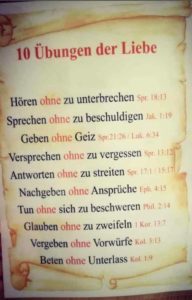
Spirituelle Einsichten, Glaubensanleitungen und praktischer Lebenshilfen
| Siehe auch: ► Vergebung und ► Glauben und ► Erlösung und ► Würde und ► Beurteilen und ► Empfehlungen |
Die Menschen sind'
Endzeit / Ende des Fischezeitalters – Offenbarung (letztes Buch der christlichen Bibel)
Die große Drangsal tritt während der "letzten Tage" des ausgehenden Fischezeitalters ein,
es dürfte die schlimmste Zeit sein, welche die Menschheit jemals erleben wird.
Markus 13, 1-37
Im griech. Original wurde Offb. 13, 15-17 im Konjunktiv verfasst, jedoch fälschlich in der Wirklichkeitsform übersetzt.
| Referenzen: de.Wikipedia-Einträge ► Offenbarung des Johannes und ► Große Trübsal |
| Medienangebot: Videopräsentation von Ivo Sasek (*1956) Schweizer Laienprediger, Gründer der AZK, Autor, 2000 Jahre alte Prophezeiungen enthüllt – Aufruf an alle Christen von Ivo Sasek, präsentiert von dem von ► Ivo Sasek gegründeten Schweizer Online-Videokanal Klagemauer.tv, 48:55 Minuten Dauer, eingestellt 23. Dezember 2021 |
Direkte Offenbarungen
Altes Testament
Neues Testament
| |||||||||||||||||||||||||||||||||||||||||||||||||||||
| Referenz: ► Gastbeitrag Bereits in der Bibel wird Narzissmus beschrieben, präsentiert von dem Blogspot Umgang mit Narzissten, Sonja Wieland, Schweizer Pfarrerin, 6. Juni 2017 |
| Siehe auch: ► Narzissmus |

| Referenz: ► Artikel Gewalt in der Bibel. Kann man bei den vielen Gewaltdarstellungen in der Bibel noch an eine "Gott der Liebe" glauben?, präsentiert von der Publikation Bibelbund, Jürgen Neidhart, evangelischer Theologe, 8. Februar 2015 |
|
Blutrünstiger "Gott" Jahwe im Alten Testament
2. Moses 12, 13
|
Persönliche Bekenntnisse
Schlussfolgerungen
|
Personal avowals
Underneath Faulkner's quote was a King James Bible filled with bookmarks, dog eared pages and handwritten notes in the pages.
Lamento
Video A Response to the Angry, Immoral God Objection, presented by the organisation presented by Cross Examined, host Dr. Frank Turek, author, YouTube 4:49 minutes duration, posted 3. December 2015
|
Literary quotes
Yahweh is a two-faced morally schizophrenic, psychopathic god.
Violent elitist-hierarchical either-or left-brained Yahwist systems kept humanity divided.
Features of the Yahwist (fundamentalist religious or secular) system: Enshrinement of an authoritative message (revelatory text), empowering of a messenger, installation of an authoritative elite interpreting the enshrined text, pressuring infallible consensus, demanding obedience, demanding (false) certainty, playing the guilt game, scaring, violence, schisms, demanding to murder "the enemy".
Outside-the-system-thinkers are ostracized for challenging the system (the one and only truth).
Other translation versions in the Lamsa Bible
Ask, Seek, Knock
The Narrow and Wide Gates
A Tree and Its Fruit
The Wise and Foolish Builders
Eli, Eli, Lama Sabachtani by H.P. Blavatsky, Collected Writings, Volume IX
Jesus was not forsaken by God, but spared or kept for the passion.
Old Testament ⇔ New Testament
GOOD in Aramaic language means ripe i.e. mature, more evolved, at the right time at the right place.
BAD means unripe i.e. immature, less evolved.
Article by Marnia Robinson, US American former corporate lawyer, researcher, author on ancient sacred-sex prescriptions, Von Urban's "Sex, Perfection and Marital Happiness. A Taste of Heaven", 11. July 2005
"If anyone strikes you on the cheek, offer the other also." Luke 6, 29 (NT)
"Do not resist an evil person. If someone strikes you on the right cheek, turn to him the other also." Matthew 5, 39 (NT)
| Reference article: ► Blog article by Maria Mayo M.Div., M.A., US American historian, religious scholar, Vanderbilt University, communications coordinator, author, Myths About Forgiveness in the Bible, presented by the US American liberal-oriented online newspaper HuffPost, 16. October 2011 |
| See also: ► Biblical forgiveness myths – Maria Mayo and ► Forgiveness and ► Equality |
The Biblical lore is the "greatest story ever told". It is the story of the Zodiac disguised as theology. The Bible displays astrotheology, the worship of God's heaven, God's Sun (God's Son) in the heavens.6
Christianity and other religions are a derivative of three distinct God types of the Old Testament [2 Kings 23:3-5]:
The Zodiac contains the "ZOO" and "dia", meaning the "Animal Wheel". This wheel is DIVIDED and CUT (a-part) in twelve sections known as houses, namely the 12 houses within God's abode (universe). Each section or house comprises 30º degrees. Hence, there are two significant ages in Jesus' life: At age 12 he appeared in the temple, at age 30 he started his teaching mission.
| ||||||||||||||||
| See also: ► Signs of the zodiac – Alchemical process |
|
| ||||||||||||||||||||||||||||||||||||
| Source: ► Edward Moor (1771-1848) British soldier, Indologist, author, The Hindu Pantheon, dating back 5500-6000 year, 4000 years BC, London, 1810 |
| ||||||||||||||||
| The correlations between the Ancient Egyptians and the Christian culture are continual. |
| Source: ► Video presentation by Jordan Maxwell (1940-2022) US American esoteric scholar, radio host, lecturer, author, Gnosis – Ancient Belief Systems – Jordan Maxwell, presented by Lightworks Audio & Video, IRES International Research and Educational Society, 1991, YouTube film, starting minute 11:15, 51:07 minutes duration, posted 19. June 2014 Biblical lore is based on astrotheology, the worship of Sun (God's Son) in the heavens. Christianity and other religions are a derivative of 1) a stellar cult, 2) a lunar (Hebrew) cult, 3) a solar cult (derived from Egyptian Mystery Schools). |
| Cited literature: ► Edward Moor (1771-1848) British soldier, Indologist, author, The Hindu Pantheon, dating back 5500-6000 year, 4000 years BC, London, 1810 ► John L. Benson, The Book of Beginnings. A Study in GenIsis. Adult Student Bible Study Guide, Accent Publications, revised edition 1983 ► Abelard Reuchlin, US American essayist on the origin of Christianity, True Authorship of the New Testament (Arius Calpurnius Piso Pen Name Flavius Josephus), Abelard Reuchlin Foundation, 2nd printing edition 1986 ► Neil Forsyth, The Old Enemy. Satan and the Combat Myth 1944, Princeton University Press, reprint 21. December 1989 |
| See also: ► Cult of Saturn – pillar of patriarchy – Jordan Maxwell ► Astrology and ► Occult research and ► Symbolism and ► Religion and ► World religions |
| |||||||||||||||||||||||||||||||||||||||||||||||||||||||||
| Selbst wenn nur Genesis, Sprüche des Psalmen das Alten Testaments (AT) integer sind und das Buch insgesamt unredlich ist (BW unter 200), weisen viele Absätze integere, teils hohe Bewusstseinswerte auf. |
| |||||||||||||||||||||||||||||||||
|
God Images
Links zum Thema Bibel und christliche Schriften / BibleLiteratur
In seinem umstrittenen Vortrag "Babel und Bibel" im Jahr 1902 postulierte Delitsch, dass die Schöpfungsgeschichte (Hexaemeron im Buch Genesis), der Mythos der Sintflut und die Bücher des Alten Testaments aus den viel älteren babylonischen Erzählungen kopiert worden sind.
Bibelstudium aus drei verschiedenen Perspektiven: als eine Art Geschichtsbuch, als Heilsbotschaft und als symbolische Auslegung spiritueller Erscheinungen.
Die "UN-heilige Schrift" beschreibt Verbrechen (Krieg, Mord, Menschenopfer, Lüge, Betrug, Ehebruch, Polygamie, Inzucht, Frauenfeindlichkeit, Genitalverstümmelung, Menschenhandel, Sklaverei, Rassismus, Fremdenhass, Götzenanbetung, Rache, Raub und vielfachen Völkermord), die Jahwe selbst anstiftet und durch die Säulenheiligen des Alten Testaments und sein auserwähltes Volk begeht. Obwohl diese zigmal Jahwes Ge-
Biblische Geschichte von Abraham bis David hinterfragt. Der lückenlose Stammbaum aller Nachkommen von Jakob bis König David zeigt, dass das gesamte biblischen Geschehen, je nach Zählung, zwischen 400 und 1000 Jahre dauert, effektiv innerhalb von nur 10 Generationen oder etwa 200 Jahren abspielt. Mit einer um 300 Jahre verkürzten ägyptischen Chronologie wird die biblische Geschichte nachvollziehbar. Unter Berücksichtigung von außerbiblischen Berichten vom Exodus können Parallelen in der ägyptischen Geschichte und Literatur gefunden werden. Die biblische Ge-
Literature (engl.)
In a 1902 controversial lecture titled "Babel and Bible" Delitsch postulated that the Old Testament writings including the stories of Genesis creation narrative and the Flood myth were borrowed from ancient Babylonian [Mesopotamian] tales.
Joseph Farrell literature
Features of the Yahwist (fundamentalist religious or secular) system: Enshrinement of an authoritative message (revelatory text), empowering of a messenger, installation of an authoritative elite interpreting the enshrined text, pressuring infallible consensus, demanding obedience, deman-
Externe Weblinks
Links zum Thema Bibel – QuoraBeiträge verfasst von Elfriede Ammann, präsentiert auf der kalifornischen Frage-und-Antwort Webseite Quora DE
External web links (engl.)
Reincarnation is mentioned in the Bible several times – in a concealed manner. (See John 1, 21-27, 3, 3-7, John 8, 58, 1. Peter 1, 23,
In 1923, the Egyptologist, E. A. Wallis Budge noted the close resemblance between Proverbs and the Teaching of Amen-em-Apt. Solomon,
The meaning of: Loaves and fishes – The ship was tossed with waves – Angling for the fish of the wise – Raising the dead
The Parable of the Talents appears in two gospels in the Bible: Matthew 25:14-30 and Luke 19:12-28. A third variant appears in the Gospel Audio- und Videolinks
Dokumentationen, Filme
Für die Katholische und die Evangelische Kirche sind alle Teile der Bibel, trotz der vielen Ungereimtheiten und offensichtlichen Fälschungen, das wahre "Wort Gottes". Die Bibel ist ein Mischwerk der Priesterkaste. Pharisäer, Schriftgelehrte und Theologen haben entschieden, was "das Wort Gottes" ist und was nicht.
Audio and video links (engl.)
The Gospel of Thomas is part of the Nag Hammadi library discovered in Egypt in 1945. It's a collection of non-canonical sayings allegedly made
Paul Wallis' book ''The Eden shows how Yahweh, the 'God' of the Old Testament is actually the story of a colonizer who refuses to let go of control over the human species. A brutal and powerful entity, physically described as dragon like, this being was elevated to the status of God by the Jewish Monarchy of ancient Judea, King Josiah, in order to gain control over the funds and minds of the people.
Linkless audios/videos
|
Wiki-Ebene
1 Zielgerichtetheit ⇔ Ergebnisoffenheit – Spindrift Gebetsforschung ⇑
2 Der außerbiblischen Überlieferung nach waren Jannes und Jambres, ein Brüderpaar, ägyptische Zauberer, die ihre Zauberkünste gegen Mose und Aaron ausspielten. ⇑
3 Resilienz – Zwei Drittel ⇔ Ein Drittel-Verhältnis ⇑
4 Das griechische Wort für "Zauberei" in obigem Bibelvers ist pharmakeia [Pharmazeutika, Drogen, Heilmittel, Gift, Zaubermittel].
zitiert in: Artikel (engl.) Why Revelation 18:23 Is So Important NOW, 10. December 2019 ⇑
5 gefunden bei Nag Hammadi in Ägypten, Codex 2, 1945 ⇑
6 Jordan Maxwell, Matrix of Power: How the World Has Been Controlled by Powerful People without Your Knowledge, S. 50, The Book Tree, Escondido, California, 2000 ⇑
7 Jordan Maxwell, Paul Tice, Alan Snow, That Old-Time Religion, S. 25, 2000 ⇑
8 Jordan Maxwell, Paul Tice, Alan Snow, That Old-Time Religion, S. 31, 2000 ⇑
9 Jordan Maxwell, Paul Tice, Alan Snow, That Old-Time Religion, S. 35, 2000 ⇑
10 "They [the Israelites] had the boys circumcised because they found out that a man would get aroused quicker, without the foreskin than he would with the foreskin. [...] The [ancient] Egyptians did the same thing, preparing boys for a little sex worship." Jordan Maxwell (1940-2022) US American esoteric scholar, radio host, lecturer, author, Matrix of Power. How the World Has Been Controlled by Powerful People, Book Tree, S. 50, 1. May 2000 ⇑
11 Video by Eric Clopper, Sex & Circumcision: An American Love Story by Eric Clopper, performed at Sanders Theatre, Harvard University, 1. May 2018, YouTube film, 2:10:50 duration, posted 19. July 2018 ⇑
12 Truth versus Falsehood. How to Tell the Difference, S. 366, 2005 ⇑
13 Truth versus Falsehood. How to Tell the Difference, S. 366, 2005 ⇑
14 Truth versus Falsehood. How to Tell the Difference, S. 366, 2005 ⇑
15 Discovery of the Presence of God. Devotional Nonduality, S. 204, 2007; Power vs. Force. The Hidden Determinants of Human Behavior, S. 274, Hay House, February 2002 ⇑
16 Truth vs. Falsehood. How to Tell the Difference, S. 369, 2005 ⇑
17 Sedona Seminar Perception vs. Essence, 3 DVD set, 22. April 2006 ⇑
18 Truth versus Falsehood. How to Tell the Difference, S. 369, 2005 ⇑
19 Truth versus Falsehood. How to Tell the Difference, S. 366, 2005 ⇑
20 Truth versus Falsehood. How to Tell the Difference, S. 366, 2005 ⇑
21 Truth versus Falsehood. How to Tell the Difference, S. 366, 2005 ⇑
22 Truth vs. Falsehood. How to Tell the Difference, S. 367, 2005 ⇑
23 Discovery of the Presence of God. Devotional Nonduality, S. 185, 2007 ⇑
24 Hingabe an Gott. Der mystische Weg aus der Dualität, S. 204, 2009 ⇑
25 Power vs. Force. The Hidden Determinants of Human Behavior, S. 274, Hay House, February 2002 ⇑
26 Truth vs. Falsehood. How to Tell the Difference, S. 366, 2005 ⇑
27 Audio interview with Robert Eisenman, Ph.D., US American biblical scholar, California State University Long Beach, theoretical writer, historian, archaeologist, "road" poet, The real story behind the Dead Sea Scrolls, presented by LA Talk Radio, program NightVision Radio, host Rene Barnett, 51:49 minutes duration, aired 18. January 2012 ⇑
28 Truth vs. Falsehood. How to Tell the Difference, S. 369, 2005 ⇑
29 Sedona Seminar Perception vs. Essence, 3 DVD set, 22. April 2006 ⇑
30 Truth vs. Falsehood. How to Tell the Difference, S. 369, 2005 ⇑
31 Transcending Levels of Consciousness. The Stairway to Enlightenment, S. 71, 2006 ⇑