
Hawkins / Ebene150
< Ebene 175 – Stolz | Skala des Bewusstseins | Ebene 125 – Verlangen >
Inhaltsverzeichnis: (verbergen)
|
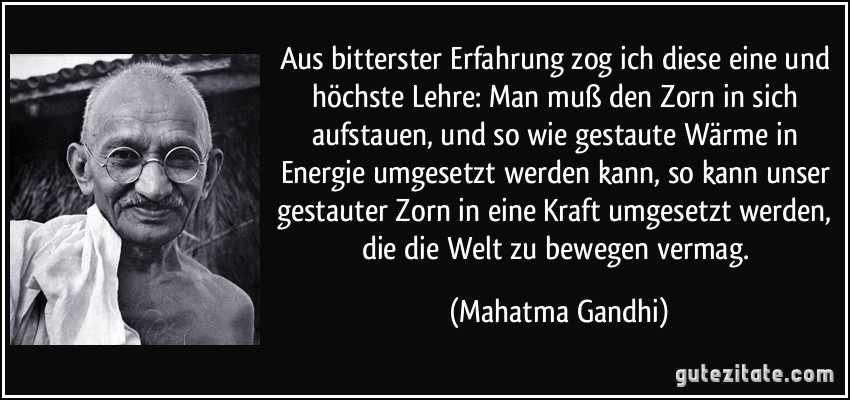
Wenn das Begehren nicht erfüllt wird, entsteht Frustration, und daraus Zorn. Zorn kann ein sehr mächtiger Antrieb sein und unter Umständen dabei helfen, einen Menschen auf die nächsthöheren BW-Ebenen zu katapultieren, sofern er kon-
Viele Menschen schaffen den Sprung von Angst zu Zorn, wenn ihnen das Wenige genommen wird, das sie noch hatten. Angst haben kann nur, wer etwas zu verlieren hat, und sei dieses Etwas noch so gering; geht es verloren, so gibt es ei- |
|
Wie gehe ich bestenfalls mit meiner Wut um?
Wut
Körperliche Reaktionen auf Wut
Wutpsychologie
Selbstbeherrschung und Intelligenz bescheren Erfolg im Leben. Gewalttätiges, wutgesteuertes Verhalten zeugt von einer schlechten Selbstbeherrschung. Selbstkontrolle kann man trainieren. (Auf das zweite Marshmallow warten, Routinehand-
Wutauslöser
Wutbändiger
Wutausbrüche kann man nicht unmittelbar durch Medikamente zum Stillstand bringen, man benötigt die Hilfe eines Psycho-
Wutmanagement-Techniken, um Wut auf natürliche Weise einzudämmen
|

Die Müllerstochter/Königin, deren Kind gefährdet war, erfährt von einem Boten, dass ein Männchen in einem kleinen Haus in der Ferne wohnt, das nachts um ein Feuer tanzt und singt:
Nun kennt sie das Rätsel, den geheimen Namen ihres Peinigers. Als sie den Poltergeist Rumpelstilzchen damit überrascht, dass er selbst sein Geheimnis ausgesprochen hatte, zerreißt er sich aus lauter Wut selbst. Sein Leben endet er mit den Worten:
Once Rumpelstiltskin's secret name is revealed his spell and control by fear is over.
Agasp Rumpelstiltskin tore himself apart – out of sheer anger.
Classification of Corporate Psychopaths, presented by softpanorama.org, Dr. Nikolai Bezroukov, service to the UN Sustainable Development Networking Programme (SDNP), updated 3. December 2011
"Justified resentments"
Persönliches Bekenntnis
Empfehlungen
Schlussfolgerungen
Mithilfe der Atmung und durch achtsames Betrachten verliert die Wut an Destruktivität. Atmung und Achtsamkeit vermitteln das nötige Rüstzeug zur Wandlung und Heilung alter, negativer Gewohnheitsmuster.
"Wenn Frauen depressiv sind, essen sie oder gehen einkaufen. Männer überfallen ein anderes Land. Es ist eine ganz andere Art zu denken." Dr. Jed Diamond (*1943) US-amerikanischer Pychotherapeut, Ehe- und Familienberater, Autor, The Irritable Male Syndrome. Understanding and Managing the 4 Key Causes of Depression and Aggression [Das Syndrom der männlichen Reizbarkeit. Die vier Ursachen von Depression und Aggression verstehen und handhaben], Rodale Books, 2004, Nachdruck 11. August 2005
Forschungsergebnisse hinsichtlich der SMR; 30.000 bis 60.000 Männer weltweit haben den Fragebogen ausgefüllt.
Von den Frauen habe ich erfahren, dass eines der Merkmale von SMR-befallenen Männern die generelle Verleug- nung ist. Audiointerview (engl.) mit Dr. Jed Diamond (*1943) US-amerikanischer Pychotherapeut, Ehe- und Familienberater, Autor, Irritable Male Syndrome. A psychology, präsentiert von dem US-amerikanischen Webradiosender Shrink Rap Radio, Psychologie-Podcast #165, Gastgeber Dr. David Van Nuys, Minute 7:52, Minute 37:56, 58:39 Minuten Dauer, Sendetermin 25. Juli 2008
Interview (engl.) mit Dr. Jed Diamond (*1943) US-amerikanischer Pychotherapeut, Ehe- und Familienberater, Autor, Is there a Mr. Mean in your life? Interview with Jed Diamond [Gibt es einen übellaunigen Mann in Ihrem Leben?], präsentiert und moderiert von Joan Price, 14. Mai 2010
Interview (engl.) mit Dr. Jed Diamond (*1943) US-amerikanischer Pychotherapeut, Ehe- und Familienberater, Autor, Are You Living With An Angry Man? Take the Quiz and Find Out [Leben Sie mit einem jähzornigen Mann zusammen? Der ausgefüllte Fragebogen gibt Auskunft.], präsentiert von der US-amerikanischen Publikation MenAlive, 24. Mai 2018
|
|
Personal awovals
Recommentations
Conclusion
Insights
Dr. Jill Bolte Taylor has recovered miraculously from a rare stroke after eight years. She who has become more compassionate than in her first life shares on the "90 Seconds Rule" and the physiological wiring of anger. Being angry is a loop, a circuitry inside the brain, restimulated by one's angry thoughts.
|
Research results regarding the emergence of IMS on 30.000 growing up to 60.000 men worldwide.
Audio interview with Jed Diamond, Ph.D. (*1943) US American psychotherapist, marriage and family counselor, author, Irritable Male Syndrome. A psychology, presented by the US American web radio station Shrink Rap Radio, psychology podcast #165, host David Van Nuys, Ph.D., US American professor emeritus of psychology Sonoma State University, California, minute 7:52, minute 37:56, 58:39 minutes duration, posted 25. July 2008
Interview with Jed Diamond, Ph.D. (*1943) US American psychotherapist, marriage and family counselor, author, Is there a Mr. Mean in your life? Interview with Jed Diamond, presented and hosted by Joan Price, 14. May 2010
For questions 1-15, each "true" scores 1 point; for question 16 "false" scores 1 point. The higher your total, the higher your anger level. Article by Jed Diamond, Ph.D. (*1943) US American psychotherapist, marriage and family counselor, author, Are You Living With An Angry Man? Take the Quiz and Find Out, presented by the publication MenAlive, 24. May 2018
Five constitutions of violence prone males
Article by Jed Diamond, Ph.D. (*1943) US American psychotherapist, marriage/family counselor, author, The 5 Hidden Reasons Men Become Violent and What We Can Do to Make the World Safer, presented by the blogspot Men Alive, 5. October 2013 |
Over time the negative memories overwhelm while the positives are forgotten.
Aggression in male mice is linked to the brain's reward centers much as food, sex, and drugs are.
|
|
Literary quotes
|
|
| |||||||||||||||||||||||||||||||||||||||||||||||||
| Sources: ► Article Anger, presented by lewispsy.org, undated ► Blog article Passive and Active Anger, presented by gdrake, July 2011 ► Article How to recognize and deal with anger, presented by the American Psychological Association (APA) 2016 |
| See also: ► Violence |
|
President Abraham Lincoln who struggled with his depression held together the opposites of darkness and light "We need to be able to remain human even though we are fighting this war."
There was one of Lincoln's very rare outbursts of anger in 'Soldiers Home', a cottage in the country on a high hill, where Lincoln ruminated on emancipation proclamations and more. "Why do you bring that up to me? Go have someone else in the White House deal with it!"
Following night Lincoln could not sleep all night. He sat up that night and recognized his mistake. The next mor- "We will find your wife!"
|
| See also: ► Stories and ► Conflict |
| Siehe auch: ► Geschichtensammlung |
Englische Werke
Links zum Thema Wut und Zorn – BW 150 / AngerLiteratur
Literature (engl.)
Externe WeblinksWikipedia-Einträge Wut
Traurigkeit findet im Hippocampus statt, dem kognitiven, denkenden Bereich des Gehirns (Abruf und Interpretation von alten Erfahrungen), eher geringe Körperreaktionen. Weblinks zum Thema Wut – QuoraBeiträge verfasst von Elfriede Ammann, präsentiert auf der kalifornischen Frage-und-Antwort Webseite Quora DE
External web links (engl.)Wikipedia-entries Anger, Methods of anger management Directness • Honor • Focussing • Courage • Humility • Forgiveness • Listen • Thankfulness
Audio- und Videolinks
➤ Resonanzeffekte (Gefühle sind ansteckend) Linklose Medienangebote
Audio and video links (engl.)
Selfcontrol and intelligence are the two keys for success in life. Violent behavior is poor selfcontrol. The leading cause of murder is anger. Audio and video links (engl.) – Newton Hightower
Healing the anger within
Movie links (engl.)
Twelve angry male jurors from different backgrounds, and races are shut away in a court room for finding a unanimous verdict on a young black man's life under trial. In the beginning 11:1 jurors plead him GUILTY for murder. In the end of an angry debate all twelve – having shed their prejudices one after the other – plead him NOT GUILTY.
|
Englisch Hawkins
Wiki-Ebene
Englisch Wiki
