(umgeleitet von Hawkins.Schönheit)
Hawkins-Menu: A·
B·
C·
D·
E·
F·
G·
H·
I·
J·
K·
L·
M·
N·
O·
P·
Q·
R·
S·
T·
U·
V·
W·
Z
Wiki-Menu: 1·
2·
A·
B·
C·
D·
E·
F·
G·
H·
I·
K·
L·
M·
N·
O·
P·
Q·
R·
S·
T·
U·
V·
W·
Y·
Z
Bewusstseinsebene von Schönheit

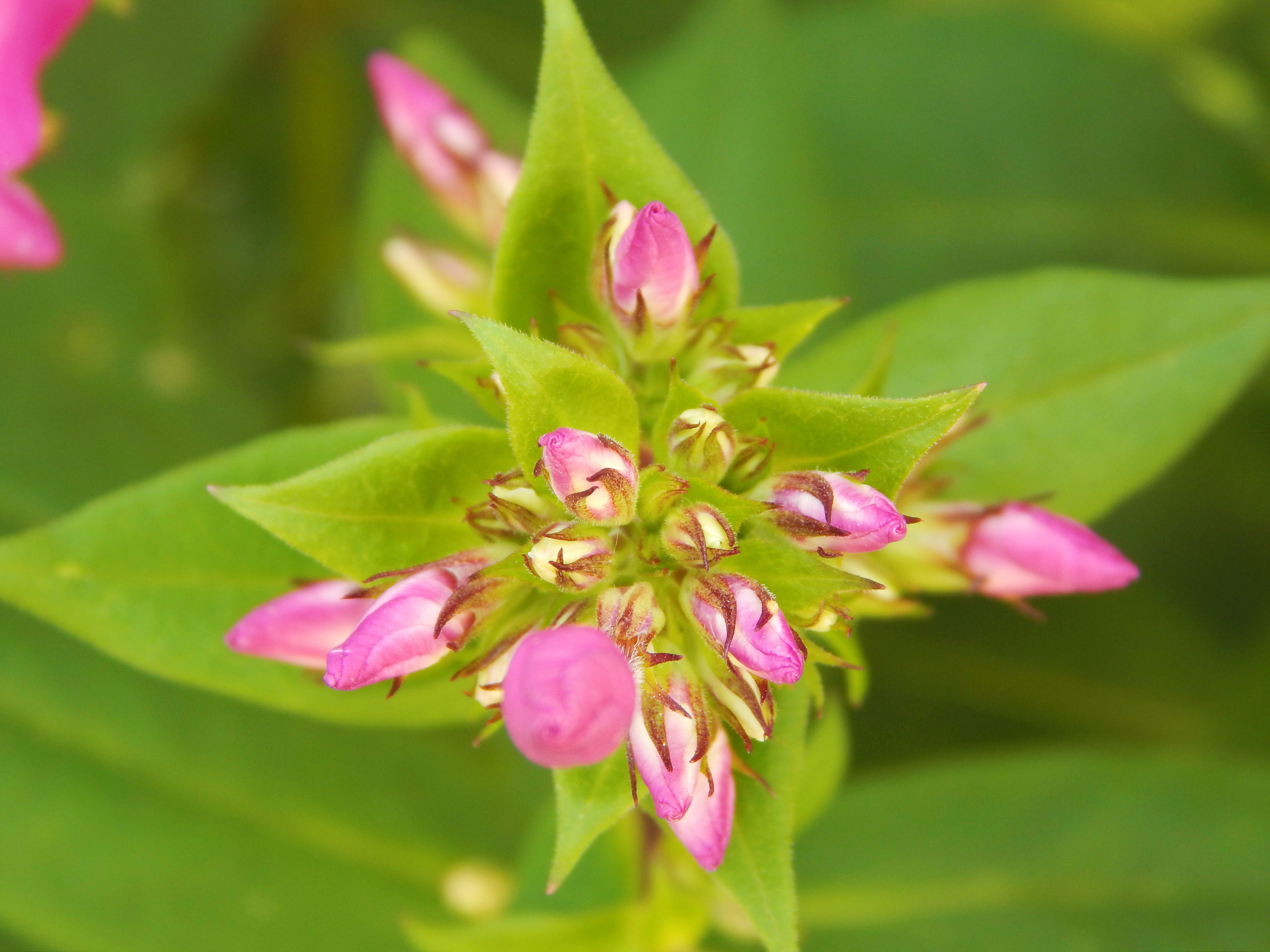
Rosa sp., Margaret Merril, Harkness 1980
Schönheit schwingt in Räumen, deren Energiefeld bei BW 500 und mehr liegt.
Die Rose ist ohne Warum.
Sie blühet, weil sie blühet.
Sie achtet nicht ihrer selbst,
fragt nicht, ob man sie siehet.
|
Quelle: ► Angelus Silesius (1624-1677) deutscher katholischer Theologe,
mystischer Lyriker, Gedicht Ohne Warum, entstanden 1640-1677 |
↑
Links zum Thema Schönheit / Beauty
Zitate von D. Hawkins
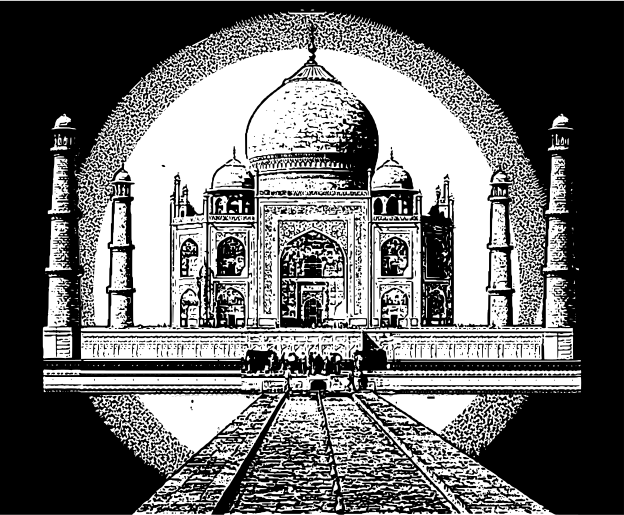
Schwarzweiße llustration des Taj Mahal Mausoleums
in Agra, Indien, erbaut unter Kaiser Mughal Shah Jahan
im Gedenken an seine Lieblingsfrau Mumtaz Mahal
- Menschen erscheinen als arglos, da sie sich in extremer Weise ihrer Realität nicht bewusst und nicht gewahr sind.
In diesem Zustand werden sie von programmierenden und illusorischen Glaubenssystemen in Gang gehalten. Gleichzeitig strahlt die Reinheit des GEISTES als ihre innere Schönheit hervor. FU Das All-sehende Auge, 2005
↑
Quotes by D. Hawkins
Personal avowal / recognition
Receiving guidance by one's "own" SELF
- The incredible beauty of all things shone forth in all their perfection, and where the world saw ugliness, I saw only timeless beauty. I spent years in inner silence, and the strength of the Presence grew. I had no personal life; my personal will no longer existed; I was an instrument of the Infinite Presence, and I went about and did as it willed. People felt an extraordinary peace in the aura of that Presence. Seekers sought answers from me, but as there was no such individual as David any longer, I saw what they were doing was finessing answers from their own Self, which was not different from mine. Excerpted from D. Hawkins, Power vs. Force, presented by the US American magazine In Light Times, August 2004; cited in: Power vs. Force. The Hidden Determinants of Human Behavior, "Preface", S. 14-15, Hay House, February 2002
- Choose to see the beauty, perfection and sacredness of all life. Source unknown
Positive (strong) response (above 200) – Negative (weak) response (below 200)
- Aesthetic – Artsy
- Beautiful – Glamourous
- The innate beauty of all that exists becomes progressively apparent. All things become of equal value so that all life
and all that exists are honored for their presence and the sheer fact of their existence. The perfection of all that exists
stands forth, and the illusion of imperfectionism dissolves. Each and every thing is the perfect expression of its essence manifesting as its innate existence, simply by being what it is. I. Reality and Subjectivity, S. 218, 2003
- Exposure to classical music, reverence for beauty, some degree of any religion, and playing a little chess – criminality is unheard of for people who grow up with these influences. Exposure to spiritual integrity creates neuronal pathways that make it impossible to fall below integrity. This is what you can do for children to help them.
Sedona Seminar Witnessing and Observing, 3 DVD set, 16. October 2004
- Question: When I am in the presence of beauty or love, tears come up. Is there a line between that and emotio-
nality?
Answer: No, it’s a stage you go through and it may last for years. It has nothing to do with gender. You can look at two people looking at each other with a loving look and you begin to cry – or a beautiful aria from an opera – any kind of stunning beauty. It’s a sensitivity to beauty that arises, and as you get in the 500’s, it becomes almost continuous. You have to desist from certain activities because you break down and cry all the time. It may last some years. If people at work ask about it, just tell them the truth – that beauty makes you cry. It’s normal. It’s not emotion – because neuro-
logically your brain changes. There’s a concept called neuroplasticity. Experience changes the chemistry of your brain physiology. The neuronal connections are always constantly changing. So crying is part of that
shift of the energy balance and your brain is putting out endorphins. Someone who is upset all the time is put-
ting out adrenalin. You walk into a great cathedral and you break into tears. You see what it took to create it.
Sedona Satsang Q&A, 2 CD set, 10. January 2007
- The harmonics have triggered parts of the brain that can only be triggered by those harmonics – when you cry be-
cause of beautiful music. It’s not just because of the melody. The power of those fields is because of the impact of
those harmonics that are transformative in a nonlinear field. It precipitates the miraculous – the harmonics.
Sedona Satsang Q&A, 2 CD set, 10. January 2007
↑
Zitate von anderen Quellen
- Den Gott der Schönheit und der Güte auch im Hässlichen und im Bösen zu fühlen und zu lieben, und sich doch in äußerster Liebe zu sehnen, es von seiner Hässlichkeit und seinem Bösen zu heilen, das ist wahre Tugend und Mo-
ral. Sri Aurobindo [Aurobindo Ghose] [BW 605] (1872-1950) indisch-britischer hinduistischer Philosoph, Mystiker, Yogi, Meister,
Freiheitskämpfer, Dichter, Zwölf Gedanken und Aphorismen [Thoughts and Aphorisms], CWSA, Band 12, S. 421-500, 50. geschrieben 1914-1915, veröffentlicht 1958
- Die wahre Schönheit manifestiert sich in den Strahlen, die aus dem Allerheiligsten der Seele dringen; ihr Leuchten bricht aus dem Innersten hervor, ebenso wie sich das Leben aus dem tiefsten Kern in Blumen und Blüten ergießt, denen es Farbe und Duft verleiht. Khalil Gibran (1883-1931) libanesisch-US-amerikanischer Maler, Philosoph, Dichter, Schriftsteller, zitiert in: Zitate berühmter Personen
- Die Schönheit liegt nicht im Antlitz. Die Schönheit ist ein Licht im Herzen.
Khalil Gibran (1883-1931) libanesisch-US-amerikanischer Maler, Philosoph, Dichter, Schriftsteller, zitiert in: Gute Zitate
- Die Schönheit verweilt nicht, sie besucht uns nur. Doch der Besuch der Schönheit ergreift uns und lädt uns ein, in
ihrem Rhythmus mitzuschwingen, sie ruft uns dazu auf, schön zu fühlen, schön zu denken, schön zu handeln in
der Welt: ein Leben zu schaffen und zu führen, welches das Schöne erweckt.
Ein Leben ohne Freude ist ein unvollständiges Leben […].
Sogar in den freudlosesten Zeiten, ja vielleicht gerade dann, können wir Schönheit entdecken und erwecken: dies
genau sind die Phasen, wenn wir sie am nötigsten brauchen.
Die Freude, die uns die Schönheit schenkt, finden wir nirgends sonst. Freude ist nicht nur das Resultat der Umstän-
de; wir können uns immer dazu entschließen, froh zu sein, ganz unabhängig von den Ereignissen um uns herum.
[…] Der heilige Augustinus sagt: "Die Seele findet ihr Gleichgewicht durch das, was sie freut. Freude oder Vergnü-
gen setzen die Seele an den Platz, der ihr gebührt. Wo Freude ist, da ist auch Reichtum".
John O'Donahue (1956-2008) irischer Priester, Hegelscher Philosoph, Dichter, Schriftsteller, Schönheit. Das Buch vom Reichtum des Lebens, S. 26, Deutscher Taschenbuch Verlag (dtv), 2003, 2004

Rosa sp.
Lucy Cramphorn, Kriloff 1960 Image No. 173
- Schönheit ist überall, nicht sie fehlt unseren Augen, sondern un-
sere Augen sehen oft an ihr vorbei. Auguste Rodin (1840-1917) französischer Bildhauer, Zeichner, zitiert in: Waldorf Ideen-Pool
- Die meisten Menschen wissen gar nicht, wie schön die Welt ist und wieviel Pracht in den kleinsten Dingen, in einer Blume, einem Stein, einer Baumrinde oder einem Birkenblatt sich offenbart. Rainer Maria Rilke (1875-1926) böhmisch-österreichischer Dichter, Erzähler Lyriker, zitiert in: Aphorismen.de
- Das Schöne ist ein Urphänomen, das zwar nie selber zur Erscheinung kommt, dessen Abglanz aber in tausend ver-
schiedenen Äußerungen des schaffenden Geistes sichtbar wird und so mannigfaltig und so verschiedenartig ist als
die Natur selber. Johann Peter Eckermann (1792-1854) deutscher Dichter, Gespräche mit Goethe, 18. April 1827, S. 636,
Leipzig, Band 1 und 2: 1836, Band 3: 1848; zitiert in: Gute Zitate
- Jeder braucht Schönheit genauso wie Brot, Orte zum spielen und beten wo die Natur heilt und Körper und Geist
stärkt. John Muir (1838-1914) schottisch-US-amerikanischer Ingenieur, Geologe, Erfinder, Naturphilosoph, Autodidakt, Schrift-
steller, zitiert in: Zitate berühmter Personen
- Schön ist, was dem Sehen gefällt, was beim Anschauen ins Auge springt, was die glücklichen Augen beseligt [...].
Was schön ist, ist auch würdig, angeschaut zu werden, ist wahrhaft sehenswert.
Heinrich Schipperges (1918-2003) deutscher Medizinhistoriker, Autor, Welt des Auges. Zur Theorie des Sehens und Kunst des Schauens, S. 7, Heinrich Schipperges Verlag, Freiburg, 1. Januar 1978
- Die Schönheit der Erde kann man nicht kaufen.
Sie gehört dem, der sie entdeckt, der sie begreift und der es versteht, sie zu genießen.
Henry Bordeaux (1870-1963) französischer Schriftsteller, Mitglied der Académie française, zitiert in: Blogartikel Im Wald unterwegs, präsentiert von dem Blog meine.stimme, Stephanie Rüdele, 25. Januar 2020
- Nicht die Schönheit entscheidet, wen wir lieben, sondern die Liebe entscheidet, wen wir schön finden.
- Schönheit kommt aus dem Herzen. Erst Persönlichkeit und Charme machen eine Frau anziehend.
Sophia Loren (*1934) italienische Filmschauspielerin, zitiert in: 1000 Zitate
- Für mich ist Schönheit die Harmonie der kleinen Unregelmäßigkeiten.Wenn alles perfekt ist, wird es langweilig.
Brigitte Bardot (1934-2025) französische Filmschauspielerin, Sängerin, Tierschutzaktivistin, zitiert in: Gute Zitate
Literaturzitate
- Heiterkeit ist weder Tändelei, noch Selbstgefälligkeit, sie ist höchste Erkenntnis und Liebe, ist Bejahen aller Wirklich-
keit, Wachsein am Rand aller Tiefen und Abgründe, sie ist eine Tugend der Heiligen und Ritter, sie ist unzerstörbar
und nimmt mit dem Alter und der Todesnähe nur immer zu. Sie ist das Geheimnis des Schönen und die eigentliche
Substanz jeder Kunst. Hermann Hesse (1877-1962) deutsch-schweizerischer Dichter, Schriftsteller, Nobelpreisträger für Literatur, 1946, Roman Das Glasperlenspiel, 1943
Gedichte
- Drum, edle Seele, entreiß' dich dem Wahn
Und den himmlischen Glauben bewahre!
Was kein Ohr vernahm, was die Augen nicht sahn,
Es ist dennoch das Schöne, das Wahre!
Es ist nicht draußen, da sucht es der Tor,
Es ist in dir, du bringst es ewig hervor.
Friedrich Schiller (1759-1805) deutscher Philosoph, Historiker, Begründer des Deutschen Idealismus, Dichter, Schriftsteller,
Die Worte des Wahns, 1799, Sämtliche Werke, Band 1, S. 173-174, 215-216, Carl Hanser Verlag, München, 1958, zitiert in: Aphorismen.de
- Je intensiver ein Mensch alles Schöne und Edle auf Erden genießt,
desto intensiver muss auch das Ewigkeitsbewusstsein
in seiner Seele leben, sonst wird er nie innerlich harmonisch werden.
Marie Feesche (1871-1950) deutsche Schriftstellerin, Fallende Tropfen. Gedichte, 1913
- Schönheit ist das Lächeln der Wahrheit, wenn sie ihr Gesicht in einem reinen Spiegel betrachtet.
Rabindranath Tagore [BW 475] (1861-1941) indisch-bengalischer Philosoph, Maler, Komponist, Musiker, Dichter, Schriftsteller, Nobelpreisträger für Literatur, 1913, Fireflies Poem, Gedicht Fireflies [Glühwürmchen], Verse 81140, 1928
↑
Quotes by various other sources
[Women] Do not let your adorning be external – the braiding of hair and the putting on of gold jewelry,
or the clothing you wear – but let your adorning be the hidden person of the heart with the imperishable
beauty of a gentle and quiet spirit, which in God’s sight is very precious. 1 Peter 3, 3-5 (NT)
He has made everything beautiful in its time. He has also set eternity in the hearts of men; yet they
cannot fathom what God has done from beginning to end. Ecclesiastes 3, 11 (NT)
Personal avowals
- Then it was as if I suddenly saw the secret beauty of their hearts, the depths where neither sin nor desire can reach, the person that each one is in God's eyes.
If only they could see themselves as they really are. If only we could see each other that way there would be no reason
for war, for hatred, for cruelty. […] we would fall down and worship each other.
Thomas Merton [LoC 515/520] (1915-1968) Anglo-American Catholic Trappist monk, mystic student of comparative religion, social activist, poet, writer, Conjectures of a Guilty Bystander, Image, revised pocketbook, 9. January 1968
Recommendations
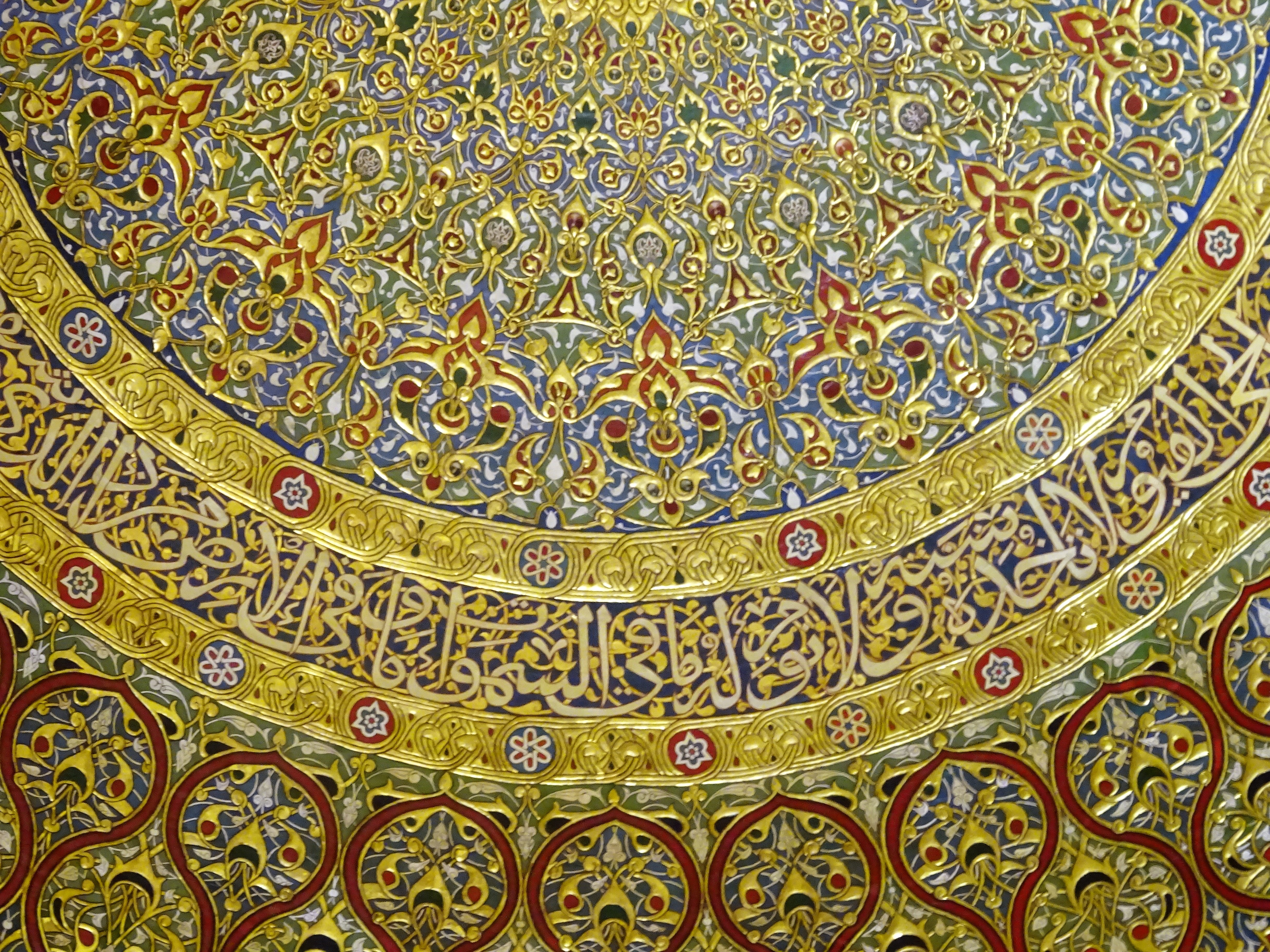
Dome of the Rock inside viewing upwards,
golden ornaments and Arabic writing, January 2018
- Whenever you are creating beauty around you, you are restoring your own soul. Alice Walker [Work LoC 440] (*1944) US-American feminist, political activist, poet, author, recipient of the Pulitzer Prize (1983) and the National Book Award, cited in: Goodreads Quotable Quote
Future outlook
Insights
- Beauty is eternity gazing at itself in a mirror. Khalil Gibran (1883-1931) Lebanese US American painter, philosopher,
poet, writer, 26 prose poetry essays The Prophet, Alfred A. Knopf, 1923, 1980, Laurier Books, 14. April 2003
- Beauty is not in the face; beauty is a light in the heart. Khalil Gibran (1883-1931) Lebanese US American painter, philosopher, poet, writer, Andrew Dib Sherfan, editor, A Third Treasury of Kahlil Gibran, S. 80, Mandarin, 11. March 1993
- Beauty […] is about an emerging fullness, a greater sense of grace and elegance, a deeper sense of depth, and also
a kind of homecoming for the enriched memory of your unfolding life.
Krista Tippett (*1960) US American entrepreneur, founder and host of the American Public Media, radio program and podcast On Being, journalist, author, Becoming Wise. An Inquiry into the Mystery and Art of Living, Penguin Press, 5. April 2016
- Being is desirable because it is identical with Beauty, and Beauty is loved because it is Being. We ourselves pos-
sess Beauty when we are true to our own being; ugliness is in going over to another order; knowing ourselves, we
are beautiful; in self-ignorance, we are ugly.
Plotinus [LoC 730; works 503] (205-270) Greek philosopher, cited in: Goodreads Quotable Quote
- Withdraw into yourself and look; and if you do not find yourself beautiful as yet, do as does the sculptor of a statue [...] cut away all that is excessive, straighten all that is crooked, bring light to all that is shadowed. [...] [D]o not cease until there shall shine out on you the Godlike Splendour of Beauty; until you see temperance surely established in the stainless shrine. Plotinus [LoC 730; works 503] (205-270) Greek philosopher, The First Ennead, 6th tractate, section 9, 1917-1930
- Withdraw into yourself and look. And if you do not find yourself beautiful yet, act as does the creator of a statue that is to be made beautiful: he cuts away here, he smoothes there, he makes this line lighter, this other purer, until a lovely face has grown his work. So do you also: cut away all that is excessive, straighten all that is crooked, bring light to all that is overcast, labor to make all one glow or beauty and never cease chiseling your statue, until there shall shine out on you from it the godlike splendor of virtue, until you see the perfect goodness surely established in the stainless shrine. Plotinus [LoC 730; works 503] (205-270) Greek philosopher, The First Ennead, 1st tractate'', section 9, 1917-1930

Vintage bookplate of a variety of shore and water birds, 1865
- Disciple: What is it that creates physical beauty?
Sri Aurobindo: There is a certain vital glow which is really not beauty – when it is overpowering and full of personal magnetism it is dangerous.
Disciple: Does the artist get his form from the vital only?
Sri Aurobindo: No. But these arts are such that they require their stand in the vital. There may be other elements in them but the vital is indis-
pensable. In fact, the highest poetry cannot come unless through the vital. One may take the elements from the mind or emotion or other parts according to necessity.
Disciple: How far is mind a factor in the process?
Sri Aurobindo: If you mean the intellectual mind it has a very little part – though it, too, has a part. The whole process is very complicated. The first impulse is given by the vital and then there is communication with the higher mind – the intuitive faculty. Then something from there co-
mes down to the heart and the artist again takes it up into the mind,
and gives expression to it.
Disciple: That is to say, something from above comes down through intuition.
Sri Aurobindo: Yes, some power from above. I use the word "Intuition" in the general sense for all the faculties that act; more properly it is "Inspiration".
Sri Aurobindo [Aurobindo Ghose] [LoC 605] (1872-1950) Indian British Hindu freedom fighter, philosopher, yogi, mystic, guru, poet, Evening Talks with Sri Aurobindo, recorded by A.B. Purani, Third Series, section 1-0122, 23. January 1939
- Everything has beauty, but not everyone sees it. Confucius [LoC 590] (551-479 BC) Chinese sage, social philosopher, sponsor of Confucianism, the Chinese state religion, cited in: Goodreads Quotable Quote
- It was easy to love God in all that was beautiful. The lessons of deeper knowledge, though, instructed me to embrace God in all things. St. Francis of Assisi [LoC 580] (1181/82-1226) Italian Catholic friar, preacher, founder of the Franciscan Order, cited in: Quotefancy
- We have often heard that beauty is in the eye of the beholder. This is usually taken to mean that the sense of beauty
is utterly subjective; there is no accounting for taste because each person's taste is different. The statement has an-
other, more subtle meaning: if our style of looking becomes beautiful, then beauty will become visible and shine forth
for us. We will be surprised to discover beauty in unexpected places where the ungraceful eye would never linger.
The graced eye can glimpse beauty anywhere, for beauty does not reserve itself for special elite moments or instan-
ces; it does not wait for perfection but is present already secretly in everything. When we beautify our gaze, the
grace of hidden beauty becomes our joy and our sanctuary. John O'Donohue johnodonohue.com (1956-2008)
Irish priest, Hegelian philosopher, storyteller, poet, author, Beauty. The Invisible Embrace, Deckle Edge, 2. March 2004
- The good, of course, is always beautiful, and the beautiful never lacks proportion. Plato [LoC 485] (427-347 BC)
Ancient Greek pre-Christian philosopher, founder of the occidental philosophy, cited in: Plato Quotes, presented by citatis.com
- Beauty is a little of each, colored by the immediate state of mind of the observer. Immanuel Kant [LoC 460] (1724-1804) German philosopher at the end of the 18th century Enlightenment, author, J. H. Bernard, translator, Critique of Judgement [1790], Hafner Publishing, New York, originally published 1892, 1951
- What is beauty? Is it a measurable fact. Gottfried Wilhelm Leibniz (1646-1716) German polylingual philosopher, mathematician, historian, politician, diplomat, cited in: article Pearls Before Breakfast, The Washington Post, Gene Weingarten, 8. Apri 2007
- There’s nothing more beautiful than the way the ocean refuses to stop kissing the shoreline no matter how many times it's sent away. Video presentation by Sarah Kay, Sarah Kay performs "B", presented by the Bowery Poetry Club, summer 2008, YouTube film, minute 2:18, posted 21. October 2008
- If the beautiful is the real presence of God in matter and if contact with the beautiful is a sacrament in the full sense of the word, how is it that there are so many perverted aesthetes? Simone Weil (1909-1943) French philosopher, Christian mystic, social activist, cited in: simone weil – beauty, presented by the website fleurmach, 14. June 2016
- Do not confuse beauty with beautiful. Beautiful is a human judgment. Beauty is All. The difference is everything. Matthew Fox (*1966) US American actor, cited in: AZ Quotes
Literary quotes
- Beauty will save the world. Fyodor Dostoyevsky [LoC 465] (1821-1881) Russian writer of novels, short stories and essays,
quoted by the prince, The Idiot, 1868-1869
- When power becomes gracious and descends into the visible – such descent I call beauty. And there is nobody from whom I want beauty as much as from you who are powerful: let your kindness be your final self-conquest. Of all
evil I deem you capable: therefore I want the good from you. Verily, I have often laughed at the weaklings who thought
themselves good because they had no claws. Friedrich Wilhelm Nietzsche (1844-1900) German classical scholar, critic of
culture, philologist, philosopher of nihilism [LoC 120], writer, Thus Spoke Zarathustra [Also sprach Zarathustra], part II, chapter 13
"Those Who Are Sublime", Ernst Schmeitzner, Chemnitz, 1883-1891
Poems
- Beauty is truth, truth is beauty.
That is all ye know on Earth, and all ye need to know.
John Keats (1795-1821) English Romantic poet, poem Ode on a Grecian Urn, first published anonymously in the journal Annals of
the Fine Arts for 1819, May 1819
Prayer
- In beauty may I walk.
All day long may I walk.
Through the returning seasons may I walk.
On the trail marked with pollen may I walk.
With grasshoppers about my feet may I walk.
With dew about my feet may I walk.
With beauty may I walk.
With beauty before me, may I walk.
With beauty behind me, may I walk.
With beauty above me, may I walk.
With beauty below me, may I walk.
With beauty all around me, may I walk.
In old age wandering on a trail of beauty, lively, may I walk.
In old age wandering on a trail of beauty, living again, may I walk.
It is finished in beauty.
It is finished in beauty.
Navajo beauty way prayer
↑
Time to stand and stare
|
What is this life if, full of care,
We have no time to stand and stare?
|
↑
Links zum Thema Schönheit / Beauty
Literatur
- Tor Nørretranders / Noerretranders (*1955) dänischer Professor für Wissenschaftsphilosophie, Wissenschaftsjournalist, Sach-
buchautor, Homo generosus. Warum wir Schönes lieben und Gutes tun, Rowohlt, Reinbek, 2004
- Tor Nørretranders / Noerretranders (*1955) dänischer Professor für Wissenschaftsphilosophie, Wissenschaftsjournalist, Sach-
buchautor, Über die Entstehung von Sex durch generöses Verhalten. Warum wir Schönes lieben und Gutes tun, Rowohlt, Ta-
schenbuchausgabe 2006
Literature (engl.)
↑
Externe Weblinks
External web links (engl.)
↑
Audio- und Videolinks
Audio and video links (engl.)
↑
|
Interne Links
Wiki-Ebene