SpiritualWiki

Hawkins / Wunder

Hawkins-Menu:


Wiki-Menu:  

2·2012


Wunder – Wunder-sames
Spontanheilungen, Bewusstseinssprünge BW 5702


Sonnenstrahlen


Definitionen eines Wunders

Ein Wunder ist:
        * eine Inspiration
        * eine Gnadenerfahrung
        * ein heiligmäßiges Phänomen
        * das Auftauchen des Möglichen in der Welt des Wahrscheinlichen
        * rekontextualisierte Wissendheit
        * eine Schau (während der die Augen übergehen)
        * die Aufhebung der gewöhnlichen Art der Wahrnehmung
        * eine Gelegenheit, die Wahrheit tiefer oder anders zu erfassen
        * unpersönlich (keine Leistung eines persönlichen Ichs)
        * die Folge einer nachhaltigen Bewusstseinsveränderung
        * ein Feldeffekt, der mittels Kundalinienergie von selbst geschieht
        * tritt in der nichtlinearen Realität auf [außerhalb der linearen Realität]
        * kommt nicht zustande (ist unwahrscheinlich oder gefährdet) in einer missgünstigen Umgebung
        * nicht vorhersagbar oder auf Bestellung und Terminvorgabe garantiert ausführbar
        * eine Spontanremission (Wunderheilung) (für konventionelle Mediziner)

Wunderheilungen

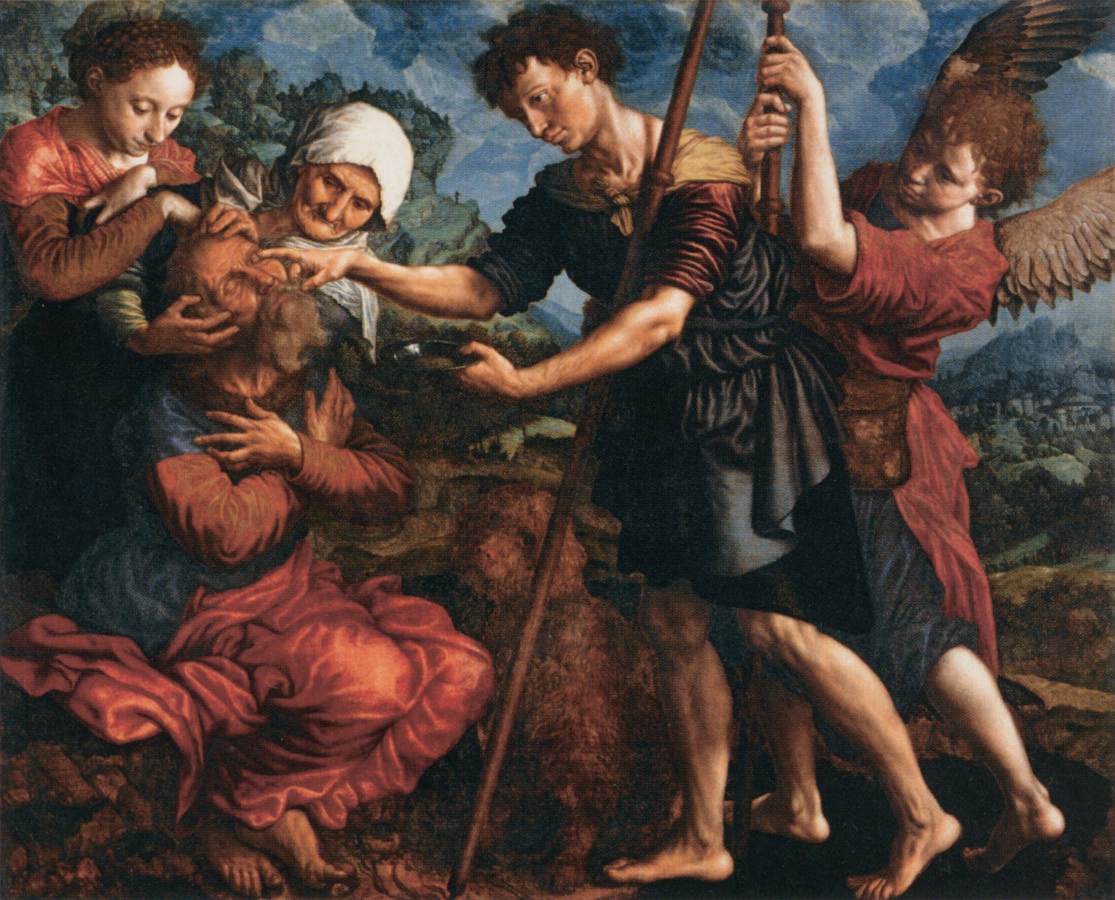
Spontane Remission ist der medizinische Fachausdruck für Wunderheilung. Ärzte nehmen dieses Phänomen selten als Ausdruck ihrer Kunst in Anspruch, wirken jedoch zumeist ungelenk oder peinlich berührt, wenn sie dazu Stellung nehmen. Placebo-Medikamente und Placebo-Operationen zeigen bisweilen denselben heilsamen Effekt.


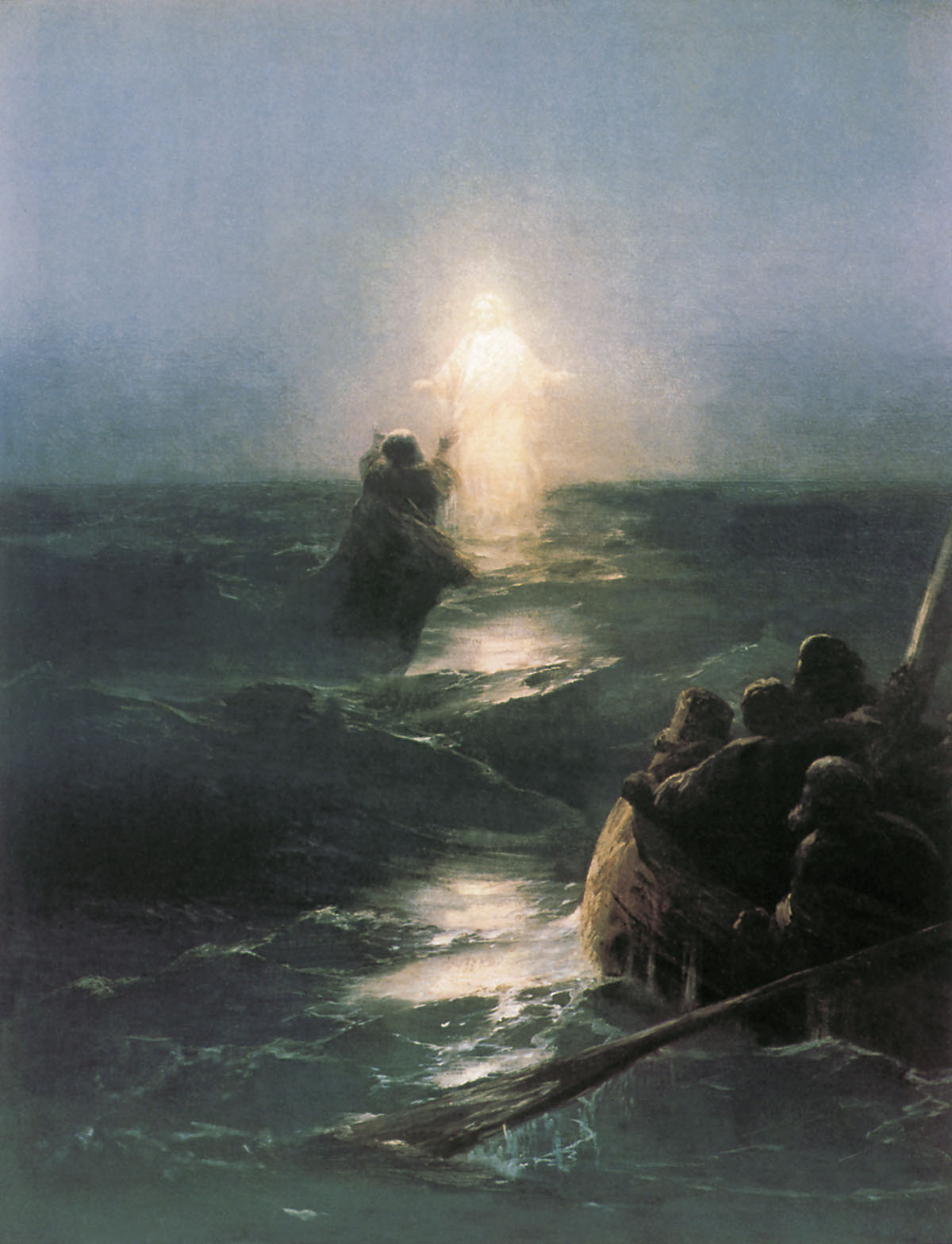
Nach seinen wundersamen Heilungen forderte Jesus die Geheilten wiederholt dazu auf, anderen gegenüber nicht von ihrem früheren Leid zu berichten.3 Dieser Rat könnte eine Vorsichtsmaßnahme sein, sich der möglichen negativen Beeinflussung durch die Umgebung zu entziehen und somit einem Rückfall in die Krankheit vorzubeugen.

Das Wunderpotential im Menschen

Was vor uns liegt und was hinter uns liegt,
sind Kleinigkeiten zu dem, was in uns liegt.

Und wenn wir das, was IN uns liegt,
nach außen in die Welt tragen,
geschehen Wunder.


Henry David Thoreau (1817-1862) US-amerikanischer Historiker, führender Transzendentalist

Umfrage zu Wundern / Poll on Miracles

  • Eine Umfrage des Harris Poll Instituts ergab im Jahr 2003: 84% der US-Amerikaner glauben an die Wirklichkeit von Wundern.
    • A Harris Poll in 2003 revealed: 84% of Americans believe in reality of miracles.

Zitate zum Thema Wunder und Wunderheilungen / Miracles, wonders and spontaneous remissions

Zitate von D. Hawkins

  • Heiligmäßiges schwingt auf dem Bewusstseinsgrad 570, und auf dieser Ebene geschehen Wunder. Quelle unbekannt


  • Ein Wunder ist die rekontextualisierte Wissendheit […], bei der das Hindernis der Wahrnehmung aufgehoben ist. Quelle unbekannt


  • Lass dich von Wundern nicht in Bann ziehen. Ihre Beschaffenheit ist nicht persönlich; das Geschehen wird vom Feld registriert. Quelle unbekannt


  • Lass dich vom Wundersamen nicht faszinieren. Es geschieht von selbst; die Kundalini-Energie vollbringt es einfach, ohne im Geringsten Rücksprache mit dir zu nehmen. Kein Ich hat es ausgeführt. Und es ist unvorhersagbar. Wunder sind nicht nach Terminplan ausführbar. Quelle unbekannt


  • Bete um ein Wunder, um die Wahrheit zu sehen. Quelle unbekannt


  • Die konventionelle Medizin hat Spontanremissionen (Wunderheilungen) dokumentiert, allerdings ohne jemals entsprechende konzeptuelle Werkzeuge zur Hand gehabt zu haben, um sie untersuchen zu können. FU Power vs. Force, S. 218


  • In jedem untersuchten Fall, in dem eine hoffnungslose und nicht mehr zu behandelnde Krankheit [spontan] geheilt wurde, hat eine nachhaltige Bewusstseinsveränderung stattgefunden, wodurch die Attraktormuster, die zur Krankheitsbildung geführt hatten, nicht mehr vorherrschend waren. FU Power vs. Force, S. 219

Zitate (engl.) von D. Hawkins

Personal avowals

  • The overall condition of my nerves improved slowly, and then another phenomenon commenced — a sweet, delicious band of energy continuously flowing up the spine and into the brain, where it created an intense sensation of continuous pleasure. Everything in life happened by synchronicity, evolving in perfect harmony, and the miraculous was commonplace. The origin of what the world would call miracles was the Presence, not my personal self. What remained of the personal "me" was only a witness to these phenomena. The greater "I," deeper than my own self or my own thoughts, determined all that happened. Power vs. Force, S ?


  • The miraculous happened, beyond ordinary comprehension. Many chronic maladies from which I had suffered for years disappeared; my eyesight spontaneously normalized and I no longer needed my lifetime bifocals. Occasionally I would feel an exquisitely blissful energy, and Infinite Love, suddenly begin to radiate from my heart toward the scene of some calamity. Once I was driving on a highway when this exquisite energy began to beam out of my chest; as I rounded a bend, there was an auto accident, the wheels of the upturned car still spinning. The energy passed with great intensity into the occupants of the car and then stopped of its own accord. Interview with Dr. David Hawkins, Power vs. Force, US magazine Light in Times, August 2004


  • If an event occurs outside the domain of explanation or expected linear causality and the Newtonian paradigm, it is termed a miracle. It is an eventuality that is brought into actuality by removal of the impediments of negativity. This may involve relinquishment of limiting belief systems, such as, "It's impossible,' or 'It is not deserved," or other ego viewpoints. For those who have reached higher levels of consciousness, the miraculous is not only commonplace, it is the natural course of events and becomes continuous. The miraculous comes out of creation and not causality. The Eye of the I, S. 139


  • Question: How do you explain the miraculous?
    Answer: The term 'miraculous' stems from the Newtonian paradigm, which is limited by the confines of logic in material form and the assumption of causality. Miracles are only comprehensible from the nonlinear domain. When spiritual power becomes focused on faulty perception, it is replaced by vision of the underlying reality which is not within the realm of logic. The Eye of the I, S. 316


  • When phenomena appear that are beyond the expectations of logic or reason, they tend to become described as ‘mystical, ineffable, or miraculous’ to denote the consequence of intention and the response of the contextual field that results in emergence. Therefore, to ‘expect a miracle,’ or ‘pray for the highest good’ accelerates the resolution of a perceived problem. This is facilitated by surrendering judgmentalism or the desire to control outcomes. Thus, one is ‘responsible for the effort and not the results’ (a dictum of twelve-step spiritual groups). Transcending the Levels of Consciousness, Section V, Spiritual Transformation, S. 310


  • Miraculous phenomena are the spontaneous, nonvolitional emergence of a potentiality's emerging as an actuality as a consequence of karmic propensities and local conditions, such as the level of the contextual field set by the power of the prevailing level of consciousness. Discovery of the Presence of God, S. 98


  • The truly 'miraculous' is the emergence into actuality of potentiality as a consequence of an overall contextual field that includes karma, and it is therefore not 'caused' by nor can it be claimed by an individual personality. Discovery of the Presence of God, S. 201


  • Letting go of the illusory sovereignty of the ego allows that which is truly sovereign to intercede. Intervention occurs via the Holy Spirit. Through contrition, undoingness, surrender, and willingness we create a space for the miraculous. Enlightenment itself is by God's grace. You can only remove the impediments to higher consciousness but the final step is by God alone, by God only. Sedona Seminar Causality: The Ego’s Foundation. Enlightenment and Surrender, 3 DVD set, January 2002


(↓)

Blocks to the miraculous

  • - Lack of karmic merit
    - Lack of willingness to surrender secondary gain
    - Guilt
    - Justified resentment
    - Desire to control
    - Outlining (giving advice to God)
    - Unwillingness to undo negative karma
    - Seeking short term (ego) vs. long term benefit
    - Overblown emotionality / hysteria
    - Clinging to the juice
Sedona Seminar Is the Miraculous Real?, 3 DVD set, 9. December 2006

Zitat (engl.) von D. Hawkins – Okkultismus

  • Traditional scripture, as well as highly evolved sages and teachers, warn "not to go there" [paranormal phenomenons] because the astral realms are not spiritual and represent other realms and dimensions for which the human mind is not equipped with protective discernment. Thus, it is perilous to invoke spirits and otherworldly entities. Occult practices have a sizeable and unseen downside. Truth vs. Falsehood, "The Paranormal", S. 391

Wunder sind das einzig Reale


cc, iz*source

Das Wunder ist das einzig Reale,
es gibt nichts außer ihm.
Wenn aber alles Wunder ist, das heißt
durch und durch unbegreiflich,
so weiß ich nicht, warum man dieser
großen einen Unbegreiflichkeit,
die alles ist, nicht den Namen
Gott sollte geben dürfen.

Christian Morgenstern (1871-1914) deutscher Dichter, Schriftsteller, Übersetzer

Zitate von anderen Quellen

Zitate aus Ein Kurs in Wundern

  • Wunder entstehen aus einem Geist, der für sie bereit ist.
  • Bei Wundern gibt es keine Rangordnung der Schwierigkeit, denn nichts ist schwierig, was voll und ganz ersehnt wird.
  • Jedes Wunder ist nur das Ende einer Illusion [...] Und im Ziel der Wahrheit müssen alle Illusionen enden.
  • Wunder sind natürlich. Wenn sie nicht geschehen, ist etwas fehlgeschlagen.
  • Wunder sind natürliche Zeichen der Vergebung.
  • Das Gebet ist das Medium der Wunder.
  • Das Wunder bedient sich der Zeit, wird aber nicht von ihr beherrscht. Erlösung ist ein Wunder, das erste und das letzte - das erste, das das letzte ist, denn es ist eins. Ein Kurs in Wundern, Lektion 97, Arbeitsbuch [BW 600]


  • Ich möchte Wunder wirken. Leonardo da Vinci [BW 565] (1452-1519) italienischer Maler, Bildhauer, Architekt, Anatom, Mechaniker, Ingenieur, Erfinder, Autor, Naturphilosoph (Universalgenie)


  • Es gibt zwei Arten zu leben: so, als gäbe es keine Wunder, und so, als gäbe es nur Wunder. Albert Einstein [BW 499] (1879-1955) deutschstämmiger US-amerikanischer-schweizer theoretischer Physiker, Entwickler der Allgemeinen Relativitätstheorie, Physik-Nobelpreisträger


  • Es verwundert uns viel zu wenig. Sigmund Freud [BW 499] (1856-1939) österreichischer Neurologe, Tiefenpsychologe, Begründer der Psychoanalyse, Religionskritiker


  • […] den Arzt, wie er die Röntgenaufnahmen, die vorher und nachher gemacht worden waren, betrachtete und sagte: "Nun, es ist alles in Ordnung." Ich sagte: "Wirklich? Das muss ein Wunder sein." Er erwiderte: "Nein, das gibt es durchaus, das sind Spontanremissionen." Er war ganz unbeeindruckt. Aber hier war ein Wunder geschehen, und nur ich war davon beeindruckt. Mellen-Thomas Benedict, US-amerikanischer Nahtodüberlebender, Durch das Licht


  • Wenn ein Wunder in der Welt geschieht, geschieht es durch liebevolle reine Herzen. Johann Wolfgang Goethe [BW 465] (1749-1832) deutscher Dichter, Universalgelehrter, Bühnenschriftsteller, Faust, 1832


  • Es gibt drei Kräfte auf dieser Erde, die das Gewissen dieser schwächlichen Rebellen zu ihrem eigenen Glück für immer besiegen und fesseln können:
    1. Das Wunder,
    2. das Geheimnis und
    3. die Autorität.
Fjodor Michailowitsch Dostojewski [BW 465] (1821-1881) russischer Schriftsteller, Die Brüder Karamasow, Buch III, Kapitel 3, 1879


  • Das Einzige, was wir brauchen, um gute Philosophen zu werden, ist die Fähigkeit, uns zu wundern. Jostein Gaarder (*1952) norwegischer Intellektueller, Autor, Sophies Welt


  • Ich bin in einem Maße gewillt, auf Wunder zu stoßen, [...] Arno Schmidt (1914-1979) deutscher Schriftsteller der Nachkriegszeit, Übersetzer, Abend mit Goldrand


  • Wer nicht an Wunder glaubt, ist kein Realist. David Ben Gurion (1886-1973) erster israelischer Premierminister (1948-1963), Mitgründer der sozialdemokratischen Arbeitspartei Israels


  • Ein Glaubender ist ein Mensch, der ein Wunder zugibt, wenn der Augenschein ihn dazu zwingt. Ein Ungläubiger ist ein Mensch, der über Wunder nicht einmal diskutiert, weil er sie nicht eingestehen kann, da sie im Gegensatz zu der Lehre stehen, zu der er sich bekennt. Gilbert Keith Chesterton (1874-1936) englischer Buchautor, Journalist


  • Die wahre Lebenskunst besteht darin, im Alltäglichen das Wunderbare zu sehen. Pearl S. Buck (1892-1973) mit Preisen ausgezeichnete längjährig (bis 1934) in China lebende US-amerikanische Schriftstellerin


  • Die Entdeckung des Wunderbaren im Alltäglichen bedarf der Fähigkeit, mit den Augen des Herzens sehen zu können. Ernst Ferstl (*1955) österreichischer Lehrer, Schriftsteller


  • NICHT MÜDE WERDEN, DEM WUNDER LEISE, WIE EINEM VOGEL, DIE HAND HINHALTEN. Hilde Domin (1909-2006) deutsche Schriftstellerin


  • ERWARTE EIN WUNDER. Botschaft auf einem Autoaufklebeschild


  • Das ist das Wunder unserer Zeit, dass ihr mich gefunden habt, dass ihr mich gefunden habt unter so vielen Millionen! Und dass ich euch gefunden habe, das ist Deutschlands Glück! Adolf Hitler [Gefallen auf BW 45] (1889-1945) österreichisch-deutscher Diktator, Vorsitzender der NSDAP, „Führer und Reichskanzler“ des Dritten Reichs, bezugnehmend auf Resonanzgesetze

Zitate (engl.) von anderen Quellen

Personal avowals

  • I wish to work miracles. Leonardo Da Vinci [LoC 565] (1452-1519) Italian polymath: painter, sculptor, architect, musician, scientist, mathematician, engineer, inventor, anatomist, geologist, cartographer,  botanist, writer


  • A miracle rearranges the order of perception, and places the levels in their true perspective. This heals at all levels, because all sickness comes from confusing the levels. A Course in Miracles [LoC 550/600] source unknown


  • A miracle is the love that sustains the universe. It's the shift in perception that removes the barriers or obstacles to our awareness of love's presence in our lives. William Thetford (1923-1988) US American psychologist, supporter of Helen Schucman in producing A Course in Miracles [LoC 550/600] source unknown


  • Miracles are not contrary to nature, but only contrary to what we know about nature. St. Augustine of Hippo [LoC 550] (354-430) Algerian bishop of Hippo Regius, philosopher, theologian


  • The way of the miracle-worker is to see all human behavior as one two things: either love, or a call for love. Marianne Williamson marianne.com (*1952) US American spiritual activist, visionary, author, lecturer, Facebook comment, 25. October 2011


  • Question: What does The Course in Miracles talk about magic?
    Answer: […] The ego's power is magic.
    There is a difference in magic and miracles.
    And in that sense magic is not a good thing. […] If you just want to make something happen, that's the way of magic. […]
    The The Course in Miracles says: If you just treat God like your errand boy and say: I want this, I want this, and I want this...!, that's magic.
    The way of the miraculous is: Dear God, how can I serve you. It is a path of surrender. […]
    That goes back to [movies like] "What the Bleep!" and seeing it all through physics. If it doesn't involve humility and it doesn't involve surrender, it doesn't involve true power.
    Not to mind about magic, but it is not going to involve the miraculous. It is not going to really tear down the kinds of walls that are keeping darkness in place on the planet. Marianne Williamson (*1952) US American spiritual activist, author, lecturer, CMED Seminar c/o Caroline Myss, part 7 of 7, minute 2:05, January 2006


  • The most beautiful thing we can experience is the mysterious. It is the source of all true art and all science. He to whom this emotion is a stranger, who can no longer pause to wonder and stand rapt in awe, is as good as dead: his eyes are closed. Albert Einstein [LoC 499] (1879-1955) German-born US American theoretical physicist, developer of the theory of general relativity


  • There are only two ways to live your life. One is as though nothing is a miracle. The other is as though everything is a miracle. Albert Einstein [LoC 499] (1879-1955) German-born US American theoretical physicist, developer of the theory of general relativity


  • The miracles […] indicate that our growth as human beings is being assisted by a force other than our conscious will. M. Scott Peck [LoC 475] (1936-2005) US American psychiatrist, psychotherapist, The Road Less Traveled, pg. 281, 1st edition 1978, Random House UK, 15. March 1990, Touchstone, 25th anniversary edition, 4. February 2003


  • About three months later a friend said I should get tested, so I went and got the scans and so forth. I really felt good, so I was afraid of getting bad news. I remember the doctor at the clinic looking at the before and after scans, saying, "Well, there is nothing here now." I said, "Really, it must be a miracle." He said "No, these things happen; they are called spontaneous remission." He acted very unimpressed. But here was a miracle, and I was impressed, even if no one else was. Mellen-Thomas Benedict, US American near-death experiencer, Journey Through the Light and Back, report of his near-death experience


  • I travelled the world studying [faith healing] [...] I have seen the most amazing miracles [...] I would give [...] healers the first chance. I would give a miracle the first chance, I really would. The universe is one giant miracle and you are part of that. Audio interview with Mellen-Thomas Benedict, US American near-death experiencer,MP3, presented by The Joyce Keller Show, WGBB AM 1240, Long Island, NY., host Joyce Keller, last third, 18. Juli 2007


  • To study the meaning of man and of life — I am making significant progress here. I have faith in myself. Man is a mystery: if you spend your entire life trying to puzzle it out, then do not say that you have wasted your time. I occupy myself with this mystery, because I want to be a man. Fyodor Mikhailovich Dostoevsky [LoC 465] (1821-1881) Russian author, personal correspondence (1839), as quoted in Dostoevsky, His Life and Work by Konstantin Mochulski, as translated by Michael A. Minihan, p. 17, 1971


  • To my thinking, miracles are never a stumbling-block to the realist. It is not miracles that dispose realists to faith. The genuine realist, if he is an unbeliever, will always find strength and ability to disbelieve in the miraculous, and if he is confronted with a miracle as an irrefutable fact he would rather disbelieve his own senses than admit the fact. Even if he admits it, he admits it as a fact of nature till then unrecognized by him. Faith does not, in the realist, spring from the miracle but the miracle from faith. If the realist once believes, then he is bound by his very realism to admit the miraculous also. The Apostle Thomas said that he would not believe till he saw, but when he did see he said, "My Lord and my God!" Was it the miracle that forced him to believe? Most likely not, but he believed solely because he desired to believe and possibly he fully believed in his secret heart even when he said, "I do not believe till I see." Fyodor Mikhailovich Dostoevsky [LoC 465] (1821-1881) Russian writer of novels, short stories and essays, The Brothers Karamazov, book I, chapter 5 Elders, 1879


  • When man rejects miracle he rejects God too; for man seeks not so much God as the miraculous. And as man cannot bear to be without the miraculous, he will create new miracles of his own for himself, and will worship deeds of sorcery and witchcraft, though he might be a hundred times over a rebel, heretic and infidel. Fyodor Mikhailovich Dostoevsky [LoC 465] (1821-1881) Russian author, The Brothers Karamazov, book V, chapter 5 The Grand Inquisitor, 1879


  • Miracle is simply the wonder of the unique that points us back to the wonder of everyday. Maurice Friedman, Ph.D., US American professor of religion, philosophy and literature, Temple University, Philadelphia (1967-1973)


  • In order to be realist you must believe in miracles. David Ben Gurion (1886-1973) first prime minister of Israel


  • Let us assume that eighty percent of illnesses are either self-limited or not treatable by modern medicine. Ten percent are miraculously cured and nine percent are made worse. Thus, we wind up barely on the positive side of zero. Franz Ingelfinger (1910-1980) German-American physician, gastroenterologist, editor of the New England Journal of Medicine, editorial, 1977


  • What is commonly called a "miracle" is actually an expression of the Law of Least Effort. Deepak Chopra, M.D. [Fallen LoC 195] (*1946) Indian physician, endocrinologist, public speaker, Harvard lecturer, self-help writer on mind-body medicine

Englische Texte – English section on miracles

Definitions of miracle

A miracle is:
        * an inspiration
        * an act of grace
        * a saintly phenomenon
        * the emergence of the possible in the realm of probable
        * recontextualized knowingness
        * an insight (when one has eyes to see)
        * the suspension of ordinary perception
        * a shift in perception
        * an opportunity to grasp truth deeper or differently
        * offers a chance, to see truth deeper or differently
        * not the result of personal achievements
        * no achievement of a personal I
        * impersonal
        * the effect of an ongoing change in consciousness
        * the result of a field effect
        * emerges by itself by virtue of Kundalini energy
        * emerges within the non-linear reality beyond the linear reality
        * occurs outside the linear box within a non-linear sphere
        * is improbable or impossible to happen in a resentful, hostile environment
        * unpredictable
        * cannot be ordered
        * carried out by guarantee at a certain set date
        * a spontaneous remission (for conventional physicians)

BW-Werte: Wunder – Wundersames / Miraculous


  • Die dreiunddreißig aufgezeichneten Wunder von Jesus sind tatsächlich reale Wunderphänomene.7

Index: Wunder / Miracles – Bücher von D. Hawkins

Englische Werke

  • ., S.

Index: Audio- und Videomedien (engl.) von und mit D. Hawkins


Links – Wunder und Wunderheilungen / Miracles, wonders and spontaneous remissions

Literatur

Literatur (engl.)

Externe Weblinks


Externe Weblinks (engl.)


Audio- und Videolinks

Audio- und Videolinks (engl.)

Interne Links

Wiki-Ebene


1 Reality, Spirituality and Modern Man, Kapitel 5, S. 98

2 Reality, Spirituality and Modern Man, Kapitel 5, S. 98

3 Lukas 5, 14; Lukas 8, 56; Markus 7, 36

4 Reality, Spirituality and Modern Man, Kapitel 5, S. 98

5 Truth vs. Falsehood, S. ?

6 Truth vs. Falsehood, S. ?

7 Reality, Spirituality and Modern Man, Kapitel 5, S. 101