
Wiki / Astrologie
Inhaltsverzeichnis: (verbergen)
 Horoskopzeichnung |
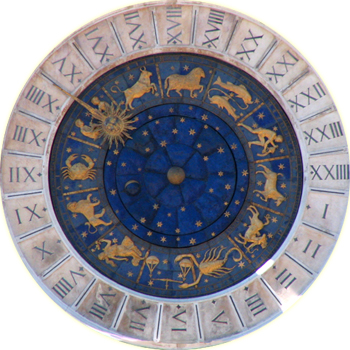 The astrological signs of the zodiac. |
|
Die Sterne zwingen uns zu nichts, sie verleiten uns auch zu nichts. Wenn wir sagen, dass ein weiser Mann über die Sterne herrscht, meinen wir, dass er Herr ist über die Kräfte, die in seinem Geist tätig |
 Sterngucker, Wandteppich aus Frankreich, ~15. Jht. Astrologie ist eine Beobachtungswissenschaft, die das Analogie-
Astrologie untersucht die Verbindung zwischen Makrokosmos und Mikrokosmos.
Die drei Weisen aus dem Morgenland, Kaspar, Melchior und Baltha-
Das Platonische Weltenjahr ("Das Große Jahr" oder "Weltjahr")
Als Folge der Präzessionsbewegung der Erdachse braucht die Sonne beinahe 26.000 Jahre, um rückläufig durch alle zwölf Zeichen des Tierkreises wieder zu ihrem Ausgangspunkt (Frühlingspunkt) zurückzugelangen. Den Weg durch alle zwölf Sternbilder bezeichnet man als das "Große Sonnen-Jahr". In jedem der zwölf Tierkreissektoren mit Millionen von Sternen verweilt die Sonne jeweils 2160 Jahre. Die Anzahl der Erdentage, die ein (kleines) Jahr ausmachen, beträgt 365,25 Tage. Es dauert 70-71 Erdenjahre, um die Sonne um 1° des Erdkreises rückwärts zu bewegen. 72 Jahre x 360 Grade des Erdkreises = 25.920 Jahre. |

Kennzeichen des Wassermannzeitalters
|
| |||||||||||||||||||||||||||||||||||||||||||
|
|
|
|
|
|
| Referenzen: ► Gelöschter Artikel Eine neue Epoche – Pluto in Steinbock, präsentiert von der Zeitschrift Der Nordstern, Christina Pfingsten und Christa Wagner, Archiv, Januar / Februar 2008 |
|
| ||||||||||||||||||
| Tabellen (engl.) : ► Tables of Solar and Lunar Eclipses und 2013 Planetary Transits, präsentiert von skyscript.co.uk, 2013 |
| See also: ► Key dates and time track of the Aquarian Age • astrological trends in 2013 |
|
Historiker und Statistiker – wie beispielsweise Walter A. Shewhart und W. Edwards Deming – haben festgestellt:
|
|
|
| Quellen: ► Alexander Fraser Tytler (1747-1813) schottischer Historiker, in einem Brief an einen US-amerikanischen Freund, 23. Mai 1857 Urheberschaft auch zugeschrieben: Lord Thomas MacCauley und Henning Webb Prentis Jr. (1884-1959) Präsident der Armstrong Cork Company, 1943 und 1946, Zuerst erwähnt in Artikel Why Democracies Fail, präsentiert von der Zeitung "Daily Oklahoman", S. 12A, 9. Dezember 1951 ► Hintergrundinformationen von Loren Collins The Truth About Tytler – The Truth About Tytler, undatiert |
|
|
| Siehe auch: ► Gesetz 3:1 und ► Das eigentümliche 11:11-Phänomen |
|
| Referenz: de.Wikipedia-Eintrag ► Vaterunser |
| Reference: ► en:Wikipedia entry Lesser banishing ritual of the pentagram (LBRP) [*] Qabalistic Cross, sometimes repeated at the end of the LBRP. This is meant to construct an astral cross in the body of the magician, with points corresponding to Sephiroth on the Tree of Life. While constructing this cross, the magician vibrates Hebrew words from the last few lines of the Lord's Prayer (Thine is the kingdom, ...). |
Der englische Begriff für Tierkreis "Zodiak" kommt aus dem Hebräischen (Zodi oder Sodi). Er bedeutet "Pfad" oder "Weg".
Persönliche Bekenntnisse
Isaak Newtons entrüstete Antwort auf einen Berufskollegen, der sein astrologisches Engagement kritisierte.
Empfehlungen
Schlussfolgerung
Kepler meinte, sein Gesetz zur Errechnung der Planetenpositionen sei nicht so wichtig wie die Gesetze der astrologischen Harmonik.


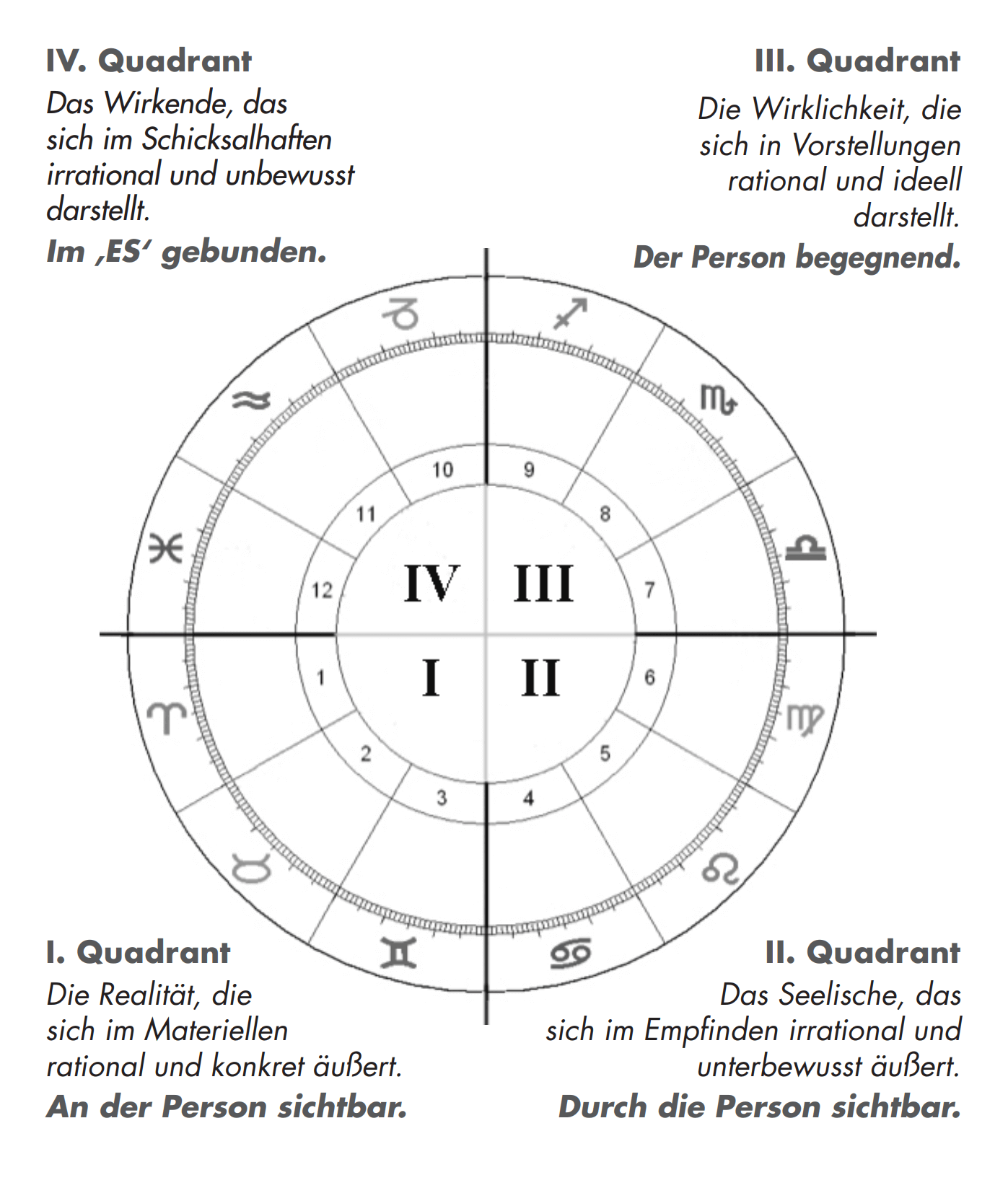
Die Astrologie ist, rein formal betrachtet, einer der großartigsten Versuche systematisch-konstruktiver Weltbetrachtung, die je vom menschlichen Geiste gewagt wurde.
|
Literaturzitate
Gedichte
Then a new "AGE" with a different sign of the zodiac is dawning and presiding.
Personal avowals

Future prospect
Insights
Planetary ruling
All that the intellect can conceive of comes from the stars.
Paracelsus [Philippus von Hohenheim] (1493-1541) Swiss Renaissance physician, botanist, alchemist, astrologer, general occultist, cited in: Franz Hartmann, M.D., The Life and the Doctrines of Paracelsus, chapter 8 "Alchemy and Astrology", S. 113, 1887, 1891, KSheeta Books, Theosophical Publishing House, John W. Lovell Company, New York, 3rd edition 1910, reprint 3. November 2016
|
Squares and oppositions: difficult aspects
Decline of communism – predicted by Western astrology
Ecstasy and addiction
Implications of Hydra and Scorpio Scorpio is a sign of intense desire; and the hydra's many heads can mean the many desires of the uncivilized human heart. Left to grow in the darkness, they can become poisonous, and begin to destroy others. But they cannot be dealt with by repression. They must be understood, held up to the light, respected as part of oneself. And although vanquished, it is a good idea to remember that one immortal head. For Scorpio, all human beings carry within them the seeds of good and evil. Evil is not an abstract thing, or somebody else's fault; it is in everyone. Human bru- tality cannot be blamed on society, but ultimately only on oneself. […] the deepest meaning of Scorpio's myth: ► come to terms with the hydra in yourself, and you redeem the world.
Liz Greene (*1946) US American-British astrologer, depth psychologist, combining Jungian archetypes with astrology, author, Astrology for Lovers, section The Scorpio Myth, Weiser Books, September 1990, reprint February 2009
|

|
Literary quotes
The better known line from Julius Caesar is, "The fault, dear Brutus, is not in our stars, but in ourselves."
Poems
Quotes by Carl Gustav Jung on Astrology: 20 Carl Jung Quotes On Astrology

Beginning of the reevaluations and restructuring of systems and disciplines, see: D. Hawkins, Truth vs. Falsehood. How to Tell the Difference, S. 4, 2005
Exactly on that date D. Hawkins held a public lecture. He calibrated the LoC of mankind in the morning (result: 205) and before the end of the lecture after a common prayer (result: 207).

Presenting the Four Kingdoms model by Michael Beckwith and the Calibrated Scale of Human Consciousness by Dr. David R. Hawkins
Exploring the combination of Rev. Michael Beckwith's model of the Four Kingdoms of Consciousness and Dr. David R. Hawkins' calibrated map of human consciousness
| ||||||||||||||||||||||||
| |||||||||||||||||||||||||||||||||||||||||||||||||||||||||||||||||||||
| Source: ► Deleted video Everything Is About To Change After Watching This...! (2018-2019), produced by Gaia TV, presented by thirdphaseofmoon, YouTube film, minute ~24:00, 33:29 minutes duration, posted 18. November 2018 |
| ||||||||||||||||||||||||
|
| ||||||||||||||||||||||||||||||||||||||||||
| Note on the Pluto return cycle in the United States empire The United States will have its first Pluto return during the period April 2018 to February 2022, in the house of money (resources). It will happen while Pluto is in Capricon. Pluto in the U.S. chart resides in the house of money and resources. ► April 2018 is correlated to Boston Tea Party, 16. December 1773.12 ► February 2022 is correlated to the issuing of the United States Declaration of Independence, 4. July 1776. ► A soulgroup consisting of the American revolutionaries has returned to incite a second American-Internation Revolution. |
| See also: ► Who returned as who? Reincarnation matches – Walter Semkiw ∞ Kevin Ryerson |
|
|
|
|
|
|
| Sources and references: ► Article by Michele Finey, 2008-2024 – Pluto in Capricorn. The end of the world as we know it?, presented in Wellspring Astrolog, written 2006, sold September 2007, edition 2008 ► Article Pluto in Capricorn: the good, the bad, even worse and redemption, presented by The Merriman Market Analyst, November 2007, reprint 31. January 2008 ► Video presentation by Simon Vorster, US American evolutionary astrologer, Astrology | Pluto in Capricorn – A Deeper Look, presented by Raising Vibrations, YouTube film, 26:32 minutes duration, posted 24. July 2016 |
| See also: ► 2012 ► Historical cycle of civilizations (Tytler cycle) – rise and decline of empires ► Project 2050 – Remote Viewing Forecast experiment (1978) |
| Siehe auch: ► Pluto im Zeichen Steinbock – Aufstieg und Niedergang von Weltreichen – Strukturelle Umwandlung |
|
The planet Venus represents the heart (heart chakra) and an alchemical Conjunction.
|
|
|
|
|
|
|
May 1518-1526 – Two major revolutions with far reaching implications
|
|
December 1631-1639
|
|
June 1761-1769
|
|
December 1874-1882
|
|
June 2004-2012 (era between Venus cycles)
|
| Source: ► Article Research into Venus Transits of the Past, presented by mydailyastrology.net, 3. June 2012 |
| Reference: en.Wikipedia entry ► Transit of Venus |
|
| See also: ► Moment of 'completed' (harmonized) paradigm shift |
| Siehe auch: ► Skizzierung des Wassermannzeitalters |
|
Historian W. Edwards Deming and statistician Walter A. Shewhart along with other colleagues have noted that ► from the beginning of history
► the average duration of the world's civilizations has been about 200 years
► followed by a period of transitioning time of 50 years.
The gestation cycle of a human being takes 260 [20x13] days.
|
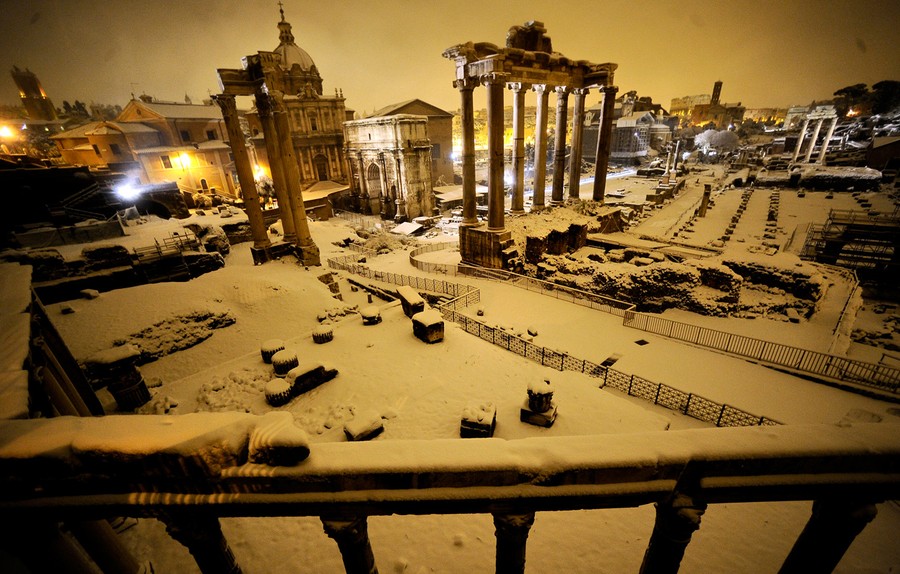 Ancient Colosseum during heavy snowfalls, Rome, 4. February 2012 In his 1976 essay The Fate of Empires and Search for Survival15 British scholar commanding general during World War I John Bagot Glubb (1897-1986) observed the life cycle of empires. They last for about 250 years covering the span of rougly 10 generations. Empires develop during six consecutive phases: 1. Pioneers 2. Conquests 3. Commerce 4. Affluence 5. Intellect 6. Decadence16
|
|
Civilizations progress through sequential evolutionary cycles lasting roundabout 250 years.
| Reference: en.Wikipedia entry ► Pluto (planet) |
| Written reference: Article The US has reached the last stage before collapse, presented by the German-owned American business, celebrity and technology news website Business Insider, James Traub, 24. December 2017 |
| See also: ► Pluto in Capricorn – Rise and fall of empires – Structural transformation within cycle of 248 years |
Inherently weak democracies will last for 200-300 years on average.
| Every few hundred years throughout Western history, a sharp transformation has occurred. In a matter of decades, society altogether re- arranges itself – its world view, its basic values, its social and political structures, its arts, its key institutions. Fifty years later a new world exists. And the people born into that world cannot even imagine the world in which their grandparents lived and into which their own pa- rents were born. Peter Drucker (1909-2005) US American management consultant, self-described "social ecologist", educator, writer, The New Society of Organizations, presented by the bimonthly management magazine Harvard Business Review (HBR), published by Harvard Business Publishing, September-October issue 1992 The American populace will have to decide whether to side with wisdom or sophomoric absurdity and fulfill Socrates' dire prediction that democracies eventually fall due to giving equal voice and votes to the nonintegrous and ignorant segment of the population (cal. 465). Historians point out that the average duration of a democracy is thus only usually two-to-three hundred years before the self-centered voters deplete the country of its own resources and political erudition. ⚡ Dr. David R. Hawkins, Truth vs. Falsehood. How to Tell the Difference, chapter 10 "America", S. 147, 2005 We now live in a nation where ➤ doctors destroy health, ➤ lawyers destroy justice, ➤ universities destroy knowledge, ➤ governments destroy freedom, ➤ the press destroys information, ➤ religion destroys morals, and ➤ our banks destroy the economy. Chris Hedges (*1956) US American journalist, war correspondent, specializing in American and Middle Eastern politics and societies, author, Pulitzer Prize laureate, The World as it is: Dispatches on the Myth of Human Progress, recited in: Video presentation "Calling All Rebels" – Chris Hedges Berkely CA talk in 2010 at KPFA fundraiser first 20min only, presented by the listener-funded Californian radio station KPFA, Pacifica Community Radio Lecture/Fundraiser, Berkeley, California 2010, YouTube film, minute 12:11, 31:10 minutes duration, posted 12. April 2012 |
|
| Originator/s: ► Alexander Fraser Tytler (1747-1813) Scottish historian ► Also attributed to Lord Thomas MacCauley, letter to an American friend, 23. May 1857 ► Also attributed to Henning Webb Prentis, Jr., President of the Armstrong Cork Company, 1943 and 1946 |
| First source: ► Article Why Democracies Fail, presented by the newspaper The Daily Oklahoman, S. 12A, 9. December 1951 |
| Reference: ► Article by Loren Collins, The Truth About Tytler, undated |
| Further reference: ► Article When will the American Empire collapse?, presented by the stories outlet Medium, mighty monk, 2. January 2019 |
| Literature: ► Peter Turchin (*1957) Russian-American scientist, specializing in cultural evolution and cliodynamics, mathematical modeling and statistical analysis of the dynamics of historical societies, Historical Dynamics. Why States Rise and Fall – Secular Cycles and Cliodynamics, Princeton University Press, 29. September 2003 ► George Friedman (*1949) Hungarian-born US American geopolitical forecaster, and strategist on international affairs, founder and chairman of the online publication "Geopolitical Futures", author, The Storm Before the Calm. America's Discord, the Coming Crisis of the 2020s, and the Triumph Beyond, Doubleday, 25. February 2020 |
| |||||||||||||||||||||||||||||||||||||
| Source: ► Video interview with Jay Weidner SacredMysteries.com (*1953) US American film producer, scholar on hermetic traditions, author, Jay Weidner on Season of the Apocalypse, presented by the US American Conscious Media Network via Gaia TV, host Regina Meredith, recorded 18. December 2012, minute 42:13, 59:38 minutes duration, posted December 2012 Subject to fee |
| References: ► Video interview with Neil Howe The Fourth Turning Explained – Boomers vs Millennials Generational Crisis, presented by the YouTube platform Real Vision Finance, host Grant Williams, YouTube film, 34:23 minutes duration, posted 30. October 2019 ► Video presentation The Fourth Turning – How this crisis was predicted 30 years ago, presented by Roger James Hamilton's Enterpreneur TV, episode 01, YouTube film, 10:04 minutes duration, posted 7. June 2020 |
| Book: ► Neil Howe (*1951) US American historian, sociologist, economist, demographer, William Strauss, US American statistician, author, The Fourth Turning, Broadway Books, reprint September 1997 Since the landing of the pilgrims major events in the North American history occur in 60-80-year cycles repeating every four generations. The fourth turning is occuring in the period 2008-2012-2024 (Pluto in Capricorn). The gestation cycle of a human being takes 260 [20x13] days. A world civilization cycle takes 250-260 years. Statisticians have noted that from the beginning of history the average duration of the world's civilizations has been about 200 years followed by a period of transitioning time of 50 years. The duration of 250 years coincides with the Pluto cycle takes 248 years. |
|
|
| Source: ► Steffan Vanel (1951-2021) US American astrologer |
| See also: ► The Age of Aquarius • astrological trends in 2013 and ► Paradigm shift and ► Principle 3:1 |
| Siehe auch: ► System-Reset ausgelöst durch den weltweiten Shutdown anlässlich der Covid-19-Plandemie 2020 |
|
| |||||||||||||||||||||||||||||||||||||||||||||||||||||||||||||||||||||||||||||||||||||||||||||||||||||||
| Note : ► Tecumseh's Curse [Curse of Tippecanoe] |
| See also: ► ⚡ List of sex addicted US American presidents ► Psychopathological rating (via PPIPCL-R) of US American presidents ► List of US presidents and their religious affiliations |
| ||||||||||||||||||||||||||||||
|
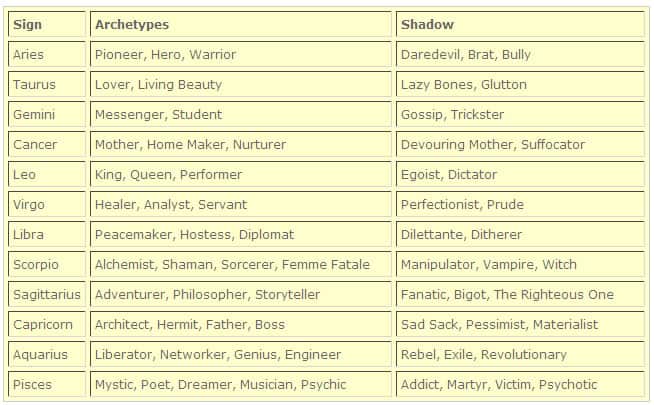 |
| Source: ► Deleted article Sun signs, archetypes and their shadow, presented by the publication Archetypestable, April 2011 |
|
| Source: ► Article Heal Yourself With the Tissue Salts, presented by the publication EzineArticles.com, Elizabeth Hendry, 25. April 2009 |
| Literature: ► George W. Carey (1845-1924) US American physician, author on the 'chemistry of life', Inez Eudora Perry, Relation Of The Mineral Salts Of The Body To The Signs Of The Zodiac, republished by Health Research Books, 1966 |
| |||||||||||||||||||||||||||||||||||||||||||||||||||||||||||||||||||||
| Source: ► Carl Gustav Jung, Psychology and Alchemy – Collected Works of C. G. Jung, Volume 12, chapter "Quartering of the philosophy", S. 229, 1944, Routledge, London, 2nd edition 1968 |
| See also: ► Alchemy and ► Philosophy |
| Calcination ⇒ | Dissolution ⇒ | Separation ⇒ | Conjunction ⇒ | Fermentation ⇒ | Distillation ⇒ | Coagulation ⇒ |
| Source: ► Overview I. Correspondences of Chemical References, presented by the publication Alchemylab.com, undated |
| |||||||||||||||||||||||||||||||||||||||||||||||||||||||||||||||||||||
| See also: ► Chakra system and ► Alchemy |
| ||||||||||||||||||||||||||||||||||||||||||||||||||||||
| See also: ► Map of Consciousness by ⚡ Dr. David R. Hawkins ► Signs of the zodiac – Alchemical process ► Chakras – Alchemical process ► Emotions and ► Hermes Trismegistos |
| |||||||||||||||||||||||||||||||||||||||||||||||||||||||||||||||||||||||
| Source: ► Overview II. Correspondences of Astrology and Numerology, presented by the publication Alchemylab.com, undated |
| See also: ► Numerology and ► Hermes Trismegistos – Alchemy |
| |||||||||||||||||||||||||||||||||||||||||||||||||||||||||||||||||||||||||||||||||||||||||||||||||||||||||||||||
| Sources featuring Quora contributor Connor Duke, presented via the Californian question-and-answer website Quora ► Answer What is the analogy drawn between virtues and skills within Aristotelian ethics?, 24. November 2018 ► Answer What are the contrasts and similarities between virtue and vice?, 4. November 2018 |
| Reference: en.Wikipedia entry ► Astrology and the classical elements |
| See also: Four temperaments correlated with elements, qualities, beings and solids |
| |||||||||||||||||||||||||||||||||||||||||||
| |||||||||||||||||||||||||||||||||||
The Biblical lore is the "greatest story ever told". It is the story of the Zodiac disguised as theology. The Bible displays astrotheology, the worship of God's heaven, God's Sun (God's Son) in the heavens.18
Christianity and other religions are a derivative of three distinct God types of the Old Testament [2 Kings 23:3-5]:
The Zodiac contains the "ZOO" and "dia", meaning the "Animal Wheel". This wheel is DIVIDED and CUT (a-part) in twelve sections known as houses, namely the 12 houses within God's abode (universe). Each section or house comprises 30º degrees. Hence, there are two significant ages in Jesus' life: At age 12 he appeared in the temple, at age 30 he started his teaching mission.
| ||||||||||||||||
| See also: ► Signs of the zodiac – Alchemical process |
|
| ||||||||||||||||||||||||||||||||||||
| Source: ► Edward Moor (1771-1848) British soldier, Indologist, author, The Hindu Pantheon, dating back 5500-6000 year, 4000 years BC, London, 1810 |
| ||||||||||||||||
| The correlations between the Ancient Egyptians and the Christian culture are continual. |
| Source: ► Video presentation by Jordan Maxwell (1940-2022) US American esoteric scholar, radio host, lecturer, author, Gnosis – Ancient Belief Systems – Jordan Maxwell, presented by Lightworks Audio & Video, IRES International Research and Educational Society, 1991, YouTube film, starting minute 11:15, 51:07 minutes duration, posted 19. June 2014 Biblical lore is based on astrotheology, the worship of Sun (God's Son) in the heavens. Christianity and other religions are a derivative of 1) a stellar cult, 2) a lunar (Hebrew) cult, 3) a solar cult (derived from Egyptian Mystery Schools). |
| Cited literature: ► Edward Moor (1771-1848) British soldier, Indologist, author, The Hindu Pantheon, dating back 5500-6000 year, 4000 years BC, London, 1810 ► John L. Benson, The Book of Beginnings. A Study in GenIsis. Adult Student Bible Study Guide, Accent Publications, revised edition 1983 ► Abelard Reuchlin, US American essayist on the origin of Christianity, True Authorship of the New Testament (Arius Calpurnius Piso Pen Name Flavius Josephus), Abelard Reuchlin Foundation, 2nd printing edition 1986 ► Neil Forsyth, The Old Enemy. Satan and the Combat Myth Google Books version, 1944, Princeton University Press, 1. December 1989 |
| See also: ► Cult of Saturn – pillar of patriarchy – Jordan Maxwell ► Bible and ► Occult research and ► Symbolism and ► Religion and ► World religions |
| |||||||||||||||||||||||||||
| References: ► Tables of Solar and Lunar Eclipses and 2013 Planetary Transits |
Links zum Thema Astrologie / AstrologyLiteratur
Jedes Tierkreiszeichen wird mit Mythen, Märchen und Legenden veranschaulicht.
Literature (engl.)
Externe Weblinks
External web links (engl.)
Quote "Kepler's views on astrology were ambivalent."
Assimilating Pluto in Sagittarius – Assimilating Saturn Opposite Neptune Saturn/Neptune opposition (2004 -2007)
Selfsabotaging stances of the star signs:
Audio- und Videolinks
Diskutanten: Dr. Michael Schmidt-Salomon (Atheist, Philosoph) Prof. Dr. Ulrich Walter (Ex-Astronaut, Physiker) Jürgen Fliege (Pfarrer) Hella von Sinnen (Entertainerin) Mauretania Gregor (Astrologin) Uwe Ochsenknecht (Schauspieler) Sylvie Kollin (Kartenlegerin)
3100 v. Chr. begann das Kali Yuga, das Zeitalter des Streits, das dia-bolische Zeitalter der Spaltung, in dem Seelen aus der Getrenntheit, inkarnier-
Sturm und Drang-Zeit zu Beginn der Luft-Epoche in 2021. 2021-2024: Viele Institutionen der alten Erd-Epoche kollabieren. Das Luft-Element
Die Aussichten der zwölf Tierkreiszeichen in der Luftepoche von 2021-2150
Audio and video links (engl.)
Biblical lore is based on astrotheology, the worship of Sun (God's Son) in the heavens. Christianity and other religions are a derivative of
On Obama and the Mayan Long Count, the magnetosphere time acceleration
December 21st 2020 is a Very Important Date Astrologically as it marks the end of a long era and the rebirth into a New Earth.
Audio and video links (engl.) – Santos Bonacci
Audio and video links (engl.) – Manly Palmer Hall
Audio and video links (engl.) – Jessica MurrayAudios and videos on astrology featuring Jessica Murray (*1951) US American astrologer, psychologist, Jungian analyst, linguist, cultural commentor, writer
Documentaries and movies
|
Englisch Wiki
Hawkins
2 Artikel Wendezeit – die Menschheit im Bewusstseinswandel, präsentiert von der Webseite Yoga Akademie Austria, undatiert / Videovortrag von Armin Risi armin-risi.ch (*1962) Schweizer Veda-Philosoph, Dichter, Sachbuchautor, Armin Risi: mein wichtigster Vortrag, vorgestellt auf der Friedenskonferenz Erding bei München, veranstaltet von Erich und Tina Hambach, Wintersonnenwende 2019, YouTube Film, 47:35 Minuten Dauer, eingestellt 20. Dezember 2020 ⇑
3 Ernst Ott (*1950) schweizerisch-deutscher Astrologe, Pluto im Steinbock 2008-2024. Neues Leben blüht aus den Ruinen, Astronova, 2. September 2008 ⇑
4 Moment of 'completed' (harmonized) paradigm shift ⇑
5 Umorientierung aus dem Drückermodus in den Anziehungsmodus ⇑
6 Article Minority rules: Scientists discover tipping point for the spread of ideas, presented by the science, research and technology news aggregator Phys.org, 25. July 2011 ⇑
7 John Bagot Glubb (1897-1986) britischer General im 1. Weltkrieg, Gelehrter, Autor, Aufsatz The Fate of Empires and Search for Survival, Blackwood, Edinburgh, 1978 ⇑
8 Pluto in Capricorn – Rise and Fall of Empires – Structural transformation ⇑
9 Truth vs. Falsehood. How to Tell the Difference, S. 398, 2005 ⇑
10 Truth vs. Falsehood. How to Tell the Difference, S. 398, 2005 ⇑
11 Truth vs. Falsehood. How to Tell the Difference, S. 398, 2005 ⇑
12 The reason for the revolutionary war in America was not the tax on tea. In 1750 Benjamin Franklin told the British how well the colonies were thriving because they were issuing their own currency. The British King shut down their public banks and ordered the American colonists to only use British currency. Within months the colonists suffered depression, hence the revolution was brewing. Source: Audio podcast interview The REAL Reason for the Revolutionary War – Bringing It Back Now, presented by The Rob Kall Bottom Up Radio Show, host Rob Kall, US American radio host, aired 25. July 2013 ⇑
13 Current trend – Shifting from PUSH mode to PULL mode ⇑
14 Article Minority rules: Scientists discover tipping point for the spread of ideas, presented by the science, research and technology news aggregator Phys.org, 25. July 2011 ⇑
15 Essay The Fate of Empires and Search for Survival, PDF, William Blackwood & Sons, Edinburgh, Scotland, 1976-1977 ⇑
16 Features of decadence: bread and circus: undisciplined, overextended military
complex, conspicuous display of wealth, massive disparity between rich and poor, desire to live of a bloated state, debasement of currency, obsession with sex) ⇑
17 Chart The U.S. Scorpio Rising Horoscope ⇑
18 Jordan Maxwell, Matrix of Power: How the World Has Been Controlled by Powerful People without Your Knowledge, S. 50, The Book Tree, Escondido, California, 2000 ⇑
19 Jordan Maxwell, Paul Tice, Alan Snow, That Old-Time Religion, S. 25, 2000 ⇑
20 Jordan Maxwell, Paul Tice, Alan Snow, That Old-Time Religion, S. 31, 2000 ⇑
21 Jordan Maxwell, Paul Tice, Alan Snow, That Old-Time Religion, S. 35, 2000 ⇑
22 "They [the Israelites] had the boys circumcised because they found out that a man would get aroused quicker, without the foreskin than he would with the foreskin. [...] The [ancient] Egyptians did the same thing, preparing boys for a little sex worship." Jordan Maxwell (1940-2022) US American esoteric scholar, radio host, lecturer, author, Matrix of Power. How the World Has Been Controlled by Powerful People, Book Tree, S. 50, 1. May 2000 ⇑
23 Video by Eric Clopper, Sex & Circumcision: An American Love Story by Eric Clopper, performed at Sanders Theatre, Harvard University, 1. May 2018, YouTube film, 2:10:50 duration, posted 19. July 2018 ⇑
24 Deleted article Revolution & Revelation. The Uranus-Pluto Square 2012-2015, Nick Anthony Fiorenza, 2012 ⇑