SpiritualWiki

Wiki / Evolution

Wiki-Menu:  

2·2012


Hawkins-Menu:


EvolutionEntwicklung


Die Genesis aufgedruckt auf ein Ei


X

Evolution

Spiral Dynamics Bewusstseinsskala nach Ken Wilber Terminologie / Farbzuteilung


Spiral Dynamics Bewusstseinsskala
Vom Ersten Tier zum Zweiten Tier
Vom Mangelbewusstsein zum Ganzheitsbewusstsein

StufeFarbeAktiviert
seit
Stadium der EntwicklungFokus / OrientierungBeschreibung
Selbstausdruck
Tier
Bewusstsein
 ERSTESTIERKontext der GetrenntheitÜberlebenDualitätBedürftigkeit
Knappheit
       
1.Infrarot
bisher
Beige
100.000 v.Chr.Säugling
______________
Überleben
Jäger und Sammler
Archaisch-instinktiv unwillkürlich-reflexhafte ÜberlebensorientierungDer Selbstausdruck dient den zwingenden körperlichen Überlebensbedürfnissen des instinkt-gesteuerten Homo sapiens.1. Tier
Mangel
2.Magenta
bisher
Violett
50.000 v.Chr.Kleinkind vor dem
3. Lebensjahr
______________
Familie Sippe
Stammeskultur
Magisch-animistisch tribalistische GruppenordnungDer zwingend vorausgesetzte Selbstausdruck ist, sich den Ältestenführern und Sitten zu unterwerfen.1. Tier
Mangel
3.Rot7000 v.Chr.Trotzphase
3.-4. Lebensjahr
______________
Ich-Bestimmung
Feudalismus
EGOZENTRISCH egoistisch-ausbeutend, Zwangsmacht Götter-GewaltherrschaftImpulsiv-reaktiver Selbstausdruck zur Erfüllung eigener Wünsche
jenseits von Schuld- und Schamgefühl
1. Tier
Mangel
4.Bernstein
bisher
Blau
3000 v.Chr.Kindheit bis zur Pubertät
______________
Gesellschaftliche Ordnung
Früher Nationalstaat
SOZIOZENTRISCH mythisch-absolutistisch zweckbestimmt-autoritäre Gehorsamkeits-OrdnungSelbstaufopfernder zweckbestimmter Gehorsam gegenüber rechtmäßigen Autoritätsfiguren zugunsten von Vergünstigungen1. Tier
Mangel
5.Orange1000 n.Chr.
(600 n.Chr. nach Graves / Calhoun)
Junger Erwachsener
18.-25. Lebensjahr
______________
Sozialverträglichkeit
Nationalstaat
WELTZENTRISCH rational leistungsorientiert wissenschaftlich-strategischKalkulierter Selbstausdruck, um Ziele zu erreichen, ohne den Zorn einflussreicher Menschen auf sich zu ziehen1. Tier
Mangel
6.Gruen1850 n.Chr.
nachdrücklich seit Beginn des 20. Jhts.
Erwachsener bis zur Midlife-Crisis
______________
Gesellschaftlicher Konstruktivismus
Korporatismus
WELTZENTRISCH pluralistisch-komplex relativistisch-personalistischgemeinschaftsorientiert-ebenbürtig-partnerschaftlichHintanstellung von Eigeninteressen zugunsten von Akzeptanz und Gruppenharmonie1. Tier
Mangel
       
 ZWEITESTIERMonumentaler
Sinnsprung
Kontext der InterverbundenheitNichtlineareSeinserfahrung
       
7.Blaugrün
bisher
Gelb
1950Erwachsener
ab 40. Lebensjahr
______________
Integrale Wahrnehmung
Kokreation
WELTZENTRISCH bis KOSMOZENTRISCH systemisch-integrativAchtsamer Selbstausdruck, der anderen möglichst nicht schadet und nicht nur dem eigenen Leben dient.2. Tier
Sein

2010: 4-5%
der Menschheit
>2020-30: 11%
der Menschheit
8.Türkis1970Reifer Erwachsener
Nur vereinzelt anzutreffen
______________
Integral-holonisches Bewusstsein
Kohärenz
KOSMOZENTRISCH
Holistisch
Verzicht auf Eigeninteressen zugunsten eines interverbundenen globalen Systems, das gerade erst entsteht2. Tier
Sein

2010: 0,4-0,5%
der Menschheit


Quellen (engl.):


  1. Egozentrische EntwicklungsebenePotenz 1
    Präkonventionell – (Unter BW 200 nach der Skala des Bewusstseins von David Hawkins) →
  2. Soziozentrische EntwicklungsebenePotenz 10
    Konventionell – (BW 200+) →
    Prärational – (BW 200-399) →
  3. Weltzentrische EntwicklungsebenePotenz 100
    Rational – (BW 400-440) →
    Postkonventionell – (BW 440-499+)
  4. Kosmo/Spirit/SELBSTzentrische EntwicklungsebenePotenz 1000
    Transrational – (BW 500+)

Die zwei Versionen der Darwinschen Evolutionstheorie – David Loye


Zwei Auslegungen der Evolutionstheorie von Charles Darwin:
Reduzierter Darwinismus
Dominanz / Unterwerfung (1859) ⇔
Wiederentdeckter Darwinismus – Partnerschaft (2007)
1
. . .

Darwins Evolutionstheorie weist aus, dass Entwicklung wesentlich beflusst wird durch
moralisches Empfinden, ethische Einfühlung und (Herzens)Bildung,
NICHT durch Konkurrenzverhalten.
Diese Erkenntnis blieb fast 150 Jahre lang verborgen.


LebensbereichBreite StraßeSchmaler Weg
Enge Pforte
TheorieReduzierter Darwinismus (1859)
"Überleben des Stärkeren"
Syndrom des Egoistischen Gens
Wiederentdeckter Darwinismus (2007)
Liebende Evolutionstheorie
Gegenseitige Fürsorge
VerhaltensmodusDominierend
KONKURRENZDENKEN
Partnerschaftlich
ZUSAMMENARBEIT
AntriebMotivationInspiration
AlterPubertät
Jugendliche Selbstbezogenheit
Erwachsenenreife
Gereifte Gegenseitigkeit
GemeinschaftMindermenschliche, menschenverachtende
und menschenunwürdige Evolution
Entfaltete menschliche Evolution
PolitikBearbeitung (Unterwerfung) und AnpassungDurchsetzung und Streben
WirtschaftEgoismus und Gier,
die wenigen Privilegierten Wohlstand ermöglicht
verbunden mit einem menschenfreundlichen
Trickle-down-Effekt zugunsten der Vielen
Fürsorglichkeit und miteinander Teilen,
um die Schätze der Erde an viele weiterzureichen
WissenschaftReduktionistische Theorie und Geschichte
orientiert an der weit zurückliegenden Vergangenheit
Expansionistische Theorie und Geschichte
orientiert an Gegenwart und Zukunft
Ethik"Überleben des Stärkeren" und
Egoismus über alles
als Antriebskraft der menschlichen Evolution
Liebe und moralisches Einfühlen
als Antriebskraft der menschlichen Evolution
SpiritualitätGrausamer Gott meines
Volks gegen andere Völker

ein Gott, dem man gehorchen muss
Gnädiger Gott aller Menschen beziehungsweise
Guter Wille von Oben und von Unten
zugunsten eines Lebens in Fülle für alle


Hinweis: Der Paläontologe Stephen J. Gould †, der zeitlebens ein Vertreter der herkömmlichen Auslegung von Darwins Evolutionstheorie war, wies wiederholt darauf hin, dass die Weltanschauung des Faschismus (Nazismus) mit dem darwinistischen Denkmodell des Überleben des Stärkeren einhergeht.


  • Die wichtigste Frage, die ein Mensch sich im Leben stellen kann, lautet: Ist das Universum ein freundlicher Ort oder nicht? Albert Einstein [BW 499] (1879-1955) deutschstämmiger US-amerikanischer-schweizer theoretischer Physiker, Entwickler der Allgemeinen Relativitätstheorie, Physik-Nobelpreisträger


  • [Claude] Bernard (1813–1878) französischer Physiologe hat Recht. Der Keim ist nichts, doch der Nährboden alles. Reuevolles Bekenntnis auf dem Sterbebett Louis Pasteurs (1822–1895) französicher Begründer der Mikrobiologie
    Wider seine eigenen wiederholten Forschungsergebnisse, welche die spontane Lebensentstehung unter sterilen mikrobiologischen Laborbedingungen bestätigten, hatte Pasteur zeitlebens die sozialdarwinistische reduktionistische Auslegung der Evolutionstheorie Darwins vertreten. Zwischen 1860-1880 ging die wissenschaftliche Debatte darum, ob ‘Selbstentstehung’ [spontane Lebensemergenz] möglich sei oder nicht. Pasteur hatte Bernards Feldthese des Nährbodens erfolgreich unterdrückt.2


Siehe auch Referenzen:
Die Umkehr des Denkmodells Jemande ⇔ Niemande
Ich-orientiertes Bankwesen ⇔ Du-Wir-orientiertes soziales Bankwesen nach Prof. M. Yunus

Zitate zum Thema Wachstum und Evolution / Growth and evolution

Zitate allgemein

  • In den äußersten Zuständen des Schwankens bin ich niemals ein Atheist in dem Sinne gewesen, dass ich die Existenz eines Gottes geleugnet hätte. Charles Darwin [BW 450/460] (1809-1882) britischer Naturforscher, Entwickler der biologischen Evolutionstheorie


  • Die Evolution der Menschheit wird durch Gewalt charakterisiert, etwas das Erich Fromm "bösartige Aggression" nannte. Es ist grundsätzlich anders als die Art von Aggression, die man in der Natur sieht: Überleben, Beschaffung von Nahrung oder sexueller Wettbewerb. […] Diese bösartige Aggression bedeutet nach Fromms Verständnis auch eine Art unstillbare Gier, die Tendenz, immer mehr haben zu wollen, mehr Macht, mehr Geld, mehr Besitz, mehr Territorium. Das ist charakteristisch für die menschliche Geschichte. Stanislav Grof, M.D., Ph.D. (*1931) tschechisch-US-amerikanischer Psychiater, Psychotherapeut, Medizinphilosoph, Mitbegründer der transpersonalen Psychologie, Die Welt ist perfekt, Interview mit Kareem van Gennip, Transpersonale Perspektiven, Vol. 4/98, Logos-Verlag-Berlin, Juli 1998


  • - Wir können die Unlenksamkeit des Bösen anerkennen und dennoch nach Würde streben.
    - Ohne Verklärung können wir verstehen, dass es immer Krieg geben wird, und dennoch für den Frieden arbeiten.
    Das können wir tun – denn das ist die Geschichte des menschlichen Fortschritts, das ist die Hoffnung für alle Welt, und in diesem Augenblick der Herausforderung muss das hier auf der Erde unsere Arbeit sein. Barack Obama (*1961) 44. US-Präsident, zit. in: Obamas Rede in Oslo, Friedensnobelpreisverleihung, Oslo, Norwegen, Der Tagesspiegel online, 10. Dezember 2009

Zitate (engl.) allgemein

  • Everyone has chosen his own level of consciousness, yet nobody could have done otherwise at any given point in time. We can only get "there" from "here." Every leap has to have a platform to originate from. Pain exists to promote evolution; its cumulative effect finally forces us in a new direction, although the mechanism may be very slow. How many times is it necessary to hit bottom before a lesson is learned? Perhaps thousands, which may account for the sheer quantity of human suffering, so vast as to be incomprehensible. Slowly, by inches, does civilization advance. David R. Hawkins, MD, PhD, Power vs. Force, S. 127


  • It is of little benefit to be personally self-critical or think that one 'should' be farther along the road than they are. Spiritual evolution is irregular and at times often seems sporadic and at other times stationary. Realize that guilt is a narcissistic indulgence. There may be long, dry periods where seemingly nothing is progressing. This is a deception; a 'long, dry period' is what is happening as though it were a test of resolve. These periods can be traversed by transcending the spiritual ego's wish to seek gain via 'progress.' Frustration itself is therefore a sign of trying to control that which is not really controllable. Dr. David R. Hawkins, Reality, Spirituality and Modern Man, chapter 19 "Practicum", S. 351-352


  • The coming of a spiritual age must be preceded by the appearance of an increasing number of individuals who are no longer satisfied with the normal intellectual, vital and physical existence of man, but perceive that a greater evolution is the real goal of humanity and attempt to effect it in themselves, to lead others to it, and to make it the recognized goal of the human race. In proportion as they succeed and to the degree to which they carry this evolution, the yet unrealized potentiality which they represent will become an actual possibility of the future. Sri Aurobindo [LoC 605] (1872-1950) Indian British mystic, philosopher, politician, The Human Cycle, Ideal of Human Unity, War and Self Determination, Lotus Press, 2nd edition, 1. January 1970


  • Our DNA has been evolving 100 times more rapidly in the last 5000 years due to a natural galactic process, which is also creating climate change throughout our entire solar system. If the prophecies are correct, psychic abilities and powers such as telekinesis, levitation, spiritual healing and telepathy may soon become as common as breathing. David Wilcock (*1973) US American consciousness researcher, author, lecturer, filmmaker, Event Horizon 2012


(↓)

Chicken and egg paradox

  • Which came first, the chicken or the egg? Both exist together as an Intelligent Design, written into the very energy that makes up our Universe.
    The chicken and the egg exist together as a template in the field both of which are ready to spontaneously emerge when the time is right. [...] DNA is the product of the field. David Wilcock (*1973) US American consciousness researcher, author, lecturer, filmmaker, 2012 Event Horizon: Prophecies and Science of a Golden Age, part 3 of 4, YouTube film, 51:11 minutes duration, posted 2. May 2010


  • Darwinism is not synonymous with evolution. Darwin's [continuous] theory [on 1000s and 1000s of gene mutations] does not explain all the data concerning evolution. [...] Darwin's theory cannot even begin to give an understanding on how an eye (organ) can develop. [...] There don't have to be actual mutations. In fact quantum physics insists that all mutations are [...] quantum possibilities for consciousness to choose from. Only when consciousness is ready to choose, when there is a whole Gestalt of consciousness giving us the organ then only the organ becomes manifest. Audio interview with Amit Goswami, Ph.D. (*1936) Indian American nuclear physicist, quantum cosmologist, Science and the Rediscovery of God, Program #3272, web radio station New Dimensions, host Craig Hamilton, minute 45:15+, 12. August 2008


  • Sow a thought and you reap an action;
    sow an act and you reap a habit;
    sow a habit and you reap a character;
    sow a character and you reap a destiny.
    Ralph Waldo Emerson [LoC 485] (1803-1882) US American philosopher, poet, lecturer, essayist, Unitarian


(↓)

See:

Nicholas Matzke, Darwin Correspondence Project, One thing Darwin didn't say: the source for a misquotation

  • It is not the strongest of the species that survives, nor the most intelligent that survives. It is the one that is the most adaptable to change. Misattributed to George Darwin [LoC 460] (1809-1882) English naturalist, author of the biological theory of evolution, paraphrase of Darwin in the writings of  (1921-2010) US American management sociologist, Louisiana State University


  • I know of no more encouraging fact than the unquestionable ability of man to elevate his life by conscious endeavor. Henry David Thoreau (1817-1862) US American author, poet, historian, philosopher, leading transcendentalist, abolitionist, naturalist, tax resister, development critic, surveyor


  • Cooperation beats submission. gloriasteinem.com (*1934) leading US American feminist of the new women's movement, visionary and political activist, writer, journalist


  • You can blow out a candle
    but you can't blow out a fire
    once the flame begin to catch
    the wind will blow it higher.
    Peter Gabriel (*1950) British singer, musician, songwriter


  • It took an incredible decadence for man to accept materialistic theories such as those of Lamarck and Darwin! All traces of confidence in divine harmony and of legitimate pride must have vanished in our lack of reaction against a science that lowers us to the brute state of so-called prehistoric man or anthropoid. Those who steer humanity toward such stultification are madmen or criminals. R. A. Schwaller de Lubicz (1887-1961) born in Alsace-Lorraine, researcher of the art and architecture of the Temple of Luxor in Egypt, Egyptian Miracle


  • Nature does not do our human either "this" or "that". [...] Nature is very conservative with things that work well and very radical when things don't work. When there is crisis it's an opportunity for change. Dr. Elisabet Sahtouris, Greek-American post-Darwinian creationist evolutionary biologist, pastist/futurist, business and UN consultant, Creating a Global Family with the Help of Biology, World Wisdom Council, sponsored by Goi Peace Foundation, Theme Creating a New Civilization, Tokyo, November 2005, Google video, minutes 9:43-10:11, 24:48 minutes duration, posted 17. February 2008


(↓)

Newton and Descartes offered the first scientific mechanical creation story.

British scholar and chief political economy and demography Thomas Malthus [LoC 204] (1766-1834) coined the idea 'We are doomed to an endless struggle in scarcity', a rationale for the East India Company to steal from the world.
The original theory of evolution goes back to Darwin's grandfather. Darwin who had adopted the Malthusian model of scarcity had observed competition and cooperation in nature. In his evolutionary theory he had to subvert the cooperation part as it didn't fit the scarcity theory.

  • The universal struggle for life must be thoroughly ingrained in the mind or the whole economy of nature with every fact in it will be dimly seen or misunderstood. It is the doctrine of Malthus applied with manifold force to the whole animal and vegetable kingdom. George Darwin [LoC 460] (1809-1882) English naturalist, author of the biological theory of evolution, The Origin of Species, quoted by Dr. Elisabet Sahtouris, Greek-American post-Darwinian creationist evolutionary biologist, pastist/futurist, former UN consultant, Creating a Global Family with the Help of Biology, World Wisdom Council, sponsored by Goi Peace Foundation, Theme Creating a New Civilization, Tokyo, November 2005, Google video, minute 6:52, beginning minute 5:08, 24:48 minutes duration, posted 17. February 2008


(↓)

Paradigm-shifting work:

Microbiologist Carl Woese and physicist Nigel Goldenfeld at the University of Illinois in Urbana-Champaign suggest that the evolutionary history may owe its development to the more creative dynamics of self-organizing systems.

  • Just suppose that Darwin's ideas were only a part of the story of evolution. Suppose that a process he never wrote about, and never even imagined, has been controlling the evolution of life throughout most of the Earth's history. It may sound preposterous, but this is exactly what microbiologist Carl Woese and physicist Nigel Goldenfeld, both at the University of Illinois at Urbana-Champaign, believe. Darwin's explanation of evolution, they argue, even in its sophisticated modern form, applies only to a recent phase of life on Earth. Horizontal and vertical: The Evolution of evolution, magazine New Scientist, issue 2744, Mark Buchanan, 26. January 2010


(↓)

Evolution in the universes


  • Many different reality frames or dimensions containing sentinent (conscious) entities exist and are interacting according to their own rule sets.
    (I know because I have been there (via OBE as taught by Robert Monroe) and seen how it works. It is logical and the results fit the data.)
    All entities in our larger reality system have the purpose of lowering their entropy by growing up, by becoming more spiritual, by becoming love – i.e. by eliminating fear and ego.
    They still have the same job [growing up] than we do. The system exists. It has to lower its entropy. That's how it evolves. There are only three states you can be in. You can be evolving, you can be static [standing still], or you can be de-evolving [dying]. […] You're either evolving or dying, because being in the middle is unstable. [...] Change happens. Everything changes. You're either evolving or you're dying. Video presentation by Thomas Campbell (*1944) US American physicist, consciousness researcher, sponsored by and at London School of Economics, filmed 22. February 2008, Physics, Metaphysics & the Consciousness Connection, part 9 of 18, YouTube film, minute 1:27, 9:00 minutes duration, posted 13. April 2008


  • Why does a consciousness system evolve? The second choice dying is a bad choice. So it evolves.
    How does it evolve? By lowering its entropy. It evolves by creating a lot of smaller units of consciousness that interact with their free will so that they can lower their entropy. Without free will you can't lower your entropy, because you cannot learn anything. It's all just a script you're following. Video presentation by Thomas Campbell (*1944) US American physicist, consciousness researcher,  sponsored by and at London School of Economics, filmed 22. February 2008, Physics, Metaphysics & the Consciousness Connection, part 9 of 18, YouTube film, minute 2:23, 9:00 minutes duration, posted 13. April 2008


Zitate (engl.) von Charles Darwin

  • Important as the struggle for existence has been and even still is, yet as far as the highest part of our nature is concerned there are other agencies more important. For the moral qualities are advanced either directly or indirectly much more through the efforts of habit, by our reasoning powers, by instruction, by religion, etc., than through natural selection. Charles Darwin [LoC 460] (1809-1882) English naturalist, author of the biological theory of evolution, The Descent of Man, and Selection in Relation to Sex, next to last page, 1871


(↓)

Cooperation superseding competition:

Men are a profoundly social and caring species.

(↓)

Altruism research:

This new science of altruism and the physiological underpinnings of compassion is finally catching up with Darwin’s observations nearly 130 years ago, that sympathy is [humanity's] strongest instinct. Dacher Keltner, US American professor of psychology, UC Berkeley, director of the Greater Good Science Center, author; cited in: ‘Survival of the Kindest’ – Sympathy is Strongest Human Instinct, 9. December 2009

  • For firstly, the social instincts lead an animal to take pleasure in the society of his fellows, to feel a certain amount of sympathy with them, and to perform various services for them. […] Such actions as the above appear to be the simple result of the greater strength of the social or maternal instincts than that of any other instinct or motive; for they are performed too instantaneously for reflection, or for pleasure or even misery might be felt. In a timid man, on the other hand, the instinct of self-preservation might be so strong, that he would be unable to force himself to run any such risk, perhaps not even for his own child. Charles Darwin [LoC 460] (1809-1882) English naturalist, author of the biological theory of evolution, The Descent of Man, and Selection in Relation to Sex, 1871


  • Sympathy [compassion] is our strongest [human] instinct. [Paraphrased.] Charles Darwin [LoC 460] (1809-1882) English naturalist, author of the biological theory of evolution

Englische Texte – English section on Evolution

The Rediscovery of Charles Darwin's distorted Evolutionary Theory

US American social psychologist and evolutionary systems scientist Dr. David Loye authored Darwin’s Lost Theory. Who We Really Are and Where We're Going, Benjamin Franklin Press, 2007.
Loye has researched four major works of Charles Darwin in a scrutinous manner:

  1. Origen of the Species
  2. Descent of Man
  3. The emotional life
  4. Notebooks (unpublished for 136 years)


Via the Word search function he did a simple screening of several terms in the e-version of Descent of Man, 1871 (475 fine print pages). Following highlights were found:

  1. The term Mind / brain was mentioned 200 times.
  2. The term Love was mentioned 95 times (are still in the book today).
    Love is only mentioned once in the official book index.
  3. The term Moral sensitivity was mentioned 92 times.
    Moral sensitivity is only mentioned 6 times in the official book index.
  4. The term Mutuality or Mutual aid i.e. Cooperation was mentioned 27 times.
  5. The term Competition was mentioned 12 times.
  6. The term Selfishness was mentioned 12 times.
    Darwin: Selfishness a is base principle, which accounts for the low morality of savages.
  7. The over exposed and ill applied term Survival of the fittest was only mentioned twice.


Loye concludes:

  • Darwin's evolutionary postulate:
    The prime motivator for human evolution is neither competition, nor natural selection, nor "survival of the fittest," as popularized but the human capacity for moral sense, ethical sensitivity, and education.
  • Darwin was pre-anticipating Abraham Maslow's humanistic psychology.
  • Darwin gave scientific grounding for Jesus' teaching and for modern brain research.
  • Darwin puts the evolutionary emphasis on sex and the flowering of love.
  • Prior to Sigmund Freud Darwin listed following evolutionary drives (see his Notebooks writings at age 28):
    1. Sexual instincts – Myotic sex = Two different sex organs in two beings - 1st billion years ago.
    2. Parental instinct – Family unit
    3. Social instinct – Group / community unit; development of reason and emotion.
In modern times brain scientists Paul D. MacLean † and Karl Pribram † as well as cell biologist Lynne Margoulis have arrived at the same findings.


Loye commenting the ongoing Darwin wars since the break of the new millenium:

  • Darwin was in favor of "progressive religion" and hated "regressive religion".
  • The arrogance of "science" and the stupidity of "regressive religion" are a hindrance to evolution.
    Neodarwinists stand both for "wrong" religion and "wrong" science.
    Sociobiologists Richard Dawkins, Daniel Bennett and Stephen Jay Gould did not study carefully what Darwin really wrote.


  • In a wide range of studies, social scientists are amassing a growing body of evidence to show we are evolving to become more compassionate and collaborative in our quest to survive and thrive. In contrast with "every man for himself" interpretations of Charles Darwin's theory of evolution by natural selection, Dacher Keltner US American professor of psychology, UCB, director of the Greater Good Science Center, author of Born to Be Good. The Science of a Meaningful Life, and his fellow social scientists are building the case that humans are successful as a species precisely because of our nurturing, altruistic and compassionate traits. Social scientists build case for 'survival of the kindest', presented by Media Relations UniversityofCalifornia.edu, Yasmin Anwar, 8. December 2009


  • In the Descent of Man Charles Darwin wrote only twice of "survival of the fittest" — but 95 times about love! 92 times about moral sensitivity. And 200 times about brain and mind. Suppression over 100 years of the real Darwin has led to the social, political, economic, scientific, educational, moral and spiritual mess we are in today. David Loye, Ph.D. (*1925) US American social psychologist, evolutionary systems scientist, partnership researcher, author, The Darwin Project


  • What’s now at stake in the battle for 21st century mind [...] On one hand are gathered those of us who, out of 100,000 years of yearning, generation after generation have worked to advance evolution – that is, to build the better world through the revolution of higher expectation.
    On the other hand are those of us who – blind captives of an antihuman paradigm and a counter-revolution of lower expectation – automatically, and tragically, have worked to check us in place or drive us backward.
    David Loye, Ph.D. (*1925) US American social psychologist, evolutionary systems scientist, partnership researcher, author of trilogy Darwin and the Battle for 21st Century Mind, Prologue, Revolution and Counter Revolution Book I of the trilogy


Sources:
- David Loye, Ph.D. (*1925) US American social psychologist, evolutionary systems scientist, partnership researcher, author, List of writings and Current books
- Audio interview David Loye, Ph.D. (*1925) US American social psychologist, evolutionary systems scientist, partnership researcher, author, Delving Into Evolution, presented by web radio station Women's Radio,
'Conversations with Riane Eisler' with leading edge thinkers, hosts Dr. Riane Eisler and Pat Lynch, 2008

Two versions of Darwin's Evolutionary Theory – David Loye


Two interpretations of Darwin's Evolutionary Theory
Reduced Darwinism (1859) ⇔ Rediscovered Darwinism (2007)
3
Competitive domination modeCooperative partnership mode
. . .

Darwin's theory of evolution outlined that the driving power of evolution is
NOT competition but moral sense, ethical sensitivity, and education.
This recognition remained hidden for nearly 150 years.


DomainLow groundHigh ground
Narrow Gate
Social TheoryReduced Darwinism (1859)
"Survival of the fittest"
Selfish genes syndrome
Rediscovered Darwinism (2007)
Loving Evolutionary Theory
Rising of the wisest
Mutual caring
Behavioral modeDomination system
COMPETITION
Partnership model
COOPERATION
DriveMotivationInspiration
AgePuberty
Adolescent Self-interest
Maturity
Mature Mutuality
Social LifeSubhuman, inhuman, and inhumane evolutionEvolved human evolution
PoliticsAdaptation and accommodationAssertion and aspiration
EconomicsSelfishness and greed
as the key to wealth for the privileged
including a noble trickle down to the many
Caring and sharing
to spread the wealth of Earth to the many
ScienceReductionist theory and story
oriented to the very deep past
Expansionist theory and story
oriented to today and the future
EthicsSurvival of the fittest and
Selfishness über alles
as the driver for human evolution
Love and moral sensitivity
as the driver of human evolution
SpiritualityFerocious God of
my people versus your people

a God that must be obeyed
Merciful God of all people or
Good Will from on high and below
favoring an abundant life for all


Note: Darwinian Paleontologist Stephen J. Gould † repeatedly noted that the mindset of fascism (nazisism) correlates with the survival of the fittest Darwinism.


  • The most important decision we make is whether we believe we live in a friendly or a hostile universe. Albert Einstein [LoC 499] (1879-1955) German-born US American theoretical physicist, developer of the theory of general relativity


  • Important as the struggle for existence has been and even still is, yet as far as the highest part of our nature is concerned there are other agencies more important. For the moral qualities are advanced either directly or indirectly much more through the efforts of habit, by our reasoning powers, by instruction, by religion, etc., than through natural selection. Charles Darwin


  • At present the most usual argument for the existence of an intelligent God is drawn from deep inward conviction and feelings which are experienced by most persons. [...]
    Formerly I was led by feelings such as those just referred to, (although I do not think that the religious sentiment was ever strongly developed in me), to the firm conviction of the existence of God, and of the immortality of the soul. [...] This argument would be a valid one, if all men of all races had the same inward conviction of the existence of one God; but we know this is very far from being the case. Therefore I cannot see that such inward convictions and feelings are of any weight as evidence of what really exists.
    Charles Darwin, Autobiography
    • Even though he was an agnostic, Darwin spoke of “an ennobling belief in God” as an important criterion in evolution. Interview with Dr. David Loye, Darwin’s lost theory of love, presented by Hologrambooks.com, 'Stray Thoughts', interviewer Frank DeMarco, 20. April 2009


  • The ideal of morality has no more dangerous rival than the ideal of supreme strength, of a life of maximum vigor, which has also been called the ideal of aesthetic greatness. That life is in truth the ultimate attainment of the barbarian, and unfortunately in these days of civilization’s withering it has won a great many adherents. In pursuance of this ideal man becomes a hybrid thing, a brute-spirit, whose cruel mentality exerts a horrible spell upon weaklings. Novalis (1772-1801) Georg Philipp Friedrich Freiherr von Hardenberg, German philosopher, author of early German Romanticism, cited in: The legacy of Friedrich Nietzsche, Roger Kimball The New Criterion, Volume 10, pg. 28, September 1991
    See Friedrich Nietzsche, German nihilist philosopher's quote: "Reality is that which has the combative vigor to assert itself."


  • The Darwinian story only goes to the adolescent part.
    Self-interest is good as long as it is contained by the self-interest of a community.
    Sustainability happens when species learn to feed each other instead of to fight each other.
    What we need now is glocalization.
    Together we can make it happen.

    Video presentation with Dr. Elisabet Sahtouris, post-Darwinian creationist evolutionary biologist, pastist/futurist, former UN consultant, After Darwin, 3 Parts, YouTube film, posted 24. April 2007


Inspired and deducted by Dr. David Loye, trilogy Darwin and the Battle for 21st Century Mind,
Prologue, Revolution and Counter Revolution, book I of the trilogy


Evolutionary theories: Darwinism – reduced and rediscovered
Dr. David Loye, trilogy Darwin and the Battle for 21st Century Mind,
Revolution and Counter Revolution (forthcoming), book I of the trilogy, epilogue, last quote
Darwin's Evolutionary Theory
reviewed by
Dr. David Loye4
Reduced Darwinism
Domination – Competition (1859)
19-20th century human mindset
Rediscovered Darwinism
Partnership – Cooperation (2007)
21st century human mindset
SociallySubhuman, inhuman, and inhumane evolutionFully human evolution
PoliticallyAdaptation and accommodationAssertion and aspiration
EconomicallySelfishness and greed as the key to wealth for the privilegedCaring and sharing to spread the global wealth
to the many
ScientificallyTruncated theory and story oriented to the deep past, applied spuriously to the presentFully human, action-animating theory and story oriented to today and the future
Moral drive of human evolutionSurvival of the fittest and selfishness über allesLove and moral sensitivity
SpirituallyOriginal sin, a ferocious God of my people versus your people who has to be obeyedNo God at all or original blessing, merciful God
of all people, good will from on high and below,
favoring an abundant life for all


- Video interview with Frans de Waal, Ph.D. (*1948) Dutch US American Candler professor of of psychology and primate behavior, director of the Living Links Center, Yerkes National Primate Research Center, Emory University, Atlanta, GA, biologist, ethologist, author, speaker, Social Darwinism and the lessons of evolution, clip 8, presented by Templeton Foundation, Templeton Book Forum, sponsored by Discover magazine, host Carl Zimmer, YouTube film, 5:16 minutes duration, posted 25. January 2010
Minute 0:38: Europeans are appalled by the extent of Social Darwinism [LoC 210] in USA (as promoted by philosopher, sociologist Herbert Spencer (1820-1903))
Minute 4:19: Competition and self-interest, fear and greed, implemented into societal structures; failed example: convicted CEO of the Enron Corporation Jeffrey Keith Skilling (*1953), who was a fan of R. Dawkins' "The Selfish Gene"

See also:
- Women's leadership superseding men's leadership
- Kosmologie

Leadership ⇔ Management – High groundLow ground


Dichotomy: The high ground ⇔ low ground
The narrow gate ⇔ the broad gate

. . .


DomainLeadershipManagement
BasicsFundamental – High GroundSecondary – Low Ground
BasicsFeminine Energy – right brainedMasculine Energy – left brained
Focus onEthical longterm solutions
Integrity
Practical shortterm problem solving
Quick & dirty
Outlook onJoint venturesCompetition (based on enemy image)
CharacteristicsFulfillment, team spirit, big picture,
creativity, connectivity, support
High achievements, discipline,
performances, order,
competition, aggressiveness
BehaviorRaising essential questionsKnowing all the answers already
BehaviorUnderstanding change as
a constant emerging phenomenon
Trying to control
and orchestrating changes
GuidanceVision: 'How can I support you?'Order: 'This is what we will do!'
StyleAcknowledging the efforts madeInsisting on company rules and regulations
LanguageJackal5 – HeadGiraffe – Heart
CooperationBrainstorming within a team settingBlaming and/or punishing a scapegoat


* * *


DomainA leader is visionary.A manager is a boss.
AttitudeA leader does the things right.A manager does the right things.
BeingnessInspired, authentic,
original, holistic
Driven image oriented copy
interested in balance sheets
the classical good soldier
ContextChallenging the status quo – LongtermAccepting the status quo – Shortterm
Questions"What?" and "Who?",
scrutinizing with ''How come that?"
"How?" and "When?", possibly "Why?"
Focus onHuman beings – inspiring confidenceSystems and structures – relying on control
ActivityRenewal and developmentsAdministration and sustenance


Source: Partially inspired by Peter Drucker (1909-2005) US American writer, management consultant, self-described "social ecologist" and Warren Bennis (*1925) US American scholar, professor of business administration, organizational consultant, pioneer of contemporary leadership studies, author

Basic timeline of evolution on Earth

The basic timeline of evolution on Earth spans a period of 4.6 billion years.
See the (very approximate) dates:

  • 4 billion years of simple cells asexually selfprocreating (prokaryotes),
  • 3 billion years of photosynthesis,
  • 2 billion years of complex cells (eukaryotes) reproducing by nuclear division (mitosis),
  • 1 billion years of multicellular life, sexually procreating,
  • 600 million years of simple animals,
  • 570 million years of arthropods (ancestors of insects, arachnids and crustaceans)
  • 550 million years of complex animals,
  • 500 million years of fish and proto-amphibians,
  • 475 million years of land plants,
  • 400 million years of insects and seeds,
  • 360 million years of amphibians,
  • 300 million years of reptiles,
  • 200 million years of mammals,
  • 150 million years of birds,
  • 130 million years of flowers,
  • 65 million years since the non-avian dinosaurs died out,
  • 2.5 million years since the appearance of the genus Homo,
  • 200,000 years since humans started looking like they do today,
  • 25,000 years since Neanderthals died out.


en.Wikipedia Timeline of evolution

Analogous animal and human evolution – Bruce H. Lipton

Spiking the evolutionary lineage
Evolution repeats itself in self-similar fractal patterns.
Humanity is analogous to an animal or an organism. Each human acts like a cell within this organism.
StageAnimal evolutionLegendHuman evolutionAge
1.FishVertebrate levelFishing
Living near, on and off the water
Maricultural age
2.AmphibiansGilled stadiumFarming
Irrigation, watering the land
Agricultural age
3.ReptilesBig body mass, small brain
mechanical "killing machines"
in an extremely stable environment
Mechanization
Huge mechanized corporations
Industrial age
4.BirdsWilbur and Orville Wright;
Landing on the moon (1969)
Earth overview; change of perspective
Aviation
Instant communication
Internet
Communication age
5.MammalsThe meek shall inherit the earth.
Greens, environmentalists, cultural creatives
Nurturing and appreciation of lifeCommunity age
Caring economics


Source: Bruce H. Lipton Ph.D., Steve Bhaerman, Spontaneous Evolution. Our Positive Future (and a Way to Get There from Here),
Bruce Lipton: Audio Promotion, Hay House, 15. September 2009
See also: Information Age ⇒ Conceptual Age ⇒ Changing expressions of creativity – Daniel H. Pink


Ten turning points in cosmic evolution made human life possible


Human evolution – resulting from cosmic hazards

Newscientist.com found 10 "turning points" during the cosmic evolution that secure human existence.


#Time lineEmerging
Event
'
Legend
*ANY TIMEThe certainty of chance
[i.e. emergence]
Tiny changes at the beginning make big differences in the end. That's why human existence is perilously perched on a great pyramid of trivia.
1.13.75 billion years agoAvoiding the voidHuman life wouldn't exist if Earth's cosmic neighborhood had been just a bit less dense than average during the tumultuous moments after the supposed big bang.
2.13.75 billion years agoTipping the
antimatter balance
The cosmos is not a sea of bland radiation. The triumph of matter suggests that the laws of physics are biased.
3.4.6 billion years agoSparking up
planet Earth
What does it take to make a solar system? Hydrogen, helium, interstellar dust – and a spark to set it on fire.
4.4.5 billion years agoMars attacksWithout the colossal interplanetary collision human evolution might have turned out very differently.
5.3.9 billion years agoBlasting
the Earth
into life
The solar system's "late heavy bombardment" blasted planet Earth. It might also have delivered a water supply, and created nurseries for life.
6.2 billion years agoOne giant leap
for a single cell
A freak event created the ancestor of all multicellular life on Earth. Without this unconventional genesis, potential humans might never have become more than bacteria.
7.635 million years agoThe age of
heroic lichen
Early life had to ride an oxygen roller coaster – until humble symbioses of algae and fungus put an end to boom and bust.
8.65 million years agoKiller asteroid with
a silver lining
A 10-kilometer-wide rock ended the era of dinosaurs, and opened a window of opportunity for little animals called mammals.
9.6 million years agoBrains or brawn?When the going got tough in prehistoric East Africa, some of humanity's closest relatives went for bigger jaws, rather than bigger brains. Big mistake.
10.70,000
years ago
Inventing language,
the easy way
Fresh pastures meant a cosier life for early humans – they granted to learn to speak.


Source: Cosmic accidents: 10 lucky breaks for humanity, New Scientist, issue 2779, 25. September 2010

Changeover

The old
adolescent
self-serving
profit maximizing
exclusive
dominating
corrupted system
is declining.
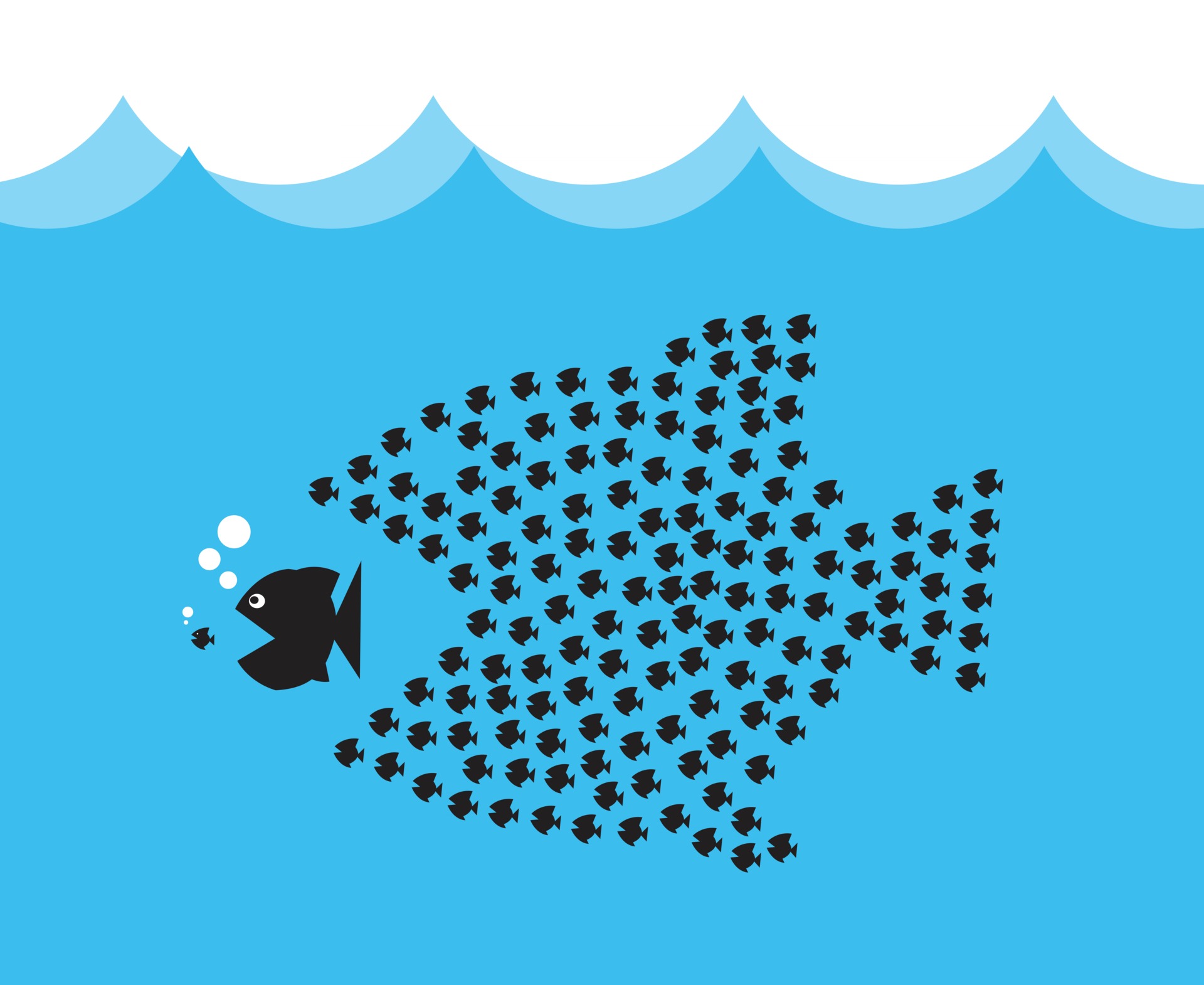
 

The new
holistic, regenerative
mature interlinked
caring, social
communitarian/dignitarian
inclusive system
is rising.


Bewusstseinswerte Evolution nach David Hawkins

Übersicht6


Links zum Thema Wachstum und Evolution / Growth and evolution

Literatur

Literatur (engl.)

Externe Weblinks

  • Wikipedia-Einträge Survival of the Fittest (Überleben der bestangepassten Individuen), Alfred Russel Wallace (1823-1913) britischer Naturalist, Forscher, Geograph, Anthropologe, Biologe (Unabhängig von Charles Darwin entwickelte Wallace Ideen zur Evolutionstheorie.)

Externe Weblinks (engl.)

  • Wikipedia entries Survival of the Fittest, Alfred Russel Wallace (1823-1913) British naturalist, explorer, geographer, anthropologist, biologist (Wallace independently proposed a theory of evolution due to natural selection that prompted Charles Darwin to publish his own theory.)

Audio- und Videolinks

Audio- und Videolinks (engl.)


Interne Links

Englisch

Hawkins


1 von David Loye/Riane Eisler; ebenfalls durch James E. Strick, Sparks of Life, The Harvard University Press, 2002

2 James E. Strick, Sparks of Life, The Harvard University Press, 2002

3 by David Loye and Riane Eisler; earlier by James E. Strick, Sparks of Life, The Harvard University Press in 2002

4 Evolution

5 Nonviolent Communication, Marshall Rosenberg

6 David R. Hawkins, Reality, Spirituality, and Modern Man, Kapitel 5, S. 90