Wiki / Kunst
Inhaltsverzeichnis: (verbergen)
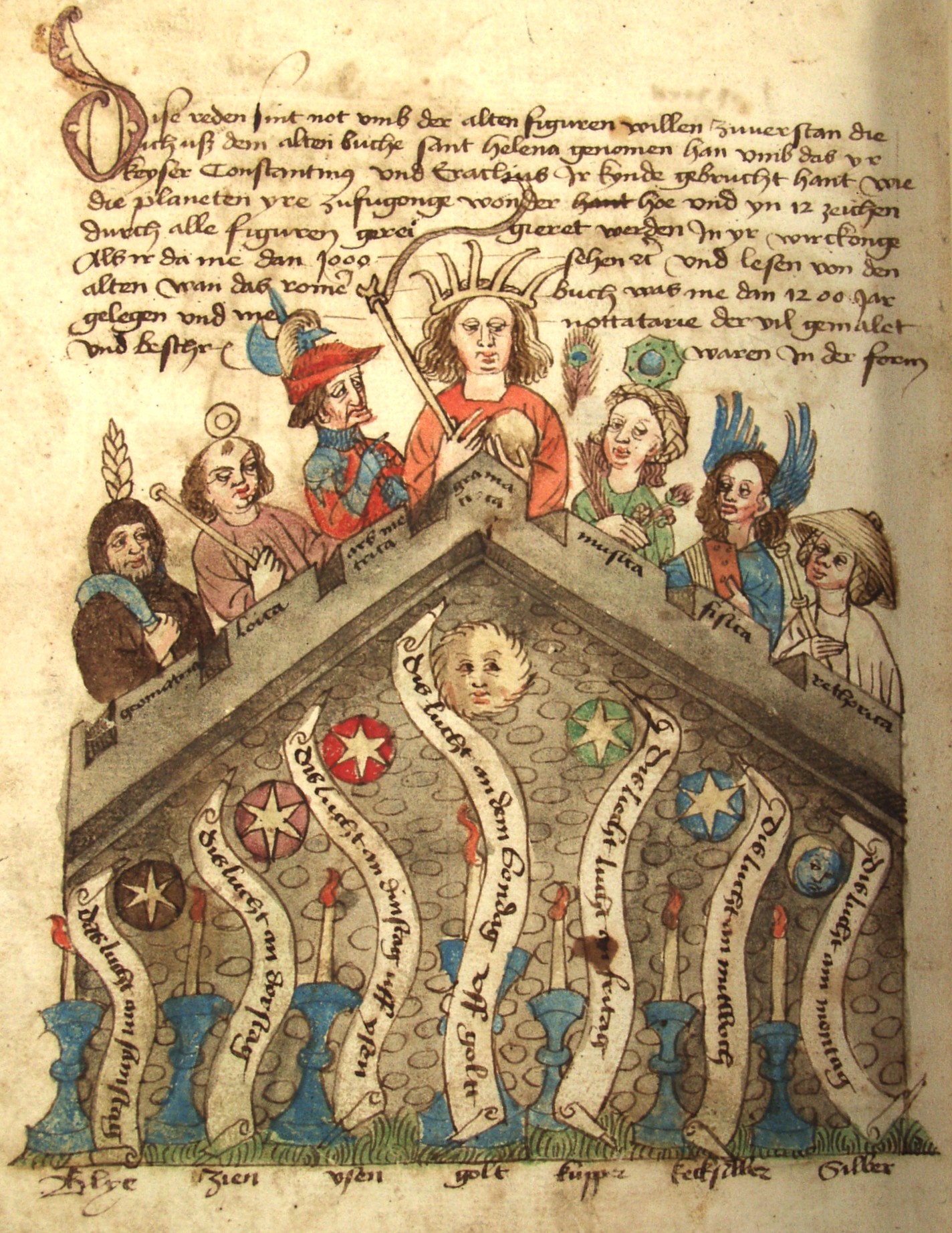
Die Sieben freien Künste mit ihren Attributen |
In der Kunst könnt Ihr nicht lügen.
Du wisse das und warte,
denn die Form muss eher zu schwingen beginnen als der Sinn,
jedoch muss der Sinn eher da sein als die Form.
Der Sinn bildet die Form.
Es singe in Dir, ehe Du singst, sonst sprichst Du nur.
Das echte Gedicht ist immer weiser als sein Dichter.
Nur singende Bücher verzaubern,
die klugen lassen unverwandelt.
Rainer Bertram
|
| |||||||||||||||||||||||||||||||||||||||
| |||||||||||||||||||||||||||||||||||||||||||||||||
| ||||||||||||||||||||||||||||||||||||||||||||||||
| Quelle (engl.): ► Videointerview mit Jan Irvin, US-amerikanischer Ethnomykologe, investigativer Forscher, politischer Beobachter, Gründer und Gastgeber der Webplattform Logos Media, Dozent, Blogger, Autor, Logic, Fallacies, and the Trivium. Tony Myers Interviews Jan Irvin, präsentiert von Logos Media, Gastgeber Tony Myers, Connecticut, Sendetermin 11. April 2011, YouTube Film, 1:33:03 Dauer, eingestellt 1. Dezember 2011 |
| Referenzartikel (engl.): ► Übersicht The Trivium method: (pertains to mind) – the elementary three, präsentiert von der Webplattform Logos Media, Gründer und Gastgeber Jan Irvin, US-amerikanischer investigativer Autor, 2009-2015 ► Blog article by Joe Dubs, The Seven Liberal Arts, 26. March 2015 |
| Inspiriert durch: ► Lance Secretan (*1939) englischer Wirtschaftsvisionär, Führungsexperte, Unternehmensberater, Theoretiker der Teaminspiration, Dozent, Autor |
| Siehe auch: ► Fragen und ► Human Design System und ► Philosophische Dreiheit – Grammatik, Logik, Rhetorik |
| See also: ► Four-stage composition of ancient Egyptian temples – Model of mystery schools |
Persönliche Bekenntnisse
Schlussfolgerungen
|
Literaturzitate
Personal avowals

Recommendations

Calls to action
Future prospects
Conclusion
Insights
|

|
Literary quotes
Along the Path to Enlightenment. 365 Reflections from David R. Hawkins, edited by Scott Jeffrey, Reflection of March 18th, January 2011
|
| |||||||||||||||||||||||||||||||||||||||||||||||
|
| |||||||||||||||||||||||||||||||||||||||||||||||||
| |||||||||||||||||||||||||||||||||||||||||||||||||
|
| Source: ► Video interview with Jan Irvin, US American independent researcher, blogger, host of Gnostic Media Podcast, lecturer, author, Logic, Fallacies, and the Trivium. Tony Myers Interviews Jan Irvin, filmed and presented by the platform Logos Media, formerly Gnostic Media, host Tony Myers, Connecticut, 11. April 2011, YouTube film, 1:33:03 duration, posted 1. December 2011 |
| Written references: ► Overview The Trivium method: (pertains to mind) – the elementary three, presented by the platform Logos Media, founder and host Jan Irvin, US American independent researcher, blogger, lecturer, author, 2009-2015 ► Blog article by Joe Dubs, The Seven Liberal Arts, 26. March 2015 |
| See also: ► Questions and ► HDS Type and ► Philosophie ► Philosophical trinity – Grammar, Logic, Rhetoric ► [*]Four-stage composition of ancient Egyptian temples – Model of mystery schools |
|
Uplifting, beautiful Art
Undefined art
Ugly, desecrating art
| Source: ► BBC TV documentary Why Beauty Matters, presented by the British TV station BBC TWO, Roger Scruton (*1944) conservative English philosopher, writer, aired 28. November 2009 – Why Beauty Matters (2009), Vimeo film, 58:59 minutes duration, posted 2013 |
|
|

|
|
|
|
Spiritual wisdom along with emotional maturity requires that the viewer, the listener, the reader, the recipient
not only is willing to test the message, the writing, the art, the music, but also the messenger.
| Sources: ► Article Grandpa Picasso: Terribly Famous, Not Terribly Nice, presented by the US American daily newspaper The New York Times, Alan Riding, 24. November 2001 ► Article 1 A dark side painted by Picasso's women, presented by the centre-left British online newspaper The Independent, Siobhan Hegarty, 21. October 2007 ► Article 2 How Picasso who called all women goddesses or doormats drove his lovers to despair and even suicide with his cruelty and betrayal, presented by the British conservative, middle-market daily tabloid newspaper Mail Online, Annabel Venning, 7. March 2012 ► Q&A 3 Did Pablo Picasso paint the weeping woman for his lover, Dora Maar, because of her depression?, presented by the Californian question-and-answer website Quora, Aman Bhagat, 1.1k views · 4 upvotes, 4. November 2014 ► Article 4 How Picasso Bled the Women in His Life for Art, presented by the Paris-based quarterly English language literary magazine The Paris Review, Cody Delistraty, 9. November 2017 |
| Books: ► 5 Arianna Stassinopoulos Huffington (*1950) Greek-American syndicated columnist, founder of the news website Huffington Post, ex-wife of former Republican congressman Michael Huffington, conservative (until mid-1990s), liberal author (late 1990s), Picasso. Creator and Destroyer, Simon & Schuster, 1st edition June 1988 ► Norman Mailer (1923-2007) US American film maker, actor, political candidate, journalist, essayist, playwright, novelist, Portrait of Picasso as a Young Man, Grand Central Publishing, October 1995, Warner Books, edited edition 1st December 1996 ☛ Archived book review Tough Guys Don't Paint, presented by the US American daily newspaper The New York Times, Michael Kimmelman, 15. October 1995 ► 6 Marina Picasso (*1950), Picasso's granddaughter, Picasso. My Grandfather, Chatto Windus, 1st edition 2001 |
| Orther references: ► Article Salinger: "Recluse" with an ugly history of women. How we’ve all found a convenient way of avoiding the truth about his troubled past, presented by the US American news and opinion website Salon, Mikki Halpin, 2. September 2010 "Picasso painted compelling portraits of women he had abused. Roman Polanski assaulted a young woman and made taut, thoughtful films. J.D. Salinger went to church suppers and hooked up with actresses." ► Article What We Lose When We Give Awards to Men Like Casey Affleck, presented by the worldwide women's lifestyle magazine of French origin Elle, Sady Doyle, 27. February 2017 Continued adoration of abusive rich and famous men like Mel Gibson, Woody Allen, Roman Polanski, and Casey Affleck tells female victims their suffering is less important than the abuser's "right" to be celebrated/awarded. ► Q&A contribution Was Pablo Picasso a sociopath?, presented on the Californian question-and-answer website Quora, Elfriede Ammann, 1.2k views · 3 upvotes, 28. October 2018 |
| See also: ► Four sides model on communication – Schulz von Thun ► Psychopathically obsessed director Alfred Hitchcock |
Newcomer actress Tippi Hedren (*1930) had a leading role in the movies The Birds (1963) and Marnie (1964), directed by Alfred Hitchcock (1899-1980). It took Hedren fifty years to find public closure with the most powerful film mogul, her former genius director, known as the "master of suspense".

In 2012 Tippi Hedren confessed: "He [Hitchcock] wanted to control my life [suck me dry and look out through my eyes]."
Later she added: "He ruined my career, but couldn't ruin my life."
Attesting "unusual genius" to Hitchcock, Hedren characterized him as "evil, and deviant, almost to the point of dangerous, because of the effect that he could have on people that were totally unsuspecting."
In her 2016 memoir Hedren disclosed that Hitchcock's crew knew all along that the perfec-
tionist director planned to expose his unexperienced new leading woman to trained drunk
scavenger birds – instead of mechanical birds, as she was led to believe from start.
Tippi Hedren's "worst week of her life" was five days of preplanned hell. Live birds being thrown at her non-stop – until she suffered a shock-trauma, a nervous shutdown, followed
by horrible nightmares and black outs. When Hedren's doctor ordered a week of rest under medical supervision for his patient, Hitchcock refused until he confronted the director, "Are you trying to kill her?" Leading man Rod Taylor (1930-2015) in The Birds commented later on the relentless attack on his co-star, "It had all the marks of a ritual stoning."
Within the movie scene of Hitchcock's days sexual harassment and stalking by influential men on trophy women was considered normal. And it still is, despite meanwhile existing harassment laws. Hedren was the object of Hitchcock's frightening dark sexual obsession of her. She, who stated, "I wasn’t the first actress who left angry, in an unpleasant situation" was not the only beautiful young actress who was controlled and humiliated by Alfred Hitchcock. Without naming names Hedren shared that two Hitchcock actresses got pregnant to step out of their contract, one changed her name to circumvent her vengeful director to ruin with her career. Hedren's female colleagues
have remained silent on the issue of alpha male Hitchcock "owning", controlling and/or stalking them.
The exception to the rule is Joan Fontaine (1917-2013). The young Fontaine recalled of Hitchcock's direction of her in the movie Rebecca in 1940: "He wanted total control over me."
|
In 2012 Tippi Hedren confessed on her experience in 1963-1964: "I dealt with it by becoming a master of getting out of the room so that I would't have to deal with him [Hitchcock] alone. There was NO ONE I could go to."
The sadistic, powerful man Hitchcock was surrounded by sycophants who all knew about his continued abuses, yet complied with them.
Tippi Hedren disclosed on Hitchcock's dark unknown side some 50 years later via the British television film The Girl, produced by BBC/HBO in 2012. She resumed: "I don't feel revengeful in the slightest. I've done this on behalf of all those women who may find themselves in the same kind of position I found myself in, who believe themselves to be helpless under the control of a domineering man who is seeking to take advantage of them. I want them to watch the film, to take courage from it and have the strength to say: 'I will not acquiesce to whatever you want me to do, even if you are my boss. You do not have the right to make demands on me, certainly not demands of that nature.'

The British-American actress Sienna Miller, who played the part of Tippi Hedren, on the abusive monster Alfred Hitchcock:
"And then you go back and you revisit a lot of his work and then you realize that all the signs were there. But all I
knew about him that he was very funny and very talented."
| YouTube video interviews featuring Tippi Hedren (*1930) US American actress, animal rights activist, former fashion model ► Tippi Hedren In Conversation on Alfred Hitchcock, presented by the British Film Institute (BFI) In Conversation, host Beryl Vertue, recorded August 2012, minute 8:12, 16:27 minutes duration, posted 30. October 2012 ► Tippi Hedren: Hitchcock Ruined My Career, presented by the Internet-based video streaming network HuffPost Live, YouTube film, 3:09 minutes duration, posted 7. December 2012 ► Tippi Hedren: Alfred Hitchcock Assaulted Me After I Refused To Sleep With Him, presented by Inside Edition, 1:43 minutes duration, posted 2. November 2016 |
| YouTube video interviews with Sienna Miller (*1981) British-American actress, model, and fashion designer, YouTube film ► Sienna Miller plays Tippi Hedren in HBO's 'The Girl' October 2012, presented by the US American broadcasting corporation ABC News, host Peter Travers, movie critic, 9:19 minutes duration, posted 19. October 2012 ► Sienna Miller Is HBO's 'The Girl' , presented by the US American not-for-profit news agency Associated Press (AP), 2:56 minutes duration, posted 17. October 2012 ► Video interview with Gwyneth Hughes, British documentary director, screenwriter and Julian Jarrold (*1960) English film and television director, Gwyneth Hughes (scriptwriter) and Julian Jarrold (director) on The Girl, presented by the "TV Preview" "The Girl", YouTube film, 19:48 minutes duration, posted 3. September 2012 |
| Biographies/Memoir: ► Donald Spoto (1941-2023) US American theologian, biographer, The Dark Side Of Genius. The Life Of Alfred Hitchcock, Da Capo Press, Centennial edition 30. August 1999 ► Peter Ackroyd (*1949) British novellist, biographer, Alfred Hitchcock, Chatto & Windus, 2. April 2015 ► Tippi Hedren (*1930) US American actress, animal rights activist, former fashion model, Tippi. A Memoir, William Morrow, 1. November 2016 |
| ► Videodokumentation über Tippi Hedren (*1930) US-amerikanische Schauspielerin, Hollywood Star Tippi Hedren blickt auf ihr Leben und die Dreharbeiten zu Hitchcocks Die Vögel zurück, YouTube Film, 51:21 Minuten Dauer, eingestellt 3. März 2023 Originaltitel: Tippi Hedren und die wilden Tiere, © Medea Film, Marita Neher, 2021 |
|
|
| Media references: ► Video Gretchen Carlson Sues Roger Ailes for Sexual Harassment, presented by GMA, program New This Morning, 6:41 minutes duration, posted 7. July 2016 ► Video interview with Stephen Battaglio, US American journalist, Fox News ends Ailes era with apology and $20 million for Gretchen Carlson, presented by the US American daily evening television news program PBS NewsHour, host Judy Woodruff, 6:35 minutes duration, posted 6. September 2016 ► Video documentary presented by the US American broadcasting corporation ABC News, television newsmagazine broadcast 20/20, YouTube film, posted 19. November 2016 ➤ Gretchen Carlson's Sexual Harassment Claims Against Roger Ailes: Part 1, 7:54 minutes duration ➤ Gretchen Carlson Recalls First Alleged Sexual Harassment Encounter: Part 2, 7:37 minutes duration ► Video interview WITW TOYOTA SOLUTIONS STUDIO 2017: Gretchen Carlson, presented by Toyota Solutions Studio, Women in the World, New York City, YouTube film, 7:43 minutes duration, posted 6. April 2017 ► Video presentation by Gretchen Carlson (*1966) US Television commentator, news anchor, author, Gretchen Carlson forced arbitration speech, YouTube film, 4:22 minute duration, 19. April 2017 ► Video TV dialogue CNN New Day Chris Cuomo How Gretchen Carlson brought down Roger Ailes & Bill O'Reilly, presented by the US American TV channel Live CNN, YouTube film, 12:45 minutes duration, posted 20. April 2017 |
| Video interviews featuring activist Gretchen Carlson (*1966) US Television commentator, news anchor, author ► Gretchen Carlson Talks About Sexual Harassment in the Workplace, presented by the multinational US American business magazine Fortune, YouTube film, 20:21 minute duration, posted 17. May 2017 ► Interview With Gretchen Carlson, presented by the Book TV, program "After Words", produced by the US American cable television network C-SPAN, host Sally Quinn (*1941) US American author, journalist, 58:12 minutes duration, posted 11. October 2017 Harrasser protection – Carlson: "Why do we protect the harrasser(s)?" Minute 3:42 Crucial role of enablers – Carlson: "Enablers are a huge part of this problem and also a huge part of this solution." Minute 5:24 Institutional silencing of women – Carlson: "Over 90% of sexual harrassment cases end up in settlements. That means the woman pretty much never works in her chosen career ever again, and she can never talk about it, she is gagged." Arbitration clauses in employment contracts: "[The female victim gets silenced and removed] and the predator, in many cases, is left to work in the same position, in which he was harrassing you." Minute 8:43ff Enculturated shaming of women – Carlson: "Women are still labeled troublemakers. We're still labeled "You just can’t take a joke." We're still labeled the B-word. We're still not believed. And the best is that we bring all these cases forward because we want to be famous." Minute 27:37 ► Gretchen Carlson: Sexual harassment 'an epidemic', presented by the US American TV channel CNN edition, host Christine Amanpour (*1958) British-Iranian television host, journalist, 11:40 minutes duration, posted 9. January 2018 |
| Book: ► Gretchen Carlson (*1966) US Television commentator, news anchor, author, Be Fierce. Stop Harassment and Take Your Power Back, Center Street, Kindle edition, 17. October 2017 ☛ Book review Kick Against the Pricks, presented by the US American semi-monthly magazine The New York Review of Books, Laura Kipnis, 21. December 2017 |
|
| Child abusing Hollywood idols: ► Blog article Hollywood Sex Abuse is a Century Old, Charlie Chaplin Raped Kids and He's Hailed As a Hero, presented by the publication The Free Thought Project, Matt Agorist, 28. October 2017 Actress Schneider sodomized contrary to script – by Bertolucci and Brando: ► Article Last Tango in Paris: Why the rape scene involving Maria Schneider is only generating an outcry now, presented by the centre-left British online newspaper The Independent, Elahe Izadi, 5. December 2016 |
| Statistics: US study examining the 100 top-grossing films – status 2015 Female characters accounted for less than a third of speaking roles. Female roles were more than three times as likely to be sexualised or involve nudity.9 Article Women Less Than One Third of Speaking Roles in Top Films, New Study Finds – Again. And less than a third of top 100 films featured women as a lead, presented by The Wrap, Debbie Emery, 6. September 2016 |
| Book: ► Julie Berebitsky, Ph.D. (*1962) US American professor of history and women's and gender studies, Sewanee University, author, Sex and the Office. A History of Gender, Power, and Desire, Yale University Press, Society and the Sexes in the Modern World, 3. April 2012 |
| References: en.Wikipedia entries ► Harvey Weinstein sexual abuse allegations and ► Enabling |
| See also: ► Bystander effect – withheld intervention due to diffusion of responsibility ► Culture degrading and women debasing BDSM – 50 Shades of Grey ► Workplace bullying ► Three different types of men and nine forms of manhood ► Transforming rankist rape culture into digntiarian consent culture ► Abusive artist Pablo Picasso ► Quotes from Trauma and Recovery – Judith Herman ► Quotes about and by (recovering) mind controlled slaves ► Control and ► Humiliation |
Links zum Thema Kunst / ArtLiteratur
Literature (engl.)
See website: artandphysics.com
Externe Weblinks
Weblinks zum Thema Kunstwerke – QuoraExternal web links (engl.)
Audio and video links (engl.)
Linkless media offering
Audio and video links (engl.) – Thomas SheridanAudios and videos featuring Thomas Sheridan (*1964) Irish alternative artist, musician, independent researcher, broadcaster, public speaker, author
| ||||||||||||||||||||||||||||||
Hawkins
1 Françoise Gilot and Picasso met in 1943. She was aged 21, he 61. They had two children together during their unmarried relationship for 10 years. ⇑
2 Ingrid Bergmann called Alfred Hitchcock "an adorable genius", who taught her to "Fake it!" ⇑
3 Doris Day on her former director Hitchcock: "He was just Mr. Hitchcock, wonderful, a great director and a good friend. I loved working with him." (12/2012) ⇑
4 Asked on the controversy on the TV film The Girl Eva-Marie Saint said: "There were six of us Hitchcock blondes, and it’s like we all were married to the man at one time or another and we all have a different take on him." (12/2012) ⇑
5 Kim Novak, struggling with bipolar disorder, experienced Alfred Hitchcock as follows: "I didn’t find him controlling whatsoever. I found him a joy." Article Kim Novak tells all, presented by the English daily newspaper The Daily Telegraph, Richard Rushfield, 3. March 2014 ⇑
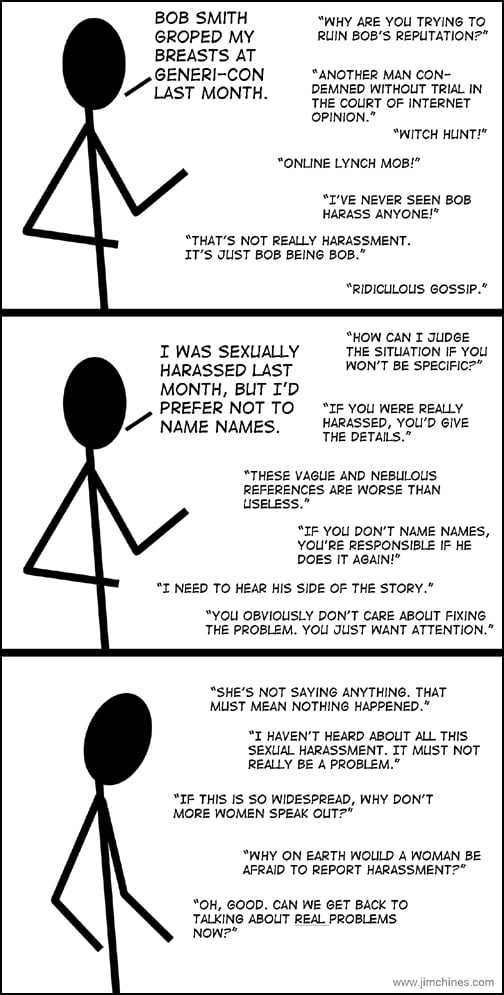
6 Why Sexual Assault Survivors Stay Quiet, Jim C. Hines, 4. October 2014 ⇑
7 Article The Specifically Jewy Perviness of Harvey Weinstein, presented by the American Jewish magazine Tablet, Mark Oppenheimer (*1974) writer, 9. October 2017 ⇑
8 Weinstein effect = tipping point for societal treatment of sexual misconduct, unleashing a high-velocity shift in Western culture since the 1960s ⇑
9 In 2015 across the 100 top‐grossing films 68.6% of named characters were still male, only 31.4% female, resulting in a gender ratio of 2.2 male characters to every female. This figure remained unchanged since 2007. Females were over three times (30.2%) as likely as their male counterparts (7.7%) to be shown in sexually revealing clothing percent and with some nudity (29% vs. 9.5%). ⇑