Links zum Thema Narzissmus / Narcissism
Literatur
- Martti Olavi Siirala (1922-2008) finnische Psychiaterin, Psychoanalytikerin, Philosophin, Autorin, Die Schizophrenie des Einzelnen und der Allgemeinheit, Vandenhoeck & Ruprecht, Göttingen, 1961, 1963
- Otto Kernberg (*1928) österreichisch-US-amerikanischer Psychoanalytiker, Autor, Borderline-Störungen und pathologischer Narzißmus, Suhrkamp Verlag, Frankfurt am Main, 1978, 1991, 18. Auflage 2009
- Alice Miller (1923-2010) polnisch-schweizerisch-jüdische Psychologin, Psychoanalytikerin, Autorin zum Thema Kindesmiss-
handlung (Trauma), Das Drama des begabten Kindes und die Suche nach dem wahren Selbst, 1979, Suhrkamp Verlag, Frankfurt am Main, 27. Auflage 1. März 1983
Klassiker – Hinweis: Miller, selbst eine Narzisstin, das Leid der Opfer des Narzissmus ausgezeichnet-detaillierte entschlüsselt.
- Jack D. Forbes (1934-2011) ur-amerikanischer Wissenschaftler, Professor emeritus, Universität von Kalifornien, Davis, politischer Aktivist, Schriftsteller, Die Wetiko-Seuche. Eine indianische Philosophie von Aggression und Gewalt| [1981],
Peter Hammer Verlag, 1984
- Alexander Lowen, Narzißmus. Die Verleugnung des wahren Selbst, Kösel, München, 1984, 2. Auflage 1986
- Alice A. Bailey (1880-1949) englisch-US-amerikanische Theosophin, Esoterikerin, Medium, Autorin, Verblendung. Ein Weltproblem, diktiert von Djwhal Khul, Mitglied der Großen Weißen Bruderschaft, Lucis Verlag, 2. Auflage 1986
- Arno Gruen (1923-2015) deutsch-schweizerischer Psychologe, Psychoanalytiker, Zivilisationskritiker, Schriftsteller, Der Verrat am Selbst. Die Angst vor Autonomie bei Mann und Frau, 1986, Deutscher Taschenbuch Verlag (dtv), Neuauflage 1. Januar 1992
- Robin Norwood (*1945) US-amerikanische Familien-, Ehe- und Kindertherapeutin, Erfolgsautorin zum Thema romantische Suchtbeziehungen, Wenn Frauen zu sehr lieben. Die heimliche Sucht, gebraucht zu werden, Rowohlt, Reinbek bei Hamburg, 1986, Neuauflage 2. September 1991
- Christopher Lasch (1932-1994) US-amerikanischer Kulturhistoriker, Sozialkritiker, Autor, Das Zeitalter des Narzißmus, Deutscher Taschenbuch Verlag (dtv), März 1988
- M. Scott Peck (1936-2005) US-amerikanischer Psychiater, Psychotherapeut, Schriftsteller, Die Lügner. Eine Psychologie des Bösen und die Hoffnung auf Heilung, Claudius Verlag, München, 1990
Narzissmus ist die Grundlage des Bösen.
- Arno Gruen (1923-2015) deutsch-schweizerischer Psychologe, Psychoanalytiker, Zivilisationskritiker, Schriftsteller, Der Wahnsinn der Normalität. Realismus als Krankheit. Eine Theorie der menschlichen Destruktivität: Realismus als Krankheit: eine grundlegende Theorie zur menschlichen Destruktivität, Deutscher Taschenbuch Verlag (dtv), 1. Januar 1992
- Dr. Susan Forward, US-amerikanische Psychotherapeutin, Referentin, Autorin, Vergiftete Kindheit. Elterliche Macht und ihre Folgen, Goldmann Verlag, München, 1. Taschenbuchauflage 1. April 1993
- Dr. Christina Grof (1941-2014) US-amerikanische Psychotherapeutin, Gründerin des Spiritual Emergence Network (SEN), Mitbegründerin von Holotropic Breathwork, Künstlerin, Lehrerin, Autorin, Sehnsucht nach Ganzheit. Der spirituelle Weg aus der Abhängigkeit, Kösel, München, 1. März 1994
- Wladimir Bukowski (1942-2019) russischer Psychiater, sowjetischer Dissident, Publizist Abrechnung mit Moskau. Das sowjetische Unrechtsregime und die Schuld des Westens, Lübbe Verlagsgruppe, Bergisch Gladbach, 1996
- Anne Wilson Schaef (1934-2020) US-amerikanische Psychotherapeutin, Frauenrechtlerin, Suchtforscherin, Autorin, Im Zeitalter der Sucht. Wege aus der Abhängigkeit, Deutscher Taschenbuch Verlag, 5. Auflage 1997
- Dr. phil. Kathrin Asper (*1941) Schweizer Psychotherapeutin, Lehranalytikerin und Dozentin, C.G. Jung-Institut Zürich, Autorin, Verlassenheit und Selbstentfremdung, Deutscher Taschenbuch Verlag (dtv), 7. Auflage 1999
- Neville Symington, portugiesischer katholischer Priester, Psychoanalytiker, Autor, Narzißmus. Neue Erkenntnisse zur Überwindung psychischer Störungen, Psychosozial-Verlag, Taschenbuch 1. Januar 1999
- Dr. Susan Forward, US-amerikanische Psychotherapeutin, Referentin, Autorin, Emotionale Erpressung. Wenn andere mit Gefühlen drohen, Goldmann Verlag, München, Taschenbuch 1. Mai 2000
- Arno Gruen (1923-2015) deutsch-schweizerischer Psychologe, Psychoanalytiker, Zivilisationskritiker, Schriftsteller, Der Fremde in uns, Klett-Cotta, Stuttgart, 1. Juli 2000, Deutscher Taschenbuch Verlag (dtv), 2. Auflage 1. November 2002
- A.H. Almaas, Ph.D. diamondapproach.org (*1944) Kuwaitian physicist, spiritual teacher, founder of the therapeutic Diamond Approach, author, The Point of Existence. Transformations of Narcissism in Self-Realization, Shambhala, 5. September 2000
- Dr. Harriet Braiker, US-amerikanische klinische Psychologin, Frauenforscherin, Autorin, Giftige Beziehungen. Wenn andere uns krank machen, Fischer, 8. Taschenbuchauflage 1. November 2001
- Rainer Sachse (*1948) deutscher Professor für klinische Psychologie, Begründer der Klärungsorientierten Psychotherapie, Autor, Histrionische und Narzisstische Persönlichkeitsstörung, Hogrefe Verlag, 1. März 2002
- Hans-Jürgen Wirth (*1951) deutscher Psychoanalytiker, psychologischer Psychotherapeut, Verleger, Autor, Narzissmus und Macht. Zur Psychoanalyse seelischer Störungen in der Politik, Psychosozial-Verlag, 29. Juli 2002
- Marie-France Hirigoyen (*1949) französische Psychiaterin, Psychotherapeutin, Familientherapeutin, Autorin, Die Masken der Niedertracht. Seelische Gewalt im Alltag und wie man sich dagegen wehren kann, Deutscher Taschenbuch Verlag (dtv),
1. September 2002, 9. Auflage Februar 2009
- Jürgen Leinemann (1937-2013) deutscher politischer Korrespondent, Journalist, Buchautor, Höhenrausch. Die wirklichkeitsleere Welt der Politiker, Karl Blessing, 2004
- Manfred F. R. Kets de Vries (*1942) niederländischer Psychoanalytiker, Management-Gelehrter, Professor für Führungsent-
wicklung, INSEAD, Autor, Führer, Narren und Hochstapler. Die Psychologie der Führung, Klett-Cotta, Stuttgart, 2. Auflage
1. April 2004
- Heinz-Peter Röhr (*1949) deutscher Pädagoge, Suchtpsychotherapeut, Autor, Narzißmus. Das innere Gefängnis, Walter Verlag, 2000, 8. Auflage 2009, Deutscher Taschenbuch Verlag (dtv), 1. Februar 2005
- Bärbel Wardetzki (*1952) deutsche Psychotherapeutin, Supervisorin, Coach, Referentin, Autorin, Mich kränkt so schnell keiner! Wie wir lernen, nicht alles persönlich zu nehmen, Deutscher Taschenbuch Verlag (dtv), März 2005
- Dr. Robert D. Hare (*1934) kanadischer emeritierter Professor für Kriminalpsychologie, Entwickler der Checkliste zur Ermittlung von Psychopathie, Universität von British Columbia, Dr. Paul Babiak, US-amerikanischer Industriepsychologe, Gewissenlos. Die Psychopathen unter uns, Springer, Wien - New York, 23. Juni 2005
- Otto Kernberg (*1928) österreichisch-US-amerikanischer Psychoanalytiker, Herausgeber, Hans P Hartmann, Herausgeber, Narzissmus. Grundlagen – Störungsbilder – Therapie, Schattauer, 1. Auflage 2006
- Dr. Martha Stout (*1953) US-amerikanische Psychologin, Autorin, Der Soziopath von nebenan. Die Skrupellosen: ihre Lügen, Taktiken und Tricks, Springer, Wien, 1. Auflage 4. April 2006
- Beate Scherrmann-Gerstetter, Diplompädagogin, Theologin, Buchautorin, Manfred Scherrmann, Mitwirkender, Das
Brave-Tochter-Syndrom und wie frau sich davon befreit, Verlag Herder, 8. Taschenbuchauflage 10. Mai 2006
- Dr. Robert D. Hare (*1934) kanadischer emeritierter Professor für Kriminalpsychologie, Entwickler der Checkliste zur Ermittlung von Psychopathie, Universität von British Columbia, Dr. Paul Babiak, US-amerikanischer Industriepsychologe, Menschenschinder oder Manager. Psychopathen bei der Arbeit, Carl Hanser Fachbuchverlag, 1. März 2007
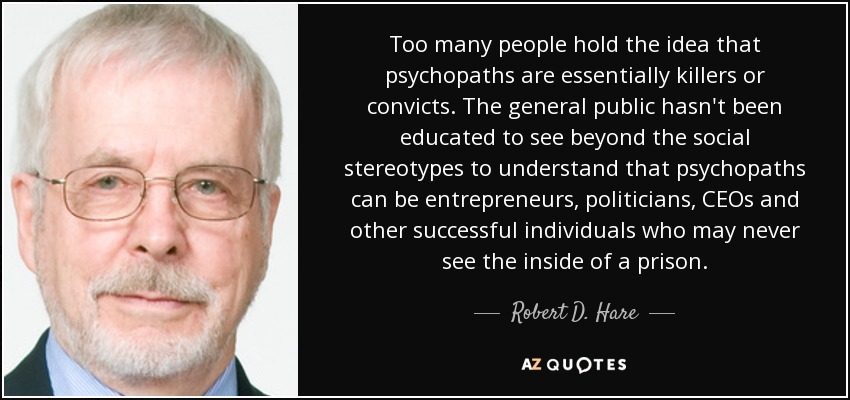
Dr. Hare ermittelte die Verteilungsrate von Psychopathen (Menschen eingerastet im "Raubtiermodus"):
1% Psychopathen – in der normalen Bevölkerung
4% Psychopathen – in den Führungsetagen von Firmen
25% Psychopathen – in den Gefängnissen
"Narzissmus die Leitneurose unserer Zeit."
- Bärbel Wardetzki (*1952) deutsche Psychotherapeutin, Supervisorin, Coach, Referentin, Autorin, Weiblicher Narzissmus. Der Hunger nach Annerkennung, Kösel, München, 4. Auflage September 2007
- Heinz-Peter Röhr (*1949) deutscher Pädagoge, Suchtpsychotherapeut, Autor, Wege aus der Abhängigkeit. Destruktive Beziehungen überwinden, Inhaltsverzeichnis, Deutscher Taschenbuch Verlag (dtv), Taschenbuchausgabe 1. Februar 2008
- Francois Lelord (*1953) französischer Psychiater, Schriftsteller, Christophe André, Der ganz normale Wahnsinn. Vom Umgang mit schwierigen Menschen, Aufbau Taschenbuch, 7. Auflage 1. Januar 2009
- Wendy Behary, LCSW, Der Feind an Ihrer Seite. Wie Sie im Umgang mit Egozentrikern überleben und wachsen können, Junfermannsche Verlagsbuchhandlung, Erstauflage 25. Februar 2009
- Wolfgang Bergmann (1944-2011) deutscher Pädagoge, Familientherapeut, Medienmanager, Journalist, Autor, Ich bin der Größte und ganz allein. Der neue Narzissmus unserer Kinder, Patmos, Taschenbuch 9. September 2009
- Hans-Werner Bierhoff (*1948) deutscher Psychologe, emeritierter Hochschullehrer, Autor, Michael Jürgen Herner, deutscher Diplompsychologe, Narzissmus – die Wiederkehr, Huber, Bern, 1. Auflage 10. September 2009
- Manfred Lütz (*1954) deutscher Psychiater, katholischer Theologe, Berater, Autor, Irre – Wir behandeln die Falschen. Unser Problem sind die Normalen – Eine heitere Seelenkunde, Gütersloher Verlagshaus, 20. Auflage 14. September 2009
- Bärbel Wardetzki (*1952) deutsche Psychotherapeutin, Supervisorin, Coach, Referentin, Autorin, Eitle Liebe. Wie narzisstische Beziehungen scheitern oder gelingen können, Kösel, München, 2. Auflage 16. November 2009
- Prof. Nina W. Brown (*1936) US-amerikanische Beraterausbilderin, Autorin, Kinder egozentrischer Eltern. Eine Kindheit mit narzisstischen Eltern bewältigen, Junfermann Verlag, Erstauflage 22. Januar 2010
- Heinz-Peter Röhr (*1949) deutscher Pädagoge, Suchtpsychotherapeut, Autor, Narzissmus. Dem inneren Gefängnis entfliehen, Patmos Verlag, 5. April 2011, 5. Auflage 2016
- Dr. Hans-Joachim Maaz (*1943) deutscher Psychiater, ärztlicher Psychoanalytiker, Autor, Die narzisstische Gesellschaft. Ein Psychogramm, Verlag C.H.Beck, München, 4. Auflage 28. Januar 2013
- ⚡ Dr. Kevin Dutton (*1967) britischer Professor für Psychologie, Psychopathieexperte, Universität von Oxford, Autor, Psychopathen. Was man von Heiligen, Anwälten und Serienmördern lernen kann, Deutscher Taschenbuch Verlag (dtv), Erstauflage 1. Mai 2013
- Barbara Egert, deutsche Astrologin, Autorin, Wenn die Kindheit Schatten wirft – Beziehungen, Hochsenibilität, Narzissmus, CreateSpace Independent Publishing Platform, Taschenbuch 9. Mai 2014
- Eva K. Kramer, Autorin, Mein Mann, der Narziss. Wie ich mich vom Leben mit einem Blender befreite, Orell Füssli, Zürich, Taschenbuchausgabe 1. September 2014
- Karen Duve (*1961) deutsche Schriftstellerin, Warum die Sache schiefgeht. Wie Egoisten, Hohlköpfe und Psychopathen uns um die Zukunft bringen, Galiani-Berlin, 2. Oktober 2014
- Wendy Behary, US-amerikanische klinische Sozialarbeiterin, Therapeutin, Ausbilderin, Autorin, Mit Narzissten leben. Wie Sie selbstbezogene Menschen entlarven und dabei wachsen können, Junfermann Verlag, 2. Taschenbuchauflage 21. Oktober 2014
- Heinz Weiss, Herausgeber, Claudia Frank, Herausgeber, John Steiner, Autor, Narzißtische Einbrüche. Sehen und Gesehenwerden – Scham und Verlegenheit pathologischer Persönlichkeitsstörungen, Klett-Cotta, Stuttgart, 4. Auflage
12. Dezember 2014
- Bernd Sprenger (*1954) deutscher Humanmediziner, Facharzt für psychosomatische Medizin, Autor, Peter Joraschky, Mitwirkender, Mehr Schein als Sein? Die vielen Spielarten des Narzissmus, Springer Spektrum, Taschenbuch 18. Dezember 2014
- Bärbel Wardetzki (*1952) deutsche Psychotherapeutin, Supervisorin, Coach, Referentin, Autorin, Blender im Job. Vom klugen Umgang mit narzisstischen Chefs, Kollegen und Mitarbeitern, Scorpio Verlag, 1. Auflage 2. März 2015
- Dr. Susan Forward, US-amerikanische Psychotherapeutin, Referentin, Autorin, Donna Frazier Glynn, Wenn Mütter nicht lieben. Töchter erkennen und überwinden die lebenslangen Folgen, Goldmann Verlag, München, 1. Taschenbuchauflage 16. März 2015
- Dr. phil Christine Merzeneder, deutsche Gerontologin, Gesundheitswissenschaftlerin, Refererentin, Autorin, Wie schleichendes Gift. Narzisstischen Missbrauch in Beziehungen überleben und heilen, Scorpio Verlag, 6. Taschenbuchauflage 1. Juli 2015
- Stefanie Stahl (*1963) deutsche Psychologin, Therapeutin, Autorin, Das Kind in dir muss Heimat finden. Der Schlüssel zur Lösung (fast) aller Probleme, Kailash, 16. November 2015
- Vera Kaesemann (*1962) deutsche Heilpraktikerin, Andreas Heineke, deutscher Radiomoderator, Journalist, Liebe – kälter als der Tod: Einem Narzissten verfallen, Goldmann Verlag, 18. Januar 2016
- Gabriele Nicoleta (*1964) deutsche Autorin, Das Gift der Narzisse. Tochter einer narzisstischen Mutter – Wenn eine Mutter ihr Kind seelisch vergiftet, Schwarzkopf & Schwarzkopf, Taschenbuch 1. Februar 2016
- Dr. Craig Malkin, US-amerikanischer klinischer Psychologe, Dozent an der Harvard Medical School, Autor, Der Narzissten-Test. Wie man übergroße Egos erkennt ... und überraschend gute Dinge von ihnen lernt, Dumont Buchverlag, E-Buch,
1. Kindle-Auflage 15. März 2016
- Lydia Benecke (*1982) polnisch-deutsche Kriminalpsychologin, Therapeutin im Strafvollzug, Sachbuchautorin, Auf dünnem Eis. Die Psychologie des Bösen, Bastei Lübbe, 3. Taschenbuchauflage 13. Mai 2016
- Roger Schawinski (*1945) Schweizer Medienunternehmer, Sat.1-Geschäftsführer (2003-2006), Moderator, Journalist, Autor, Ich bin der Allergrößte. Warum Narzissten scheitern, ebook, Kein&Aber, 1. Kindle-Auflage, 15. Juni 2016
Unter anderem wird der Niedergang folgender öffentlicher Personen vorgestellt: Lance Armstrong, Sepp Blatter, Joe Ackermann, Franz Becken-
bauer, Jörg Kachelmann, Steve Jobs, Thomas Middelhoff, Pablo Escobar, David Petraeus. "Das Internet ist die technologische Weiterentwicklung der Geschichte von Narziss. Anstelle eines Spiegelbilds in einem nahen See hat man heute sein Spiegelbild immer und überall zur Hand und will sich unzählige Male bewundern lassen."
Bonellis Modell des Narzissmus beruft sich auf die neurobiologischen und genetischen Forschungen des US-amerikanischen Psychiaters und Genetikers C. Robert Cloninger (*1944), insbesondere die "drei Dimensionen des Charakters" (Self-Directedness, Cooperativeness, Self-Transcendence). Narzissmus ist der Dreischritt
1. Selbstidealisierung – überhöhtes Selbstwertgefühl und überzogene Selbsteinschätzung
2. Fremdabwertung – Verachtung und aktive Herabsetzung von Mitmenschen
3. Selbstimmanenz – im Gegensatz zur Selbsttranszendenz vertreten von Victor Frankl und Robert Cloninger.
Der in der expandierenden »Narzisssphäre« allgegenwärtige unscharfe Vorwurf »Narzisst« ist ein Synonym für »Idiot«. Dombek dekonstruiert den Hype um die Selbstsuchtepidemie und fügt der Liste der Persönlichkeitsstörungen die Narziphobie hinzu.
- Dr. Hans-Joachim Maaz (*1943) deutscher Psychiater, ärztlicher Psychoanalytiker, Autor, Das falsche Leben. Ursachen und Folgen unserer normopathischen Gesellschaft, Leseprobe, Verlag C.H.Beck, München, 1. Auflage 16. März 2017
- Umberta Telfner, italienische Psychologin, Autorin, Hilfe, ich liebe einen Narzissten! Überlebensstrategien für alle Betroffenen, Arkana, Goldmann Verlag, Taschenbuch 17. April 2017
- Dr. med. Jochen Peichl (*1950) deutscher Facharzt für Psychotherapie, Psychiatrie und Neurologe, Autor, Warum es auch gut ist, Narzisst zu sein. Narzissmus als Überlebensstrategie, Kösel, München, 25. April 2017
- Dr. Karyl McBride, US-amerikanische Ehe- und Familientherapeutin, Psychotherapeutin, Autorin, Werde ich jemals gut genug sein? Heilung für Töchter narzisstischer Mütter, G.P. Probst Verlag, 2. Taschenbuchauflage 27. April 2017
- Bärbel Wardetzki (*1952) deutsche Psychotherapeutin, Supervisorin, Coach, Referentin, Autorin, Narzissmus, Verführung und Macht in Politik und Gesellschaft, Europa Verlag, 1. Auflage 30. Mai 2017
- Blogartikel Bereits in der Bibel wird Narzissmus beschrieben, präsentiert von dem Blogspot Umgang mit Narzissten, Gastbeitrag von Sonja Wieland, Schweizer Pfarrerin, 6. Juni 2017
- Reinhard Haller (*1951) österreichischer Psychiater, Psychotherapeut, Neurologe, Autor, Die Narzissmusfalle. Anleitung zur Menschen- und Selbsterkenntnis, Ecowin Verlag, 3. Juli 2017, 11. Auflage 11. Oktober 2018
70 Prozent der etwa 5000 Briefe und Mails, die Haller nach der Veröffentlichung von "Narzissmusfalle" erreichten, wurden von Frauen verfasst, die überzeugt waren: "Sie beschreiben genau meinen Partner!" Nur fünf Prozent der Männer schrieben: "Das ist meine Partnerin." Die restlichen 25 Prozent waren weibliche und männliche Arbeitnehmer, die ihren meist männlichen Chef zu erkennen glaubten.
Haller: "Männer neigen tatsächlich eher zu narzisstischen Reaktionen. Sie sind eher in Machtpositionen, in denen sie sich das erlauben können."
- Udo Rauchfleisch (*1942) Schweizer klinischer Psychologe, Psychotherapeut, Psychoanalytiker, Autor, Narzissten sind auch nur Menschen. Wie wir mit ihnen klarkommen. Ein Ratgeber, Patmos Verlag, 1. Taschenbuchauflage 18. September 2017
- Lydia Benecke (*1982) polnisch-deutsche Kriminalpsychologin, Therapeutin im Strafvollzug, Sachbuchautorin, Psychopathinnen. Die Psychologie des weiblichen Bösen, Bastei Lübbe (Lübbe Ehrenwirth), 5. Auflage 29. März 2018
- Bärbel Wardetzki (*1952) deutsche Psychotherapeutin, Supervisorin, Coach, Referentin, Autorin, Sonja R., Und das soll Liebe sein?: Wie es gelingt, sich aus einer narzisstischen Beziehung zu befreien, Deutscher Taschenbuch Verlag (dtv), 31. Mai 2018
- Dr. phil Christine Merzeneder, deutsche Gerontologin, Gesundheitswissenschaftlerin, Refererentin, Autorin, Gegengift. Narzisstischen Missbrauch überwinden und heilen, Scorpio Verlag, Erstauflage 25. Mai 2018
- Bärbel Mechler (*1958) deutsche Kommunikationstrainerin, Coach, Autorin, Von Psychopathen umgeben. Wie Sie sich erfolgreich gegen schwierige Menschen zur Wehr setzen, Mankau Verlag, 5. Taschenbuchauflage 26. August 2018
- Rainer Sachse (*1948) deutscher Professor für klinische Psychologie, Begründer der Klärungsorientierten Psychotherapie, Autor, Selbstverliebt – aber richtig. Paradoxe Ratschläge für das Leben mit Narzissten, Klett-Cotta, Stuttgart, 10. Auflage
14. Oktober 2018
- J.H. Simon, US-amerikanischer Blogger, Autor, Matthias Arnoldt, Übersetzer, Sieg über Narzissmus. Narzisstischen Missbrauch erkennen – überwinden – heilen [How to Kill a Narcissist], Eigenverlag J.H. Simon, 18. Mai 2019
Übungen zur Befreiung von narzisstischem Missbrauch
1. Verbündete finden: Stärken Sie Ihr Selbstwertgefühl durch limbische Resonanz.
2. Das wahre Selbst entfesseln: Entdecken Sie verdrängte Teile Ihres Selbst, um Zerrissenheit zu überwinden und Ganzheitlichkeit
wiederherzustellen.
3. Neue Fähigkeiten entwickeln: Erweitern Sie Ihre Kompetenzen auf diversen Lebensfeldern.
4. Muskeln spielen lassen: Fordern Sie die Grenzen des psychologischen Käfigs heraus und wagen Sie sich aus Ihrem Versteck.
5. Für Ausgleich sorgen: Stellen Sie in Ihren Beziehungen wieder das Gleichgewicht her.
6. Grenzen setzen: Kultivieren Sie eine starke Selbstwahrnehmung und lernen Sie, diese entschlossen zu verteidigen.
7. Verbrannte Erde: Distanzieren Sie sich effektiv von anderen, die Sie manipulieren wollen.
- Dr. med. Pablo Hagemeyer, deutscher Facharzt für Psychiatrie und Psychotherapie, Autor, "Gestatten, ich bin ein Arschloch." Ein netter Narzisst und Psychiater erklärt, wie Sie Narzissten entlarven und ihnen Paroli bieten, Eden Books, 3. April 2020
- Paul Levy (*1956) US-amerikanischer Künstler, Heiler, Autor, Wetiko. Das Geistesvirus heilen, das unsere Welt heimsucht, Neue Erde, Taschenbuch 6. März 2023
↑
Literature (engl.)
See also: Lloyd deMause, Personality types, parenting styles, historical-cultural-political manifestations – Lloyd deMause
- Christopher Lasch, Ph.D. (1932-1994) US American cultural historian, University of Rochester, moralist, social critic, author, The Culture of Narcissism. American Life in an Age of Diminishing Expectations, Wikipedia entry, first issued 1979, Norton, reprint 21. August 1991
- Charles Derber (*1944) US American professor of sociology, Boston College, author, The Pursuit of Attention. Power and Ego in Everyday Life, Oxford University Press, 1979, 2nd edition 15. June 2000
Exploring the roots and ramifications of the normalizing of pathological narcissism in 20th century American culture using psychological, cultural, artistic and historical synthesis
- Morgan Scott Peck (1936-2005) US American psychiatrist, psychotherapist, People of the Lie. The Hope for Healing Human Evil, Touchstone Press, 1st edition 1983, 2nd edition 2. January 1998
- Catherine L. Taylor, US American weight loss coach, author, The Inner Child Workbook. What to Do with Your Past When It Just Won't Go Away, TarcherPerigee, 1. July 1991
- Patricia Evans, The Verbally Abusive Relationship. How to recognize it and how to respond, Adams Media, Avon, Massachusetts, 1992, expanded 3rd edition 18. January 2010
- Alice A. Bailey (1880-1949) British US American theosophist, metaphysician, author writing by inner intermediary dictate, Glamour. A World Problem, dictated by Djwal Khul, member of the White Brotherhood, Lucis Publishing Company, June 1995
- George K. Simon, Ph.D. (*1948) US American self-help author, In Sheep's Clothing: Understanding and Dealing with Manipulative People, A. J. Christopher & Company, 19. December 1996, Parkhurst Brothers, revised paperback edition
1. April 2010
- Len Oakes, Australian psychologist, University of Auckland, Prophetic Charisma. The Psychology of Revolutionary Religious Personalities, Syracuse University Press, 1st edition 1. November 1997
- Prof. Jay Newman (1948-2007) US American philosopher, University of Guelph, Guelph, Ontario, Inauthentic Culture and Its Philosophical Critics, McGill-Queen's University Press, November 1997
- Robert D. Hare, C.M., Ph.D. hare.org (*1934) Canadian professor of experimental psychology, researcher in psychopatho-
logy, psychophysiology, criminal psychology, developer of Hare Psychopathy Checklist-Revised (PCL-R), University of British Columbia, Paul Babiak, Ph.D., US American industrial psychologist, Without Conscience. The Disturbing World of the Psychopaths Among Us, The Guilford Press, 1st edition 8. January 1999
- Glenn R. Schiraldi, Ph.D., US American trauma specialist, author, The Self-Esteem Workbook, New Harbinger, 1st edition 2001, 2nd revisededition 26. January 2017
- Robert Greene (*1959) US American speaker, author, The Art of Seduction, Profile Books, 2001, Gardners Books, 2004
Presenting examples from historical figures such as Cleopatra, Giacomo Casanova, Duke Ellington and John F. Kennedy
- ⚡ Sam Vaknin samvak (*1961) Israeli Macedonian journalist, editor-in-chief of the online magazine of politics Global Politician, publisher, author, Lidija Rangelovska, editor, Malignant Self-love. Narcissism Revisited, Narcissus Publications, North Macedonia, revised edition July 2001, unabridged paperback issue 1. May 2015
- Susan Forward, Ph.D., US American psychotherapist, public speaker, author, Craig Buck, coauthor, Toxic Parents. Overcoming Their Hurtful Legacy and Reclaiming Your Life, Bantam, reprint paperback, 2. January 2002
- Harriet Braiker, Ph.D., US American clinical psychologist, researcher on women's issues, author, The Disease To Please. Curing the People-Pleasing Syndrome, McGraw-Hill Education, paperback issue 13. February 2002
- Sandy Hotchkiss, PsyD, LCSW, US American psychoanalyst, author, Why Is It Always About You? The Seven Deadly Sins of Narcissism, Free Press, 22. July 2003
- Harriet Braiker, Ph.D., US American clinical psychologist, researcher on women's issues, author, Who's Pulling Your Strings? How to Break the Cycle of Manipulation and Regain Control of Your Life, McGraw-Hill, paperback issue 12. September 2004
- Martha Stout, Ph.D. (*1953) US American psychologist, author, The Sociopath Next Door. The Ruthless Versus the Rest of
Us, Broadway Books, New York, 2005, Harmony, 14. March 2006
- Robert D. Hare, C.M., Ph.D. hare.org (*1934) Canadian professor of experimental psychology, researcher in psychopatho-
logy, psychophysiology, criminal psychology, developer of Hare Psychopathy Checklist-Revised (PCL-R), University of British Columbia, Paul Babiak, Ph.D., US American industrial psychologist, Snakes in Suits. When Psychopaths Go to Work, ReganBooks, 2006
The brain of a psychopath rests in the "predator mode." Robert D. Hare's check list on psychopathy was developed at the University of British Columbia. Dr. Hare evaluated the ratio of psychopaths (people set in "predator mode"):
1% psychopaths – normal population
4% (functional) psychopaths – CEOs/board members of companies
25% (dysfunctional) psychopaths – prison inmates
- Barbara A. Oakley, Ph.D., US American professor of systems engineering, Oakland University, Evil Genes. Why Rome Fell, Hitler Rose, Enron Failed and My Sister Stole My Mother's Boyfriend, Prometheus Books, 1st edition 2007, paperback,
21. October 2008
Neurological and social factors contributing to chronic antisocial behavior
- Sam Vaknin samvak (*1961) Israeli Macedonian journalist, editor-in-chief of the online magazine of politics Global Politician, publisher, author, Lidija Rangelovska, editor, Narcissistic Abuse. From Victim to Survivor. How to Survive Relationships with Narcissists and Psychopaths, Narcissus Publications, North Macedonia, 2nd Kindle edition 10. January 2007
- Robin Stern, Ph.D., US American licensed psychoanalyst, associate director for the Yale Center for Emotional Intelligence, associate research scientist, Child Study Center at Yale, author, The Gaslight Effect: How to Spot and Survive the Hidden Manipulation Others Use to Control Your Life, Morgan Road Books, New York, 2007, Harmony Books, New York, reprint paperback issue 9. January 2018
- Wendy Behary, LCSW, US American author, Disarming the Narcissist. Surviving and Thriving With the Self-Absorbed, New Harbinger Publications, 1st edition March 2008
- David Kiely, Irish author, Christina McKenna, Irish author, The Dark Sacrament. True Stories of Modern-Day Demon Possession and Exorcism, HarperOne, reprint edition 7. October 2008
- Cooper Lawrence, The Cult of Celebrity. What Our Fascination with the Stars Reveals About Us, skirt!, 1st edition 20. January 2009
- Drew Pinsky, M.D. (*1958) US American internist, addiction medicine specialist, assistant clinical professor, Keck USC School
of Medicine, radio and television personality, author, Dr. S. Mark Young, US American professor of entertainment, Marshall Business School, The Mirror Effect. How Celebrity Narcissism Is Seducing America, Harper, 1st edition 17. March 2009
- Jean M. Twenge, Ph.D. (*1971) US American psychologist, San Diego State University, W. Keith Campbell, Ph.D., The Narcisstic Epidemic. Living in the Age of Entitlement, Free Press, Atria Books, 21. April 2009, paperback issue 13. April 2010
Twenge and her team noted a rise in narcissist personality traits.
- Paul Levy (*1956) US American psycho-activating healer, artist, author, Wetiko, the Greatest Epidemic Sickness Known to Humanity, Awaken In The Dream Publishing, 1. January 2011
- Jon Ronson (*1967) Welsh documentary filmmaker, radio presenter, journalist, nonfiction author, The Psychopath Test.
A Journey Through the Madness Industry, Picador Riverhead, 2011
- Susan Anderson, LCSW, US American psychotherapist, author, Taming Your Outer Child. Overcoming Self-Sabotage and Healing from Abandonment, New World Library, 2011, reprint edition 17. Februar 2015
- Thomas Sheridan (*1964) Irish alternative artist, musician, independent researcher, broadcaster, public speaker, author, Puzzling People. The Labyrinth of the Psychopath, Velluminous Press, 1. March 2011
- Aaron James, Ph.D., US American professor of philosophy, School of Humanities, University of California Irvine, Assholes.
A Theory, Anchor, 2012, reprint edition 22. April 2014
- Thomas Sheridan (*1964) Irish alternative artist, musician, independent researcher, broadcaster, public speaker, author, Defeated Demons. Freedom from Consciousness Parasites in Psychopathic Society, Velluminous Press, 1. May 2012
- ⚡ Kevin Dutton, Ph.D. (*1967) British professor of experimental psychology, expert on the science of social influence, University of Oxford, author, The Wisdom of Psychopaths. What Saints, Spies, and Serial Killers Can Teach Us About Success, William Heinemann, 20. September 2012, Scientific American / Farrar, Straus and Giroux, reprint edition 3. September 2013
CRITIQUE: In Praise of Empty Souls – Can We Learn From Psychopaths?, presented by the US American liberal magazine on politics and
arts The New Republic, Martha Stout demolishes Kevin Dutton's book on the 'wisdom' of psychopaths by Martha Stout, Ph.D.
(*1953) US American psychologist, author, presented by the online publication Sott.net, 14. December 2012
Foreword: "My search to understand evil and its transformation is what attracted me to Paul Levy’s invaluable work. […] In helping us understand and face the lies that weave through our lives, Paul Levy’s work leads us to our extraordinary opportunity. […] It is a rare philosopher and spiritual leader who can help us to look into the mirror of our collective participation and denial. Yet, Paul Levy accomplishes this and more. He helps us find a way to explore the most intimate connections between our spiritual and material lives and the wider psychic storm and power lines in which we struggle. He makes a way through our madness, our "spiritual starvation," to invoke our imagination to literally "change our mind." […] As you read Dispelling Wetiko, you will be challenged. You will savor moments of "ah ha." When you have finished, you will find that something has shifted. There are fewer spiritual calluses between your imagination and your daily life. You will see a way forward that you had not seen before. You will feel less isolated, more hopeful. You will never quite look at the world in exactly the same way again." Foreword by Catherine Austin Fitts (*1950) US American former assistant secretary of housing under George H.W. Bush, managing a 300 billion dollar portfolio, whistleblower on financial terrorism, president of the Solari Report
- Jackson MacKenzie, US American co-founder of the online support community PsychopathFree, author, Psychopath Free. Recovering from Emotionally Abusive Relationships With Narcissists, Sociopaths, and Other Toxic People, PsychopathFree,
4th edition 20. March 2013, Berkley, expanded edition 1. September 2015
- Ross Rosenberg, US American psychotherapist, professional trainer, expert witness, speaker, author, The Human Magnet Syndrome. Why We Love People Who Hurt Us, Premier Publishing & Media, 9. July 2013
- Linda Martinez-Lewi, Ph.D., US American licensed psychotherapist, clinical expert on the narcissistic personality, author, Freeing Yourself from the Narcissist in Your Life. At Home. At Work. With Friends, TarcherPerigee, 15. August 2013
Celebrity narcissists named by Martinez-Lewi: Armand Hammer, Ayn Rand, Frank Lloyd Wright, Pablo Picasso
- Daniel Shaw, LCSW, US American certified psychoanalyst, psychotherapist, cult member of the SYDA movement under Gurumayi (1981-1994), author, Traumatic Narcissism. Relational Systems of Subjugation, chapter "Traumatic Narcissism in Cults", Routledge, 1st edition 19. September 2013, 2014
Even among those who do leave cults, a common feeling is shame, at their own blindness, their hunger to believe, and grief at getting it wrong.
Featuring "intergenerational generation of narcissistic personalities" and the relational dynamics that sustain "systems of subjugation"
- Charles Derber (*1944) US American professor of sociology, Boston College, author, Sociopathic Society. A People's Sociology of the United States, Routledge, 1st edition 2. October 2013
- Pete Walker, US American psychotherapist, CPTSD From Surviving To Thriving. A Guide and Map for Recovering from Childhood Trauma, CreateSpace Independent Publishing Platform, 1st paperback edition 13. December 2013
- Ramani Durvasula, Ph.D. (*1965) US American licensed clinical psychologist, professor of psychology, California State University, Los Angeles, media expert, author, Should I Stay or Should I Go? Surviving a Relationship with a Narcissist, Post
Hill Press, Kindle edition 24. November 2015
- Dr. Craig Malkin, US American clinical psychologist, lecturer for Harvard Medical School, author, Rethinking Narcissism. The Secret to Recognizing and Coping with Narcissists, Harper Perennial, 7. July 2015, reprint paperback issue 5. July 2016
Offers a research-derived test, which measures both healthy narcissism and subtler forms of unhealthy narcissism; Echoism: understanding –
and breaking – the attraction to narcissists; common traits of the three types of narcissists: introverted, extroverted, and communal
- H. G. Tudor, US American selfconfessed narcissistic sociopath, blogger of narcite, author, Fuel, CreateSpace Independent Publishing Platform, 1. Taschenbuchauflage 20. Juli 2016
- Shahida Arabi, US American psychologist, bestselling author, Becoming the Narcissist’s Nightmare. How to Devalue and Discard the Narcissist While Supplying Yourself, SCW Archer Publishing, Kindle edition 23. April 2016
- Shannon Thomas, US American social worker, author, Healing from Hidden Abuse. A Journey Through the Stages of Recovery from Psychological Abuse, MAST Publishing House, 25. August 2016
- Elinor Greenberg, Ph.D., US American psychologist, expert on personlity disorders, Gestalt therapist, trainer, author, Borderline, Narcissistic, and Schizoid Adaptations. The Pursuit of Love, Admiration, and Safety, CreateSpace Independent Publishing Platform, 1st paperback edition 12. September 2016
- Shahida Arabi, US American psychologist, bestselling author, POWER. Surviving and Thriving After Narcissistic Abuse.
A Collection of Essays on Malignant Narcissism and Recovery from Emotional Abuse, presented by Thought Catalog,
18. January 2017
- A. B. Jamieson, Prepare to be tortured. The price you will pay for dating a narcissist, Independently published, 12. March 2018
Layman's guide
↑
Externe Weblinks
- Leseprobe von: Dr. Reinhard Haller (*1951) österreichischer Chefarzt, Psychiater, Psychotherapeut, Neurologe, Suchtexperte, Sprecher, Autor, Der Code des Bösen. Der Gerichtspsychiater Reinhard Haller seziert in seinem neuen Buch die Anatomie des Bösen., präsentiert von der überregionalen deutschen Wochenzeitung Zeit Online, Nr. 44, 22. Oktober 2009
- Blogartikel "Alles ist ok!" – Warum Opfer von Narzissten und Psychopathen den Missbrauch verleugnen, präsentiert von dem Wordpress-Blogspot Energievampire, Nina Tiasela 23. Dezember 2011
- Artikel So erkennen Sie einen Psychopathen, präsentiert von der überregionalen deutschen Tageszeitung Die Welt, Fanny Jiménez, Wissenschaftsredakteurin, 14. August 2014
Die im obigen Artikel dargestellte Unterscheidung – Soziopathie ⇔ Psychopathie (Soziopathen = umweltbedingt; Psychopathen = anlagebedingt) ist überholt. Sie entspricht nicht der aktuellen Forschungslage.
Die jüngste Fachliteratur nennt die Begriffe "Primary Psychopathy" (primäre Psychopathie oder "Psychopathie ersten Ranges") und "Secondary Psychopathy" (ehemals "Soziopathie", sekundäre Psychopathie oder "Psychopathie zweiten Ranges"). Die Annahme, dass Psychopathie dasselbe sei wie die im DSM-5 definierte "antisoziale Persönlichkeitsstörung" ist widerlegt. Menschen mit hohem Psychopathiewert haben häufig, jedoch nicht immer, auch eine "antisoziale Persönlichkeitsstörung", jedoch haben die meisten Menschen mit einer "antisozialen Persönlichkeitsstörung“ nicht zugleich einen hohen Psychopathiewert.
Untertitelt mit: Jede Zeit sucht sich die Krankheit, die zu ihr passt: Nach dem Ausgebrannten betritt nun der Narzisst die Bühne.
- Artikel Narzissmus ist männlich und eine Frage der Erziehung, präsentiert von der deutschen Wochenzeitschrift Stern, Mirja Hammer, 9. März 2015
- Blogartikel Der Narzisst hat Angst, wahnsinnig zu werden, präsentiert von dem Blogspot Umgang mit Narzissten, Sven Grüttefien, 24. Januar 2017
- Artikel Selbstverliebter WestenStudien zeigen: Je westlicher unsere Welt, umso mehr Narzissten scheint sie hervorzubringen. Doch steht uns tatsächlich eine Narzissmus-Epidemie bevor?, präsentiert von der deutschen Monatszeitschrift Spektrum der Wissenschaft, Agnes Schulze, 6. Februar 2017
- Blogartikel Narzissmus auf dem Vormarsch?, präsentiert von dem Blogspot Wie-funktioniert.com, 27. Mai 2017
- Interview mit Otto Kernberg (*1928) österreichisch-US-amerikanischer Professor für Psychiatrie, Weill Cornell Medical College, Psychoanalytiker, "Narzissten leben von Bewunderung statt von Liebe". Ich-fixiert, unfähig zur Selbstkritik, mit einem schwachen Selbst: Die narzisstische Persönlichkeit enstehe meist in der Kindheit, sagt Psychoanalytiker Kernberg, präsentiert von der österreichischen Tageszeitung Der Standard, Lisa Mayr, 1. Oktober 2017
- Schriftliches Vortragstranskript via Docplayer Pathologischer Narzissmus: Entstehung, Diagnostik und Therapie bei betroffenen Patienten, Prof. Dr. med. Stefan Röpke, Stillachhaus Privatklinik, Charité Berlin, 20. Januar 2018
- Artikel Diese vier Typen von Menschen ziehen Narzissten magisch an, präsentiert von der online Wirtschaftszeitung Business Insider Deutschland, Lindsay Dodgson, 8. August 2018
1. Beeindruckende Menschen, sei es durch ihre Karriere, ihre Hobbys und Begabungen, ihren Freundeskreis oder ihre Familie.
2. Menschen, die den Narzissten dazu bringen, sich durch Komplimente oder Gesten selbst gut zu fühlen.
3. Jeder, der den Narzissten in den Augen anderer gut dastehen lässt.
4. Menschen, die die Gefühlswelt des Narzissten bestätigen, über ihre Fehler hinwegsehen und sie trotz ihrer narzisstischen Beleidigungen
wahrscheinlich nicht verlassen.
- Artikel Radikale Entwertung und übertriebene Bewunderung, präsentiert von der überregionalen links-alternativen Schweizer WOZ Die Wochenzeitung, Johanna Lier (*1962) Nr. 33/2018, 16. August 2018
- Blogartikel Arten von Narzissmus, präsentiert von dem Blogspot, Verena Spitzer (*1981), 6. Dezember 2018
- Artikel Die narzisstische Gesellschaft. Wo sich das Ego mit Hilfe moderner Medien aufplustert, bleibt die Menschlichkeit auf der Strecke, präsentiert von dem alternativen online Magazin Manova, Wolfram Rost? (*1948) deutscher Ingenieur, Philosoph, 16. Februar 2019
- Artikel "Echoisten" sind das Gegenteil von Narzissten — und das ist nicht unbedingt besser, präsentiert von der online Wirtschaftszeitung Business Insider Deutschland, Nathalie Gaulhiac, 25. Februar 2019
- Interview mit Dr. Elinor Greenberg, US-amerikanische Psychologin spezialisiert auf Persönlichkeitsstörungen, Gestalttherapeutin, Trainerin, Autorin, Verrückt nach mir, präsentiert von dem Magazin der überregionalen deutschen Wochenzeitung ZEITmagazin, Nr. 33, 7./11. August 2019
- Artikel Warum sich Empathen und Narzissten gegenseitig toxisch anziehen, präsentiert von der Webseite Wie sie liebt, Jeremias Franke, 14. Dezember 2020
Linklose Artikel
- Artikel Fies ist sexy, präsentiert von dem deutschen öffentlich-rechtlichen Fernsehsender ARD, tägliches Nachrichtenprogramm Tagesschau, ausgestrahlt 21. Juni 2008
Die "dunkle Triade" sozial unerwünschter Charaktereigenschaften – Gewinnsucht, Narzissmus und psychopathische Kaltherzigkeit – bei Männern kommt laut Studie der New Mexico State Universität in 2008 bei Frauen kurzfristig und zu Zeugungszwecken besser an.
↑
Weblinks zum Thema Narzissmus und Persönlichkeitsstörungen – Quora
Beiträge verfasst von Elfriede Ammann, präsentiert auf der kalifornischen Frage-und-Antwort Webseite Quora DE
- Beitrag Welche berühmte Person der Geschichte wird verehrt, obwohl sie eigentlich eine schreckliche Person ist?, Referenz zu dem Psychopathen Pablo Picasso, 14.1k-113, 9. Januar 2019
- Kurzbeitrag Gibt es Bewältigungstechniken, die es Ihnen ermöglichen, glücklich zu sein, während Sie in einer Beziehung zu einem Narzissten bleiben?, 193-12, 22. Januar 2019
- Beitrag Laut des Psychologen Maaz ist Narzissmus in der Regel die Folge einer gestörten Mutter-Kind Bindung. Spielen Väter bei der Entstehung von Narzissmus eine untergeordnete Rolle?, 1.3k-4, 28. Januar 2019
- Beitrag Warum werden Narzissten von empathischen Menschen angezogen?, Referenz Enneagrammtypen: Choleriker/Narzissten und Melancholiker/Empathen, 2.9k-63-4, 14. Februar 2019
- Beitrag Was mögen Narzissten nicht?, 3.1k-22-1, 6. März 2019
- Übersetzter Beitrag von Leah S. Woods Wie bricht ein Narzisst zusammen und warum tut er das?, 6.9k-56-1, 10. März 2019
- Übersetzter Beitrag von Barry McGuinness Welches Verhaltensmuster zeigt am allerdeutlichsten, dass man einen Narzissten vor sich hat?, 4.6k-46-1, 17. März 2019
- Beitrag Wie kann ich nach narzisstischem Missbrauch meinen Stolz und meine Würde zurückerlangen?, Referenz zu
Mario Martinez, 1.1k-14-1, 13. April 2019
- Übersetzter Beitrag von Mark Williams, Wie und weshalb wird man das Opfer von narzisstischem Missbrauch?, 881-51-2,
15. April 2019
- Beitrag Haben Narzissten jemals Bedauern, wenn sie andere misshandeln?, Referenz zu Pablo Picasso, 2.5k-52-3,
16. April 2019
- Beitrag Welches sind die am häufigsten auftretenden Persönlichkeitsstörungen in der heutigen Gesellschaft?, 986-10,
5. Mai 2019
- Beitrag Was ist der übliche Zyklus eines Narzissten?, 1.2k-22-0, 20. Mai 2019
- Beitrag Welche Bücher und Filme verdeutlichen die Thematik der narzisstischen Persönlichkeitsstörung?, 626-4-1, 5. Juni 2019
- Beitrag Kennst Du psychologisch-soziologische Begriffe und Schlagwörter, welche die kollektive Zivilisationsneurose skizzieren (die neuerdings als "Narzissmus" in aller Munde ist)?, 164-2-0, 5. Juni 2019
- Übersetzter Beitrag von Kris Harpster Weshalb gelingt es nur wenigen Menschen, einen Narzissten zu erkennen?, 1.9k-26-0,
7. Juni 2019
- Beitrag Welche missbräuchlichen Erziehungsmaßnahmen an Kleinkindern haben einerseits Persönlichkeitsstörungen ausgelöst und andererseits in der gesamtgesellschaftlichen Entwicklung historische Abdrücke hinterlassen?, 258-3,
7. Juni 2019
- Beitrag Sam Vaknin ist ein diagnostizierter Narzisst, der als Erster zum Thema Narzissmuss online Aufklärungsvideos erstellt und verbreitet hat. Wie definiert Sam Vaknin den Narzissmus?, 3k-39-4, 9. Juni 2019
- Übersetzter Beitrag von Serenity Pratt Weshalb bestehen Narzissten darauf, die Menschen zu verletzen, die sie angeblich lieben?, 2,2k-83-5, 16. Juni 2019
- Beitrag Wie hoch ist der Bevölkerungsanteil der narzisstisch gestörten Menschen?, 412-4-0, 19. Juni 2019
- Übersetzter Beitrag von Kat Stevenson Weshalb glauben die meisten eher dem Narzissten als dem Opfer?, 296-28-0,
19. Juni 2019
- Übersetzter Beitrag von Karen Arlucks Welche Menschentypen ziehen Narzissten magisch an?, 4.3k-33-2, 20. Juni 2019
- Beitrag Gibt es ein Heilmittel gegen Narzissmus?, 411-2-0, 27. Juni 2019
- Übersetzter Beitrag von Sara Rosseels Weshalb verübeln Narzissten so lange?, 2.6k-32-0, 29. Juni 2019
- Übersetzter Beitrag von Serenity Pratt Was fühlt ein Narzisst, der sich vor dir fürchtet?, 3.1k-49-1, 1. Juli 2019
- Übersetzter Beitrag von Jennifer DeLucy Wie betreibt ein Narzisst Gehirnwäsche an seinem Beziehungspartner?, 11.3k-139-5, 5. Juli 2019
- Übersetzter Beitrag von Elinor Greenberg Wieso weigert sich ein Narzisst, der dich terrorisiert und mithilfe von Komplizen verleumdet hat, sich mit dir auszusprechen, nachdem du ihn als Narzissten bezeichnet hast, selbst wenn es ihm von Nutzen wäre, den Konflikt beizulegen?, 111-2-0, 14. Juli 2019
- Beitrag Sollten Psychotherapeuten besonders zurückhaltend darin sein, persönlichkeitssgestörte Klienten zu umarmen?, 446-13-0, 15. Juli 2019
- Übersetzter Beitrag von Phyllis Antebi Wie verhält sich ein Narzisst, der unter Stress steht?, 6.6k-50-1, 17. Juli 2019
- Übersetzter Beitrag von Todd Skyler Endet ein Streit mit einem Narzissten jemals mit einem beiderseits einvernehmlichen Ausgang oder einer Problemlösung?, 686-17-1, 18. Juli 2019
- Übersetzter Beitrag von Christian Gunnerson Weshalb ist Scham das zentrale Gefühl eines Narzissten?, 2.5k-41-5, 22. Juli
2019
- Beitrag Was bedeutet der Begriff "Narzissten-Gebet"?, 1.6k-29-4, 25. Juli 2019
- Übersetzter Beitrag von Todd Skyler Endet ein Streit mit einem Narzissten jemals mit einem beiderseits einvernehmlichen Ausgang oder einer Problemlösung?, 687-17-1, 28. Juli 2019
- Beitrag Gibt es ein Zuwenig an Narzissmus?, 273-3-0, 3. August 2019
- Beitrag Was zeichnet einen Narzissten aus?, 910-17-1, 9. August 2019
- Noch zu erweiternder Beitrag Welche Märchen erzählen vom narzisstischen Missbrauch und veranschaulichen das typische Verhalten von bösartigen Narzissten?, 399-8-0, 10. August 2019
- Beitrag War Klaus Kinski ein Narzisst?, 18.8k-70-2, 11. August 2019
- Übersetzter Beitrag von Dr. Elinor Greenberg, US-amerikanische Psychologin spezialisiert auf Persönlichkeitsstörungen, Gestalttherapeutin, Trainerin, Autorin, Wie behandelt die amerikanische Psychologin Elinor Greenberg Klienten mit narzisstischer Persönlichkeitsstörung?, PT-Artikel 2.3k-35-5, 12. August 2019
Stufe 1 – Symptomlinderung oder Beschwichtigung
Stufe 2 – Künftiges Leid vermeiden
Stufe 3 – Vorhandene Bewältigungsmechanismen identifizieren
Stufe 4 – Neue Bewältigungsmechanismen einüben
Stufe 5 – Neue Gewohnheiten etablieren
Stufe 6 – Die eigene negative Wirkung auf die Mitmenschen erfassen
Stufe 7 – Sich den eigenen Kindheitstraumata zuwenden
Stufe 8 – Die eigene verinnerlichte Leitstimme aktualisieren
Stufe 9 – Empathie für andere Menschen aufbringen
Stufe 10 – Authentizität / Echtsein leben
- Übersetzter Beitrag von Veronica Welles Sind Narzissten fähig zur echten Selbstreflexion?, 63-1-0, 12. August 2019
- Übersetzter Beitrag von Elinor Greenberg Was passiert, wenn man einen Narzissten kritisiert? Wie wird er darauf reagieren?, 181-2-0, 12. August 2019
- Beitrag (Querverweis) Was macht es so schwer, einen Narzissten zu entlarven?, 96-4-0, 13. August 2019
- Beitrag Kennst Du Zitate aus der Bibel oder anderen althergebrachten heiligen Schriften, in denen die Aspekte von Narzissmus beschrieben werden?, 137-2, 13. August 2019
- Beitrag (Querverweis) Welche Filme zeigen am besten narzisstische Persönlichkeiten?, 771-3, 16. August 2019
- Übersetzter Beitrag von Brenda Massey Wie kommt es, dass ein Narzisst eine gut aussehende, gebildete, selbständige Frau verlässt, um ihr andere Frauen vorzuziehen, die weit unter ihrem Niveau liegen?, 581-42-0, 25. August 2019
- Übersetzter Beitrag von Todd Skyler Handeln Narzissten eher nach den Vorgaben des Reptiliengehirns (Hirnstamms)?, 775-12-0, 26. August 2019
- Übersetzter Beitrag von Todd Skyler Ist ein Narzisst gefährlich?, 4,2k-57-3, 27. August 2019
- Übersetzter Beitrag von Todd Skyler Kann ein Narzisst es wirklich bedauern, eine Beziehung mit einem guten Menschen zerstört zu haben?, 229-12, 3. September 2019
- Übersetzter Beitrag von Kiersten Pressefeld Welche spirituellen Einsichten hast du während deiner Heilung von narzisstischem Missbrauch gewonnen?, 87-1-0, 8. September 2019
- Beitrag In welcher Beziehung stehen Narzissmus und mangelnde emotionale Reife?, Referenz zu Babyseelen, Kindseelen, junge Seelen, reife Seelen, <4% alte Seelen, 536-6-0, 10. September 2019
- Übersetzter Beitrag von Tami McConnell Was geschieht im Kopf eines bösartigen Narzissten? Was treibt ihn um und an?, 2.3k-32-1, 15. September 2019
- Übersetzter Beitrag von Kris Harpster Selbst nach gründlicher Recherche – was ist am Verhalten von Narzissten am schwersten zu fassen?, 2,3k-61-0, 22. September 2019
- Beitrag Wie denkt und fühlt ein Narzisst in sich?, 1,5k-24-0, 24. September 2019
- Übersetzter Beitrag von Rob Leone Was muss sich ein Narzisst beibringen, um sich ändern zu können?, 226-3-0,
9. Oktober 2019
- Beitrag Ist es Selbstschutz oder Unmenschlichkeit, wenn man einen Narzissten verlässt, dem man die Liebe versprochen hat und ihm nun nicht hilft, seinen Lebenskampf und seine Unfähigkeit, sich zu ändern zu verstehen?, 203-11-0, 11. Oktober 2019
- Beitrag In welchen Branchen und Berufen sind Menschen mit narzisstischer Persönlichkeitsstörung am häufigsten anzutreffen, und warum?, 422-9-2, 6. November 2019
- Beitrag Sind wir nicht ohne Ausnahme alle Narzissten unserer Like-Button-, Selfie- und Social-Media-Gesellschaft, von der Werbeindustrie mit ihrer Sehnsuchtsstimulierung nach Erfolg, Ruhm und Reichtum geradezu wie Vieh herangezüchtet? Nun:
Bist Du Narzisst?, 235-12, 19. November 2019
- Beitrag (3 Querverweise) Wie gehst du dagegen an, wenn dein ehemaliger narzisstischer Partner Unwahres über dich verbreitet und dessen "Anhänger" dich deswegen ausschließen, ohne die Intrige hinterfragt zu haben?, 186-2, 15. Dezember 2019
- Beitrag Das Thema Narzissmus wird bei Quora "mit heißer Nadel gestrickt". Welche Beiträge dazu hast Du verfasst
oder übersetzt und auf Quora eingestellt oder andernorts veröffentlicht?, 289-7, 16. Dezember 2019
- Beitrag Weshalb sind sich emotional instabile Borderlinerinnen und Narzissten so zugetan, so dass sie sich vorzugsweise ineinander verlieben?, 180-10, 1. Januar 2020
↑
External web links (engl.)
Websites
- Article Sociopath vs. Psychopath: What's the Difference?, presented by WebMD, Kara Mayer Robinson, undated
- Judith Orloff, M.D., Ph.D. (*1951) US American assistant professor of psychiatry, UCLA, empath, dying companion, lecturer, author, How To See Through the Charm of a Narcissist, presented by the blogspot https://drjudithorloff.com/drjudithorloff.com, undated
- Presentation by Dr. Laurie Jo Moore, University of Auckland, Dr. Mila Goldner-Vukov, Queensland Health, Malignant Narcissism: From the Snow White Syndrome to modern neurobiology, sponsored by the 44th International Neuropsychiatric Pula Symposium, presented by the publication Neurologia Croatica, Volume 84, No. 53, S. 84-89, 2004
- Article Inside the Mind of a Sociopath’', excerpted from: Martha Stout, Ph.D. (*1953) US American psychologist, author, The Sociopath Next Door. The Ruthless Versus the Rest of Us'', Broadway Books, New York, 2005, Harmony, 14. March 2006
- Scientific article by W. Keith Campbell, University of Georgia, Joshua Foster, University of South Alabama, The Narcissistic Self: Background, an Extended Agency Model, and Ongoing Controversies, presented by Psychology Press, S. 115-138, January 2007
- Judith Orloff, M.D., Ph.D. (*1951) US American assistant professor of psychiatry, UCLA, empath, dying companion, lecturer, author, How To Deal With A Narcissist, presented by the blogspot https://drjudithorloff.com/drjudithorloff.com, 2008
☛ A narcissist's life revolves around him.
☛ A narcissist expects compliments to get his attention or approval.
☛ A narcissist constantly steers the conversation back to himself.
☛ A narcissist downplays the feelings or interests of others.
☛ A narcissist reacts cold or withholding when met with disagreement or disapproval.
- Interview with Drew Pinsky, M.D. (*1958) US American internist, addiction medicine specialist, assistant clinical professor,
Keck USC School of Medicine, radio and television personality, co-host Loveline radio show, author, and Dr. S. Mark Young,
US American professor of entertainment, Marshall Business School, Falling for narcissism, presented by the US American daily broadsheet The Washington Times, Cheryl Wetzstein, 5. May 2009
- Richard Boyd, Ph.D. (1942-2021) US American philosopher, Narcissism – Living Without Feelings, presented by the Energe-
tics Institute, Perth, West Australia, 2010 (undated)
- Scientific paper by Paul Babiak, Ph.D., Craig S. Neumann, Ph.D., Robert D. Hare, Ph.D., Corporate Psychopathy: Talking the Walk, PDF, presented by the peer-reviewed journal Behavioral Sciences & the Law, issue 28, S. 174-193, 2010
- Scientific paper by Dr. Laurie Jo Moore, University of Auckland, Dr. Mila Goldner-Vukov, Queensland Health, Malignant Narcicissism: From Fairy Tales to Harsh Reality, discussedd by Review Medicinska naklada, Zagreb, Croatia, referring the publication Psychiatria Danubina, Volume 22, No. 3, S. 392-405, September 2010
- Article Personality Disorders. A Nation-based Perspective on Prevalence, presented by the electronic, peer-reviewed journal Innovations in Clinical Neuroscience, authored by Randy A. Sansone, M.D., co-authored by Lori A. Sansone, M.D., issue 4,
S. 13-18, 8. April 2011
Five major studies have examined the prevalence and type of personality disorders in community samples in the United States. [Status 2011]
- Article The Disturbing Link Between Psychopathy And Leadership, originally presented by the US American bimonthly magazine Psychology Today, reissued by the US American business magazine Forbes, Victor Lipman, 25. April 2013
- Article 23 Signs You're Secretly a Narcissist Masquerading as a Sensitive Introvert, presented by the US American monthly magazine Scientific American, Scott Barry Kaufman (*1979) US American humanistic psychologist, scientific director of the Imagination Institute in the Positive Psychology Center, University of Pennsylvania, science writer researching intelligence, personality, and creativity, 26. August 2013
- Article Five Powerful Ways Abusive Narcissists Get Inside Your Head, presented by the publication Self-Care Haven, 21. July 2014
- Article 5 Sneaky Things Narcissists Do To Take Advantage Of You, presented by the website Thought Catalog, Shahida Arabi, 6. August 2014
1. Idealization-devaluation-discard phase 2. Gaslighting 3. Smear campaigns 4. Triangulation 5. The false self and the true self (Jekyll-Hyde]
An Australian study has found that about one in five corporate executives are psychopaths – roughly the same rate as among prisoners.
Nathan Brooks, forensic psychologist: "Typically psychopaths create a lot of chaos and generally tend to play people off against each other."
Sent for reprint to Huffington Post, Rolling Stone, The New Yorker, Harper's Magazine, The Atlantic, this article got rejected by all.
- Article Here's why CEOs often have the traits of a psychopath, presented by the German-owned American business, celebrity and technology news website Business Insider, Lindsay Dodgson, United Kingdom, 7. Juli 2017
- Article Inside the Mind of a Narcissist. Knowing how the narcissist thinks can help you understand toxic individuals., presented by the US American bimonthly magazine Psychology Today, Joe Navarro M.A. (*1953) Cuban-born American former FBI agent and supervisor, expert on nonverbal communication and body language, public speaker, author, 1. September 2017
- Blog article Ten Rules Found in Narcissistic Homes, presented by the independent mental health social network Psych Central, Sharie Stines, MBA, Psy.D, US American recovery expert, 14. September 2017
1. Children are taught that someone must be blamed for the mistakes that occur.
2. The narcissist always gets his or her way during decision making.
3. The narcissist is allowed to have his or her feelings and "dump" them on other family members.
4. Family members other than the narcissist must justify why they feel the way they do and the narcissist will never validate the others' emotions.
5. "Discipline" of children is harsh, shame-filled, destructive, inappropriately expressed, and hurtful.
6. Family members are conditioned to meet the needs of the narcissist.
7. Children are taught, not to look within themselves, but to constantly scan the horizon in order to determine the narcissist's mood
prior to making a decision.
8. Everyone in the family learns that making mistakes is shameful.
9. Narcissistic homes have rigid rules.
10. Image is the highest priority.
Exhibitionist narcissists represent the stereotype.
Closet narcissists have different personas.
Toxic narcissists crave chaos and destruction.
Relationships with narcissists can be risky.
- Blog article How to Spot a Sociopath in 3 StepsIt helps to know some of the warning signs of sociopaths., presented by the
US American bimonthly magazine Psychology Today, Bill Eddy, LCSW, JD, US American lawyer, therapist, senior family mediato, National Conflict Resolution Center, San Diego, author, 15. March 2018
- Article 5 stages of psychogenic death or 'give-up-itis' , presented by the US American web portal Big Think, Paul Ratner,
2. October 2018
Dr. John Leach: "Psychogenic death is real. It isn't suicide, it isn't linked to depression, but the act of giving up on life and dying usually within days, is a very real condition often linked to severe trauma. Severe trauma might trigger some people's anterior cingulate circuit to malfunction. Motivation is essential for coping with life and if that fails, apathy is almost inevitable."
Stages of psychogenic death: 1. Social withdrawal ✣ 2. Apathy ✣ 3. Aboulia 4. Psychic akinesia ✣ 5. Psychogenic death
- Contribution What types of gaslighting are there?, presented by the Californian question-and-answer website Quora, Stewart Cook, 12. October 2018
- Article by Elinor Greenberg, Ph.D., US American psychologist, expert on personlity disorders, Gestalt therapist, trainer, author, If personality disorders are learned behavior, why can't a narcissist unlearn what they have learned and relearn? Does that mean the capacity was never there to begin with?, presented by the US American bimonthly magazine Psychology Today,
25. October 2018
- Blog article 7 Gaslighting Phrases Malignant Narcissists, Sociopaths and Psychopaths Use To Silence You, presented by the independent mental health social network Psych Central, Shahida Arabi, US American psychologist, bestselling author,
7. March 2019, updated 18. November 2019
1. You're crazy/you have mental health issues/you need help.
2. You’re just insecure and jealous.
3. You're too sensitive / you're overreacting.
4. It was just a joke. You have no sense of humor.
5. You need to let it go. Why are you bringing this up?
6. You're the problem here, not me.
7. I never said or did that. You're imagining things.
1. Emotional appeals
2. Bandwagon
3. Black-and-white / Either-or
4. Burden of proof
5. False flattery
6. Incredulity
7. Labeling
8. False compromise
9. Empty promises
11. Ridicule
12. Slippery Slope
13. Dehumanizing
14. Slogans
- Blog article on narcissism by Amanda Robins, US American psychotherapist, blogger, Healing The Wounds of Childhood,
19. April 2019
- Blog article by Brenda Della Casa, blogger, 20 Extremely Brutal Signs You're In Love With A Narcissist, presented by the blogspot Your Tango, 18. July 2019
- Article Cosmic Consciousness, Maurice Bucke, and Walt Whitman. An Adventure in Narcissism, presented by the online publication integralworld.net, Gary Stogsdill, US American wisdom teacher, blogger, 25. July 2019
- Blog article What Is a Narcissist? 8 Key Traits of Narcissism Everyone Should Know, presented by the blogspot goodhousekeeping, Lisa Bain, 14. August 2019
- Article by Elinor Greenberg, Ph.D., US American psychologist, expert on personlity disorders, Gestalt therapist, trainer, author, A Glossary of Narcissistic Slang Terms, presented by the US American bimonthly magazine Psychology Today, 2. September 2019
Basic guide to terms like "gaslighting", "love bombing", "hoovering", and "flying monkeys"
- Article Is Narcissism Treatable? This psychologist has built her career on it., presented by the US American bimonthly magazine Psychology Today, Julie L. Hall, 18. October 2019
- Article by Elinor Greenberg, Ph.D., US American psychologist, expert on personlity disorders, Gestalt therapist, trainer, author, Do Therapists Empathize with Abusive Narcissistic Clients?, presented by the US American bimonthly magazine Psychology Today, 10. November 2019
- Article Narcissism comes from insecurity, not inflated sense of self, presented by the nonprofit website that aggregates news articles about scientific research Futurity, James Devitt, NYU, 26. March 2021
↑
Web links on the topics narcissim and borderline – Quora
Q&A contributions issued by Elfriede Ammann, presented on the Californian question-and-answer website Quora EN
- Q&A contribution Was Pablo Picasso a sociopath?, 1.2k views · 3 upvotes, 28. October 2018
- Q&A contribution Are the most successful politicians sociopaths? Why?, 572 views, 30. October 2018
- Q&A contribution Should it be allowed to have an individual with narcissistic behavior disorder in a high political position?, reference to the psychopathological rating (via PPIPCL-R) of US American presidents, 32 views, 25. December 2018
- Q&A contribution Why are sociopaths incurable?, reference to Robert Hare, 745 views · 2 upvotes, 26. December 2018
- Q&A contribution What careers have the most sociopaths?, 994 views · 3 upvotes, 4. February 2019
- Q&A contribution What is the usual cycle of a narcissist?, 2.8k views · 13 upvotes, 22. May 2019
- Q&A contribution Freud's term "narcissism" – currently on everyone's lips – is celebrating its centenary this year. What other catchwords, phrases and book titles are known to you that outline our pathological societal phenomenon?, 253 views,
6. June 2019
- Q&A contribution How does Sam Vaknin, himself a diagnosed narcissist and first to go online public on the topic, define narcissism?, 297 views · 3 upvotes 9. June 2019
- Q&A contribution Why are borderline personality disorder (emotionally unstable personality disorder) and narcissistic personality disorder so similar? And why do two people with each disorder tend to fall for each other?, 2.6k views · 6 upvotes, 10. June 2019
- Q&A contribution What could happen when you expose a sociopath/malignant narcissist and turn them into the authorities?, reference to Donna Zerner · Marc Gafni · Ken Wilber, 369 views · 3 upvotes, 6. July 2019
↑
Audio- und Videolinks
- Fernsehdokumentarfilm und Diskussionsrunde zum Thema Narzissmus, Süchtig nach dem Selbst – Über Narzissmus und Gesellschaft, präsentiert von dem deutschsprachigen öffentlich-rechtlichen Fernsehsender 3Sat, Sendung delta, Gastgeber Gert Scobel (*1959) deutscher Philosoph, Fernsehmoderator, Journalist, Autor, Gastdiskutierende: Bärbel Wardetzky (*1952) deutsche Psychotherapeutin, Psychologin, Pädagogin, Autorin, Klaus Eidenschink, Georg Franck, 36:41 Minuten Dauer, Erstsendetermin 10. Januar 2008, eingestellt 25. Dezember 2012
- Video Fernsehinterview mit Prof. Dr. Richard David Precht (*1964) deutscher Philosoph, Fernsehmoderator, Dozent, Publizist, Egoismus – Nur anerzogenes Verhalten?, präsentiert von dem deutschen öffentlich-rechtlichen Fernsehsender ARD WDR, Sendung "Planet Wissen", YouTube Film, 58:28 Minuten Dauer, eingestellt 26. Februar 2011
Werbung und Propaganda tragen zum Züchtungsprogramm für Egoismus bei. Egoismus als der ultimative Konsummotivator ⇔ altruistisch-kooperatives Verhalten, das soziale Anerkennung verspricht
Stetiges Streben nach Konsum, Besitz, Animation und Aktion sind der Ausdruck einer narzisstischen Störung.
- Videopräsentation von Dr. Reinhard Haller (*1951) österreichischer Chefarzt, Psychiater, Psychotherapeut, Neurologe, Suchtexperte, Sprecher, Autor, Reinhard Haller: Die Macht der Kränkung, veranstaltet von dem Bildungscenter der Arbeiterkammer Vorarlberg, Moderator Franz Josef Köb, Feldkirch, Österreich, 10. April 2013, YouTube Film, 1:19:43 Dauer, eingestellt 23. Februar 2016
- Videopräsentation von Suzanne Grieger-Langer profilersuzanne.com (*1972) deutsche Diplom-Pädagogin, therapeutische Führungskraftrainerin, Profilerin, Dozentin, Sachbuchautorin, Die Tricks der Trickser, 007 statt 0815 – Interview mit Suzanne Grieger-Langer, präsentiert von dem YouTube-Kanal Wissen-ist-Macht.TV, YouTube Film, 59:16 Minuten Dauer, eingestellt 24. März 2014
- Videopräsentation von Dr. Reinhard Haller (*1951) österreichischer Chefarzt, Psychiater, Psychotherapeut, Neurologe, Suchtexperte, Sprecher, Autor, Dr. Reinhard Haller: Die Macht der Kränkung, präsentiert von BildungsTV, Redoutensäle, Linz, Österreich, 6. Dezember 2016, YouTube Film, 1:06:28 Dauer, eingestellt 14. Dezember 2016
Kränkung (offense) ist ein Angriff auf persönliche Werte, Gefühle und Vorstellungen, eine psychische Verletzung. Sie führt zu einer "anhaltenden Erschütterung des Selbst und seiner Werte".
- Videopräsentation [Rezension] von Klaus Schlagmann, deutscher Diplompsychologe, psychologischer Psychotherapeut, Freud-Kritiker, Kapitel 3d: Unverständnis gegenüber Narziss/dem Eisenofen bei Heinz-Peter Röhr, YouTube Film, 51:36 Minuten Dauer, eingestellt 27. Dezember 2017
- Audio Radio-Feature mit Transkript Sind wir alle Narzissten?, präsentiert von dem öffentlich-rechtlichen, werbefreien Rundfunksender Deutschlandfunk (DLF), Sendeformat Deutschlandradio Kultur, Redakteur Kai Adler, 12. November 2018
- Audiointerview mit Lydia Benecke (*1982) polnisch-deutsche Kriminalpsychologin, Therapeutin im Strafvollzug, Sachbuchautorin, Benecke • Podcast-Gespräch • Psychopathinnen, präsentiert von dem Kortizes Podcast, Gastgeber Brynja Adam-Radmanic, aufgenommen 15. November 2018, YouTube Film, 29:53 Minuten Dauer, eingestellt 15. November 2018
- Videopräsentation von Bärbel Wardetzky (*1952) deutsche Psychotherapeutin, Psychologin, Pädagogin, Autorin, Und das soll Liebe sein?, veranstaltet von der Arbeiterkammer Vorarlberg (AKVorarlberg), YouTube Film, 1:14:17 Dauer, eingestellt
19. November 2018
- Videointerview mit Dr. Hans-Joachim Maaz (*1943) deutscher Psychiater, ärztlicher Psychoanalytiker, Autor, Interview mit dem Psychoanalytiker Hans-Joachim Maaz, präsentiert von der Initiative Berufung Mami, Gastgeberin Jeniffer (*1979) Mütteraktivistin, Bloggerin, YouTube Film, 1:09:55 Dauer, eingestellt 23. Februar 2019
- Videopräsentation von Dr. Dr. Raphael M. Bonelli (*1968) österreichischer Neurowissenschaftler, Dozent an der Sigmund Freud Privatuniversität Wien, Psychiater, systemischer Psychotherapeut, Autor, Narzissmus verstehen. Wie unsere Gesellschaft den Narzissten schuf, veranstaltet von dem Wiener interdisziplinären und interreligiösen Institut für Religiosität in Psychiatrie & Psychotherapie (RPP-Institut), YouTube Film, 51:33 Minuten Dauer, eingestellt 27. April 2019
- Video Fernsehinterview mit Bärbel Wardetzky (*1952) deutsche Psychotherapeutin, Psychologin, Pädagogin, Autorin, https://apolut.net/der-freie-fall-mit-baerbel-wardetzki-thema-narzissmus/Bärbel Wardetzki , präsentiert von der deutschen Online-Plattform für investigativen Journalismus KenFM,
1. Ausgabe des neuen Sendeformats "Der Freie Fall", Gastgeberin Lena Lampe, Apolut Film, 53:30 Minuten Dauer,
eingestellt 26. September 2019
Linklose Medienangebote
- Audiointerview mit Suzanne Grieger-Langer profilersuzanne.com (*1972) deutsche Diplom-Pädagogin, therapeutische Führungskraftrainerin, Profilerin, Dozentin, Sachbuchautorin, Psychopathen im Unternehmen. Wie erkennt man Psychopathen? Sie sind die Meister der Manipulation und der Intrige., präsentiert von PodCast Gastgeber Bernd Geropp, 23:05 Minuten Dauer, 19. Dezember 2013
Psychopathen stellen (nach europäischer Erhebung) 1%, (nach US-amerikanischer Erhebung 3-4%) der Weltbevölkerung, und schaffen 99% der Schäden in der Wirtschaft. Die Verteilung von Männern und Frauen unter den Psychopathen ist 50/50. 14.5% der Top-Manager (vorwiegend Männer) sind Psychopathen. Minute 8:20
↑
Spielfilme und Dokumentationen zum Thema Narzissmus
- Britisches Theaterstück Gaslicht (Gas Light) des britischen Dramatikers Patrick Hamilton, 1938
Fokus auf die Thematik des Gaslightings = Bewusst inszenierte desorientierende Irreführung des Opfers
- Adaptierter britischer Thriller und Kriminalfilm Gaslight mit Adolf Wohlbrück, Diana Wynyard, Regisseur Thorold Dickinson, 1940
- Neuverfilmter US-amerikanischer Mystery-Thriller Film Das Haus der Lady Alquist, mit Ingrid Bergman, Charles Boyer, Regisseur George Cukor, 1944
- US-amerikanisches Filmdrama Die Faust im Nacken, mit Marlon Brando, Karl Malden, Regisseur Elia Kazan, 1954
- US-amerikanisches Filmmusical Die Oberen Zehntausend, mit Grace Kelly, Frank Sinatra, Bing Crosby, Filmproduzent MGM, 1956
- US-amerikanischer Thriller Ein Mann für gewisse Stunden, mit Richard Gere, Lauren Hutton, Regisseur Paul Schrader, 1980
- US-amerikanischer Thriller Eine verhängnisvolle Affäre [Fatal Attraction] mit Michael Douglas, Glenn Close, Regisseur
Adrian Lyne, 1987
- US-amerikanischer Spielfilm Wall Street, mit Michael Douglas, Charlie Sheen, Regisseur Oliver Stone, 1987
- US-amerikanischer Spielfilm Das Rußland-Haus, mit Sean Connery, Michelle Pfeiffer, Klaus Maria Brandauer, Regisseur
Fred Schepisi, 1990
- US-amerikanischer Spielfilm Der Feind in meinem Bett [Sleeping with the enemy] mit Julia Roberts, Patrick Bergin, Regisseur Joseph Ruben, 1991
- US-amerikanischer Spielfilm (Familie) Aus der Mitte entspringt ein Fluss, Regisseur Robert Redford, 1992
- US-amerikanisch-französischer Erotikthriller Basic Instinct mit Sharon Stone, Michael Douglas, Paul Verhoeven, niederländischer Regisseur, 1992
- US-amerikanischer Actionfilm Stirb langsam [Die Hard] mit Bruce Willis, Alan Rickman, Regisseur John McTiernan, 1998
- US-amerikanisches Filmdrama Eiskalte Engel [Cruel Intentions], Regisseur Roger Kumble, 1999
- US-amerikanischer-kanadischer satirisch-psychologischer Horrorfilm American Psycho, Regisseurin Mary Harron, 2000
- Neuverfilmtes US-amerikanisches Filmdrama Vanilla Sky mit Tom Cruise, Penélope Cruz, Cameron Diaz, Regisseur
Cameron Crowe, 2001
- US-amerikanisches Filmdrama Weißer Oleander, Regisseur Peter Kosminsky, 2002
- US-amerikanische Filmkomödie Was das Herz begehrt, mit Jack Nicholson, Diane Keaton, Regisseurin und Drehbuchautorin Nancy Meyers, 2003
- US-amerikanisches Filmdrama Hautnah [Closer], Drehbuch Patrick Marber, Regisseur Mike Nichols, 2004 [2005]
- US-amerikanische Fernsehserie (Krimi, Drama, Thriller) Criminal Minds, Drehbuchautor Jeff Davis, 2005
- US-amerikanische Filmkomödie Der Teufel trägt Prada, mit Meryl Streep, Anne Hathaway, Regisseur David Frankel, 2006
- US-amerikanische Fernsehkrimi- und Dramaserie Dexter, 2006-2013
- US-amerikanische Tragikomödie Das Beste kommt zum Schluss, mit Jack Nicholson, Morgan Freeman, Regisseur Rob Reiner, 2007
- US-amerikanischer Independent-Liebesfilm (500) Days of Summer, Drehbuch von Scott Neustadter und Michael H. Weber, Regisseur Marc Webb, [2005] 2009
- Britischer Spielfilm Das Bildnis des Dorian Gray, Regisseur Oliver Parker, 2009
Dieser Film über das Dorian Gray Motiv ist der letzte von insgesamt neun Verfilmungen angefangen 1915.
- Adaptierte schwarze Komödie Der Gott des Gemetzels [Carnage], Regisseur Roman Polański, 2011
- US-amerikanisches Filmdrama Der große Gatsby, mit Leonardo DiCaprio, Tobey Maquire, australischer Regisseur Baz Luhrmann, 2013
- US-amerikanische Fernsehserie (Politthriller und Drama) House of Cards, über Netflix, 2013
- US-amerikanisches Familiendrama Im August in Osage Country, Regisseur John Wells, Hauptrollenfigur Meryl Streep, 2013 [2014]
- US-amerikanische Filmbiografie, The Wolf of Wall Street, Regisseur Martin Scorsese, 2013 [2014]
- US-amerikanisches Krimidrama Gone Girl – Das perfekte Opfer, Regisseur David Fincher, 2014
- Britischer Spielfilm (Roboter) Ex Machina, Regisseur Alex Garland, 2015
- US-amerikanischer Erotikfilm (BDSM) Fifty Shades of Grey mit Dakota Johnson, Jamie Dornan, Regisseur Sam Taylor-Johnson, 2015
See also the evaluation: ► Culture degrading and women debasing BDSM – 50 Shades of Grey
- Französisches Filmdrama Mein ein, mein alles, mit Vincent Cassel, Emmanuelle Bercot, Regisseur Maïwenn, 2015
- Deutsches Fernsehfilmdrama (häusliche Gewalt) Die Ungehorsame mit Felicitas Woll, Marcus Mittermeier, Regisseur
Holger Haase, via Sat1, 2015
- US-amerikanisches Filmdrama Der seidene Faden [Phantom Thread] mit Daniel Day-Lewis, Drehbuchautor und Regisseur
Paul Thomas Anderson, 2017
- Spanischer Horrorfilm Verónica – Spiel mit dem Teufel [Verónica], Regisseur Paco Plaza, 2017
- Fernsehdokumentation Narzissmus als Störung ∙ Mensch, bin ich toll, ARD-alpha 20:40 Minuten Dauer, 29. April 2016
- Fernsehdokumentation Doku 2017 HD Überführt Der Zuhälter Andreas Marquardt, präsentiert von dem deutschen öffentlich-rechtlichen Fernsehsender ZDF, Dokukanal ZDFInfo, produziert 2017, YouTube Film, 49:44 Minuten Dauer, eingestellt
3. September 2017
- Dokumentation Narzissmus als Störung, vorgestellt von der YouTube-Plattform Crazy Snoop, YouTube Film, 29:45 Minuten Dauer, eingestellt 13. November 2017
- Fernsehdokumentation zum Thema "Narzissmus", Narzissmus – Die große Ego-Show, präsentiert von dem deutschen öffentlich-rechtlichen Fernsehsender WDR, "Planet des Wissens", 58:10 Minuten Dauer, eingestellt 29. April 2021
↑
Audio and video links (engl.)
- Video presentation by Drew Pinsky, M.D. (*1958) US American internist, addiction medicine specialist, assistant clinical profes-
sor, Keck USC School of Medicine, co-host Loveline radio show, author, and Dr. S. Mark Young, US American professor of management, Marshall Business School, Understanding the Celebrity Personality on their celebrity study 200 people lasting
2.5 years entitled Narcissism and Celebrity, presented by the peer-reviewed academic journal covering the field of personality psychology Journal of Research in Personality, October 2006, republished by USC Annenberg School for Communication,
6. November 2006, YouTube film, 55:59 minutes duration, posted 12. September 2008
- Video Psychopath MRI – General psychology, YouTube film, 7:13 minutes duration, posted 21. August 2007
Referencing an older study. Meanwhile it is known that the amygdala of many psychopaths is generally smaller than average. They also seem to have reduced connections between the ventromedial prefrontal cortex and the amygdala. In addition, there is possibly some correlation with a
large cavum septum pellucidum (particularly in aggressive/violent psychopaths) which indicates a maldevelopment of the limbic system. These differences are merely statistically correlational and they can be found in other disorders as well as normally behaved people.
- Audio interview with Wendy Behary, LCSW, author of Disarming the Narcissist. Surviving and Thriving With the Self-Absorbed, New Harbinger, On Narcissism, presented Psychjourney, host Deborah Harper, 29:34 minutes duration, aired 24. April 2008
- Audio presentation by Alan Watt (1965-2021) Scottish researcher, radio show host, alternative media publicist, author, Psy-
chopaths And Sociopaths Run Your World, presented by radio show Cutting Throught the Matrix on the Republic Broad-
casting Network, YouTube film, 43:02 minutes duration, aired 2. June 2010, posted 20. September 2011
- YouTube video documentary I Am Fishhead – Are Corporate Leaders Psychopaths?, produced by FHmovie.com, Misha Votruba Vaclav Dejcmar, 2011, YouTube film, 1:18:17 duration, posted 2. January 2017
Psychologist Philip G. Zimbardo, Ph.D. (*1933), leading expert on psychopathy Robert D. Hare, C.M., Ph.D. (*1934), Nicholas A. Christakis, M.D., Ph.D., MPH (*1962) Greek American professor of social and natural science, Harvard Medical School, Boston, Massachussetts, Yale University (*2013), New Haven, Connecticut, physician, author, James H. Fowler, Ph.D. (*1970) US American social scientist specializing in social networks, cooperation, political participation, and genopolitics, professor of medical genetics, professor of political science, University of California, San Diego, Vaclav Havel (1936-2011) Czech dissident, first postcommunist President of the Czech Republic (1993-2003) and during the Velvet Revolution (1989-1992), poet, playwright, essayist, authors Gary Greenberg and Christopher Lane
- Video presentation by Glenn D. Wilson, Ph.D. (*1942) New Zealand professor of evolutionary psychology, expert on attitude and personality measurement, sexual attraction, deviation and dysfunction, partner compatibility, Mad, bad or sad? The Psycho-
logy of Personality Disorders, sponsored by Gresham College, Museum of London, 17. January 2012, Lecture transcript provided by gresham.ac.uk, YouTube film, 50:07 minutes duration, posted 26. January 2012
- Series of CNN TV interviews with and about Arnold Schwarzenegger [Mr. Universe] (*1947) Austrian-American 38th governor of California (2003-2011), former professional bodybuilder, actor, model, businessman, Schwarzenegger says he 'screwed up,' hopes to win Shriver back, presented by the US American TV channel CNN, hosted by CNN Wire Staff, aired 3. October 2012
- Video presentation by Clive Boddy, Ph.D., British professor of leadership and organisational behaviour, University of Tasmania, Bullying and Corporate Psychopaths at Work, presented by TEDx Talks, TEDx Hanze University, Groningen, Netherlands, YouTube film, 14:33 minutes duration, filmed 3. October 2012, posted 3. December 2012
For the last seven years, Boddy has studied the evidence and effects of toxic leadership, and the social influence of the presence of corporate psychopaths on various workplace outcomes, including on levels of conflict and bullying at work. In Australia psychopaths are responsible for
26% corporate bullying.
"Narcissism is the pursuit of gratification from vanity or egotistic admiration of one's own attributes. The term originated from Greek mythology, where the young Narcissus fell in love with his own image reflected in a pool of water. Narcissism is a concept in psychoanalytic theory, which was popularly introduced in Sigmund Freud's essay On Narcissism (1914). The American Psychiatric Association has listed the classification narcissistic personality disorder in its Diagnostic and Statistical Manual of Mental Disorders (DSM) since 1968, drawing on the historical concept of megalomania." en.Wikipedia
- Video presentation by Dr. Kirk Honda, US American couple and family therapist, Narcissistic vs Borderline vs Histrionic, pre-
sented by the podcast Psychology in Seattle, YouTube film, 25:04 minutes duration, posted 14. November 2018
- Video presentation Wetiko – Exploring the Alarming Rise of Narcissism, Manuscript, presented by Kim Saeed, YouTube film, 7:12 minutes duration, posted 1. February 2019
- Video interview with Ramani Durvasula (*1965) US American professor of psychology, UCLA, licensed clinical psychologist, media expert, author, BIG SIGNS You're Dating A NARCISSIST! (Watch Out For This), presented by podcaster and host Lewis Howes, YouTube film, 1:47:25 duration, posted 6. December 2021
- Video lecture The Battle for the Mind: How to Exit an Artificial Reality (Cynthia Chung RTF Lecture), presented by the YouTube channel Rising Tide Foundation, Cynthia Chung, Canadian co-founder and editor of the Rising Tide Foundation, lecturer, writer, YouTube film, 2:15:10 duration, starting minute 4:52, posted 20. December 2022
"The mind is its own place and, in itself can make a heaven of hell or a hell of heaven." John Milton, Paradise Lost
Linkless media offering
- Audio presentation by Drew Pinsky, M.D. (*1958) US American internist, addiction medicine specialist, assistant clinical profes-
sor, Keck USC School of Medicine, radio and television personality, author, Dr. S. Mark Young, US American professor of en-
tertainment, Marshall Business School, authors of The Mirror Effect. How Celebrity Narcissism is Seducing America, Narcissism and Celebrity, eye-opening analysis of celebrity-crazed US culture, obsessed with the rich and famous, presented by Skirball Cultural Center in association with Book Soup, 24. March 2009, podcast, 40 minutes duration, posted 18. August 2009
↑
Audio and video links (engl.) – Paul Levy
Wetiko = collective psychosis
- Video TV interview with Paul Levy, US American psycho-activating healer, artist, author, Paul Levy being interviewed on TV, presented by the US American Portland Communty Media (TV), hosts Jim Wrathall, Sally Stepath, Diane Tierney, Portland, Oregon, 3. November 2013, YouTube film, 58:58 minutes duration, posted 20. November 2013
- Audio interview with Paul Levy, US American psycho-activating healer, artist, author, Jay Weidner SacredMysteries.com (*1953) US American film producer, scholar on hermetic and alchemical traditions, author, Archons, Alchemy and Mental Illness – Jay Weidner & Paul Levy, presented by Higher Journeys, host Alexis Brooks, YouTube film, 1:02:07 duration, posted
20. June 2018
↑
Audio and video links (engl.) – David R. Hawkins
↑
Audio and video links (engl.) – Thomas Sheridan ⚠ Caveat
Audios and videos featuring Thomas Sheridan (*1964) Irish alternative artist, musician, independent researcher, broadcaster, public speaker, author
[*] John Lash (*1945) US American self-educated scholar of comparative mythology, metahistoric researcher, mystic, author
| Type | Offering | Title | Sponsor ♦ Location | Duration | Release date |
| YouTube video | Presentation | Painting Yourself Out of a Corner | 4th ARC Convention, Bath, United Kingdom, March 2012 | 1:32:06 | 15. June 2012 |
Quotes by Thomas Sheridan: "You are, therefore you think." Minute 27:44
"The brainwave state of a psychopath is always in the same alpha wave mode that a TV puts a normal person in." Minute 1:13:03 |
| YouTube audio | Interview | The Psychopathic Control Grid. Profiling Psychopaths, hour 1 of 2
The Psychopathic Control Grid, The Venus Project & Trans humanism, hour 2 of 2 | West Swedish web radio station Red Ice Radio, host Henrik Palmgren, aired 26. June 2011 | 52:49
56:07 | 16. October 2013
14. October 2013 |
| YouTube video | Interview | Enlightening Times Interview with Thomas Sheridan, part 1 of 2
Enlightening Times Interview with Thomas Sheridan, part 2 of 2 | Enlightening Times, sponsored by ICAN event Esoteric Agenda, Manchester June 2012 | 10:15
9:30 | 16. April 2013 |
| YouTube audio | Interview | Handling Psychopaths Human Predators, part 1 of 2
Handling Psychopaths Human Predators, part 2 of 2
[*] Together with John Lash | Blogtalkradio show Grok The Talk, host Thomas Malone, Japan | 1:10:12
1:09:44 | 25. June 2012 |
| YouTube video | Presentation | Consciousness Parasites and Psychopathic Society
Neutralizing the worldwide Psychopathic Control Grid via consciousness empowerment, creative intention | | 1:13:04 | Recorded 10. July 2012
Posted 29. April 2013 |
| YouTube video | Presentation | Financial Terrorism Exposed!!
(Psychopaths in Public Life) | Alternative View by Ian R. Crane, CarlMB Productions | 59:08 | 29. August 2012 |
| YouTube video | Presentation | Why Are Psychopaths So Relevant to Understanding Today's Society | Awakened State, Teviot, Edinburgh | 1:07:00 | Recorded 13. October 2012
Posted 9. April 2013 |
| YouTube audio | Interview | Elite Psychopathology | US American web radio station Truth Connections Radio, host Kathrin Buckalew | 2:00:10 | Recorded 16. October 2012
Posted 18 October 2012 |
| YouTube video | Interview | Interview with Thomas Sheridan on Tour in Norway | Siv Harestad, interviewer, Norway, January 2013 | 18:11 | 2. February 2013 |
| YouTube audio | Interview | The Anvil of the Psyche, part 1 of 2
The Anvil of the Psyche, part 2 of 2 | legalise-freedom, host Greg Moffitt | 43:44
54:44 | Recorded 11. February 2013
29 April 2013
30 April 2013 |
| YouTube video | Presentation | Heretics and Hysteria | New Horizons, St. Annes, Lancashire, Manchester Video Productions | 2:05:57 | Recorded 13. May 2013
Posted 16 May 2013 |
| YouTube audio | Presentation | It is Now Time to Walk Out of Hell | | 59:45 | 20. May 2013 |
| YouTube video | Presentation | TruthJuice Leicester 24.06.2013 | Truth Juice, The Music Cafe, Leicester, United Kingdom, 24. June 2013 | 2:06:11 | 27. June 2013 |
| YouTube audio | Investigative Report | Jimmy Savile the 666 Serial Killer
Warning ⚡ For mature listeners only | | 32:46 | 15. July 2013 |
| YouTube video | Presentation | The 'Right' Hand of God by Thomas Sheridan | Sample chapter from the DVD Breaking the Babylon Mind | 15:59 | 26. September 2013 |
| YouTube audio | Interview | Psychopaths | Web radio HARDLINE, host Susanne Posel, US American integral investigative journalist | 1:12:24 | 13. October 2013 |
List of living celebrity psychopaths: Tony Blair, Bill Clinton, George H. W. Bush, Henry Kissinger, Madeleine Albright, Condoleezza Rice, Dick Cheney, Prince Philip, Duke of Edinburgh
List of past celebrity psychopaths: Sigmund Freud, Colonel Parker
List of unnamed psychopaths: Jesuits, skeptical professional debunkers on the Internet, esp. females diagnosed with "borderline personality disorder", Transhumanist movement
⚠ Caveat ⚡ – CRITIQUE From Internet Troll to Psychopathy Expert: The Con-Artistry of Thomas Sheridan, presented by the online publication Sott.net, Joe Quinn and Niall Bradley, 19. August 2012 |
| YouTube video | Presentation | Hitler and IG Farben – Obama and Monsanto. Is The Same Philosophical Construct. | | 7:48 | 19. December 2014 |
| YouTube video | Presentation | Thomas Sheridan explains the Psychopathic Control Grid | Capricorn Radio, Disclosure Nation | 3:00:45 | 30. July 2017 |
See also: ► Audio and video links (engl.) – Thomas Sheridan
↑
Video links (engl.) – Sam Vaknin
Documentary about Psychopathy
⚠ Note: Sam Vaknin was diagnosed with Narcissistic Personality Disorder (NPD) and is an attested psychopath.
- Video I, Psychopath, produced by Australian Screen Australia, New South Wales Film and Television Office and Fibro Majestic films, coproduced with ZDF and arte, writer and director Ian Walker, extended version, YouTube film, part 1-8, each 10:00 minutes duration, part 9, 2:49 minutes duration, posted 29. September 2010
47-year-old convicted corporate criminal Sam Vaknin, and his long-suffering but ever-loyal wife, Lidija, embark on a diagnostic road trip into the mind and life of a psychopath, an uncharted territory. Meeting the world’s experts in psychopathy, Vaknin and Lidija were put through a battery of rigorous psychological tests and neuro-scientific experiments.
- Video presentations by Sam Vaknin samvak (*1961) Israeli Macedonian journalist, editor-in-chief of the online magazine of politics Global Politician, publisher, author
Infos on narcissistic abuse by narcissists and psychopaths: Narcissistic Abuse Malignant Self-love: Narcissism Revisited, Healthyplace.com
See also: Lloyd deMause, Personality types, parenting styles, historical-cultural-political manifestations
Narcissists apply the approach-avoidance-repetition complex.
"Narcissists are terrified of intimacy." Minute 6:04
"The narcissist's alleged evilness is utilitarian. Narcissists are evil only when being malevolent secures a favorable outcome." Minute 2:41
- Body Language of Narcissistic and Psychopathic Abuser, YouTube film, 11:19 minutes duration, posted 2. August 2010
- Spot a Narcissist or a Psychopath on Your First Date, YouTube film, 6:02 minutes duration, posted 2. August 2010
- What is Ambient Abuse i.e. Gaslighting?, YouTube film, 8:22 minutes duration, posted 20. August 2010
"In ambient abuse the roles are reversed. The victim is considered by everyone to be mentally deranged and unstable.
And the abuser is universally acclaimed as the suffering soul and victim." Minute 2:14
- When the Narcissist's Parents Die, YouTube film, 7:16 minutes duration, posted 17. August 2010; alternatively: Dead Parents of the Narcissist, posted 19. August 2010
- How the Narcissist Sees Children, YouTube film, 6:29 minutes duration, posted 19. August 2010
- Common Professions of the Narcissist, YouTube film, 7:08 minutes duration, posted 19. August 2010
- Narcissist and the Internet, YouTube film, 8:19 minutes duration, posted 20. August 2010
- Giving Narcissist Second Chance, YouTube film, 4:42 minutes duration, posted 28. August 2010
"Narcissists do not provide closure." Minute 0:15
"The narcissist casts all interactions with other people in terms of conflicts or competitions to be won. He does not
regard you as a partner but as an adversary to be subjugated." Minute 1:05
- Is the Narcissist Legally Insane?, YouTube film, 5:50 minutes duration, posted 13. September 2010
"Lacking empathy, narcissists don't care about other peoples feelings, needs, priorities, wishes, preferences and boundaries. Narcissists are awkward, tactless, painful, toxitant, abrasive and insensitive.
Most narcissists are obsessive compulsive. All narcissists should be held accountable [to the effects] of the vast and overwhelming majority of their actions. The narcissist's impulse control – contrary to prevailing myths – is unimpaired. The only things a narcissist cannot control are his grandiose phantasies." Minute 0:52
"Many narcissists don't feel responsible for their actions […] because they are shapeshifters, actors [of their changing false selves]." Minute 4:03
- The Narcissist's Life, a Prolonged Nightmare, YouTube film, 11:34 minutes duration, posted 13. September 2010
- Closure with Abusers, YouTube film, 4:21 minutes duration, posted 12. October 2010
- Narcissist in Court and Litigation, YouTube film, 5:59 minutes duration, posted 15. October 2010
- Narcissist Embarrassment, YouTube film, 4:21 minutes duration, posted 8. November 2010
"[The narcissist] is intimate only with his false self." Minute 0:58
"Narcissists believe in magic and in phantasy." Minute 4:09
- The Narcissist Woman, YouTube film, 6:47 minutes duration, posted 8. November 2010
"Most narcissists – about three quarters – are male." Minute 0:15
"Narcissists – both men and women – are chauvinistic and conservative." Minute 1:11
- Narcissist's Cognitive Deficits, YouTube film, 4:55 minutes duration, posted 10. November 2010
- Can Narcissists Truly Love?, YouTube film, 5:27 minutes duration, posted 10. November 2010
- Narcissist Father? Save Your Child, YouTube film, 6:42 minutes duration, posted 13. November 2010
- Narcissist Never Sorry, YouTube film, 4:35 minutes duration, posted 15. November 2010
"The narcissist sometimes feels bad. He sometimes experiences panic. The narcissist has a diminished capacity to empathize." Minute 0:15
- The Narcissist and the Sense of Humor, YouTube film, 5:17 minutes duration, posted 18. November 2010
- How to Survive from a Relationship with a Narcissist, YouTube film, 7:08 minutes duration, posted 19. November 2010
- Cope with Narcissists: Abandon or Mirror, YouTube film, 6:22 minutes duration, posted 19. November 2010
"Narcissists are incorrigeably and notoriously difficult to change. Thus, trying to modify them, to heal them, to cure them with love is doomed to failure. You should either accept them as they are or avoid them altogether."
"The narcissist is an emotional cripple. He needs constant adulation." Minute 5:31
- How do Narcissists Experience Holidays, YouTube film, 5:20 minutes duration, posted 19. November 2010
- Closure for Victims of Abuse, YouTube film, 4:21 minutes duration, posted 25. November 2010
- Remain Friends with the Narcissist?, YouTube film, 5:50 minutes duration, posted 18. January 2011
- Narcissists Hate Women, Are Misogynists, YouTube film, 10:23 minutes duration, posted 2. February 2011
- The Narcissist and his Self Destructive Behaviors, YouTube film, 7:25 minutes duration, posted 8. March 2011
"Narcissists abuse drugs and substances. They shock compulsively. They drive recklessly." Minute 0:16
- Why Victims of Narcissists Can't Let Go the Narcissist?, YouTube film, 6:43 minutes duration, posted 9. March 2011
- Narcissist's Routines, YouTube film, 5:27 minutes duration, posted 26. April 2011
- Narcissism Myths, YouTube film, 8:05 minutes duration, posted 27. April 2011
- Typical Narcissist's Spouse, YouTube film, 8:55 minutes duration, posted 27. April 2011
- How to Cope With a Vindictive Narcissist?, YouTube film, 4:47 minutes duration, posted 27. April 2011
- Faces of Narcissist's Aggression, YouTube film, 7:28 minutes duration, posted 14. June 2011
- Narcissists: Achievers and Failures, YouTube film, 6:11 minutes duration, posted 7. July 2011
"The narcissist's false self is unrealistic, his expectations of himself are way out there. His superego [inter voices that critisize him] is sadistic." Minute 1:42
- Idealized, Devalued, Dumped, YouTube film, 11:58 minutes duration, posted 20. July 2011
- Narcissist's Vulnerability: Grandiosity Hangover, YouTube film, 8:06 minutes duration, posted 1. November 2011
- Narcissist's Pathological Space: His Kingdom, YouTube film, 14:55 minutes duration, posted 10. November 2011
- Why Politicians Steal So Much?, YouTube film, 4:22 minutes duration, posted
12. February 2012
- Dating Post-Divorce: Online Dating, Dating Errors and Tips, YouTube film, 15:47 minutes duration, posted 12. February 2012
"It is impossible to have a relationship with a narcissist that is meaningful to the narcissist.
To preserve one's mental health one must abandon the narcissist." Minute 11:11
- Bullying as Art, Abuse as Craftsmanship, YouTube film, 11:48 minutes duration, posted 1. April 2012
- Understanding Your Past and Future Relationships, YouTube film, 14:25 minutes duration, posted 20. June 2012
- Understanding Your Past and Future Relationships, YouTube film, 14:25 minutes duration, posted 20. June 2012
- Narcissist Frustrates, Humiliates Women with Ostentatious Fidelity, 12:11 20. June 2012
"Narcissists are misogynous. Narcissists hold women in contempt. They loathe and fear women.
In the narcissist's mind there are the honest women of his life, really saints, and the whores, the prostitutes that he is having sex with. The narcissist divides all women into saints and whores." Minute 1:08
"The narcissist view of women is actually a projection. […] The narcissist emotionally believes that women are the continuation of his mother." Minute 9:06
- Narcissist: Destructive Envy and Romantic Jealousy, YouTube film, 10:55 minutes duration, posted 22. July 2012
- Narcissist's Wonderboy Mask, YouTube film, 8:15 minutes duration, posted 30. September 2012
"The false self insulates the narcissist from the risks of emotional contamination and intimacy." Minute 0:59
"The false self and the Wunderkind mask both prefer adulation and attention to love." Minute 6:36
"The narcissist must remain a child if he is to feel superior and grandiose, because that is the only way it can work." Minute 4:23
- Narcissist Re-idealizes Discarded Sources of Narcissistic Supply, YouTube film, 4:00 minutes duration, posted
29. October 2012
"Narcissists have no enemies. They only have sources of narcissist supply. An enemy means attention.
Attention means supply." Minute 3:20
- Video interview with Sam Vaknin mediakit (*1961) Israeli Macedonian journalist, editor-in-chief of the online magazine of politics Global Politician, publisher, author, Narcissism: Conspiracy or Post-traumatic Condition?, presented by the American Freedom Radio online radio show The Vinny Eastwood Show, host Vinny Eastwood (*1984), aired 31. January 2019, YouTube film, 2:25:24 duration, posted 31. January 2019
What is narcissism? Is narcissism a natural reaction to trauma? Is it a post-traumatic condition? A positive adaptation? Are narcissists the new elite? A form of artificial intelligence? A new faith? A conspiracy against the masses? Narcissistic and psychopathic leaders throughout history: biology or mere coincidence?
- Sam Vaknin Analyzes Barack Obama, part 1 of 3, broadcasted by the "Israel National Radio", Tamar Yonah Show, aired 4. August 2009, YouTube film, 9:55 minutes duration, posted 22. January 2010
- Sam Vaknin Analyzes Barack Obama, part 2 of 3, broadcasted by Israel National Radio, Tamar Yonah Show, aired
4. August 2009, YouTube film, 4:32 minutes duration, posted 22. January 2010
- Sam Vaknin Analyzes Barack Obama, part 3 of 3, broadcasted by Israel National Radio, Tamar Yonah Show, aired
4. August 2009, YouTube film, 7:51 minutes duration, posted 22. January 2010
↑
Educational movie links (engl.) on narcissism / psychopathy
↑
|