
Wiki / Paedagogik
(umgeleitet von Wiki.Pädagogik)
Inhaltsverzeichnis: (verbergen)

Student Joseph M. Kraus, Universität Erfurt, 1775 |
|
Ein Eipo-Junge aus West-Neuguinea verspeist genüsslich ein großes Stück Schokolade aus den Früchten des Johannisbeer-
baums. Seine jüngere Schwester möchte auch ein Stück davon haben. Sie quengelt, während er sich hartnäckig weigert, ihr etwas abzugeben. Sie fängt an zu weinen, ihr Bruder brüllt.
Aufgrund des Lärms kommt die Mutter herbeigeeilt. Sie erkennt die Geschwisterdynamik und die Lernchance. Schweigend nimmt sie dem Jungen das Stück Schokolade aus der Hand und dem Mund und bricht es in zwei Hälften.

Die Eipo-Mutter gibt ihrem Sohn die beiden Stücke "Schokolade" zurück, ohne ihn weiter zu instruieren. Nun hat der Junge in jeder Hand einen Brocken und steht vor der Wahl, was er mit den beiden Leckerbissen machen wird. Eine Hand füttert ihn, die andere kann (ab)geben.
Nach der mütterlichen Intervention und angesichts der neuen Ge-
gebenheit entscheidet der Junge, seiner Schwester freiwillig ein Stück Carobbrot zu geben. Sie nimmt und isst davon. Ihre Tränen sind schnell getrocknet.
| Quelle: ► Gelöschter Audiovortrag von Arno Gruen (1923-2015) deutsch-schweizerischer Psychologe, Psychoanalytiker, Zivilisa- tionskritiker, Schriftsteller, Arno Gruen – Der Verlust der Identität, YouTube Film, 1:31:07 Dauer, eingestellt 27. Mai 2016 Bezug: Der österreichische Verhaltensforscher Irenäus Eibl-Eibesfeldt (1928-2018) berichtete von einer Eipo-Mutter in West-Neuguinea (Indonesien), deren Erziehungsstil ihrem Sohn ermöglichte, die Kunst des Teilens zu erlernen. Minute 15:18 |
| See also: ► Educational dilemma – solved practically, creatively and intelligently |

|
|
| References: ► Article including videos The AGE of UBUNTU, presented by harisingh.com, undated ► Article 1 Plus 1 Equals 11, presented by harisingh.com, undated ► Video interview with Nelson Mandela (1918-2013) leading South African anti-apartheid activist, prisoner for 27 years during apartheid, first black president of South Africa (1994-1999), Ubuntu told by Nelson Mandela, YouTube film, 1:37 minutes duration, posted 6. March 2012 |
| See also: ► Ubuntu – Shared humanity |
|
In der Pygmalion-Sage der griechischen Mythologie erschafft der Bildhauer Pygmalion eine Elfenbeinfigur namens Galatea. Als sie später zum Leben erweckt wird, verliebt er sich in sie. Der Galatea-Effekt ist eine Unterkategorie des Pygmalion-Effekts.
Zu Beginn des Schuljahres rief der Schulleiter drei Lehrer in sein Büro, um sie folgedermaßen zu unterrichten: Aufgrund Ihrer hervorragenden Leistungen im Unterricht in den letzten drei oder vier Jahren sind wir zu dem Schluss gekommen, dass Sie die besten Lehrer an dieser Schule sind. Als besondere Belohnung für Sie haben wir drei Klassen mit jeweils 30 der klügsten Schülerinnen und Schüler dieser Schule eingerichtet. Sie sind die Schülerinnen und Schüler mit den höchsten IQs. Und wir werden Sie als Lehrer dieser Klassen für das ganze Jahr einsetzen. Um uns nicht dem Vorwurf der Diskriminierung auszusetzen, ist es sehr wichtig, dass Sie diesen Kindern in keiner Weise zu verstehen geben, dass Sie wissen, dass sie für eine überprüfte Klasse ausgewählt wurden. Außerdem werden wir es ihren Eltern nicht mitteilen, weil wir ihnen keine Schwierigkeiten durch das Elternhaus bereiten wollen. Ich erwarte von Ihnen, dass Sie genauso unterrichten, wie Sie es normalerweise tun, und genau den gleichen Lehrplan verwenden. Ich erwarte, dass Sie mit diesen Schülern sehr gute Ergeb- nisse erzielen.
 Am Ende des Schuljahrs hatten die ausge-
Der Schulleiter bat die drei Lehrer in sein Büro und sagte: Sie haben ein sehr gutes Schuljahr geschafft. Ja, das stimmt. [...] Und es war so ein- fach, antworteten die Lehrer. Diese Kinder konnten wir ganz leicht unter- richten. Sie waren so lernbegierig; es war eine schiere Freude, sie zu unterrichten. Nun ja, ich sollte Ihnen lieber die Wahrheit enthüllen, sagte der Schuldirektor.
Sie waren ein Experiment beteiligt. Die 90 von Ihnen unterrichteten Kinder wurden nach dem Zufallsprinzip aus der Schülerschaft ausgewählt. Als ich sie zu Beginn des Jahres Ihren Klassen zuwies, hatte ich keine Ahnung, wie hoch ihr jeweiliger IQ ist. Das ist unglaublich!, riefen die Lehrer aus. Aber wie kann es dann sein, dass sie so einen ausgezeichneten Schnitt erreicht haben? Sie haben derart gut gehalten. Sie haben so gute Noten bekommen. Achso! Ja doch! Das muss daran liegen, dass wir hervorragende Lehrer sind.
Daraufhin erwiderte der Direktor: Ich denke, ich sollte Ihnen auch die andere Seite des Experiments enthüllen. Zu Beginn des Schuljahres haben wir alle Namen der Lehrer unserer Schule in einen Hut gesteckt, und Ihre Namen, wurden als die ersten drei gezogen wurden.
Der Direktor war Robert Rosenthal, der US-amerikanische Professor für Psychologie an der Universität von Kalifornien in Riverside. Er untersuchte, welche Wirkung die Erwartungen der Lehrer hinsichtlich der Schüler (bekannt als der so genannte Pygmalion-Effekt) und interessierte sich besonders dafür, inwieweit sich die selbsterfüllende Prophezeiung im Alltag und in Laborsituationen auswirkt. Dieser Begriff wurde von dem Soziologen Robert K. Merton geprägt. |
| Referenz: de.Wikipedia-Eintrag ► Pygmalion-Effekt |
| Siehe auch: ► Liste der psychologischen Effekte, Phänomene und Syndrome |
| See also: ► Pygmalion effect – Average people may perform at genius level |
|
Empfehlung

Anklage
Schlussfolgerungen

Einsichten
Prophetischer Ausblick von 1924

|
Literaturzitat
Personal avowals
Confession
Recommendations
Warning
Appeals
Conclusions
Prophetic outlook from 1924
Conclusion
Insights
Whitewashed gun meme circulating social media: "With guns, you can kill terrorists, with education you can kill terrorism."
Education is not the filling of a pail but the lighting of a fire. William Butler Yeats (1865-1939) Irish poet, playwright, Nobel laureate in literature, 1923



Blog entry Noam Chomsky: Perpetuating Brainwashing Under Freedom, presented by the Californian question-and-answer website Quora, Francisco Souza Homem de Mello, 31. March 2013
|
| |||||||||||||||||||||||||||||||||||||||||||||||||||||||||||||||||||||||||||||||||||||||||||||||
| Video references: ► Removed animated movie The Deliberate Dumbing Down of America. The Leipzig Connection: Sabotage of the US Educational System, directed by Paolo Lionni, YouTube film, 12:09 minutes duration, 16. November 2010 ► Video interview with John Taylor Gatto (1935-2018) US American public school teacher in New York City, recipient of the New York State Teacher of the Year award, author, presented by host Lennart Mogren, Swedish teacher, Sweden, March 2003, YouTube film ☛ The Ultimate History Lesson – Full version[*] YouTube film, 34:09 minutes duration, posted 7. May 2011 ☛ State Controlled Consciousness – Excerpt, YouTube film, 8:56 minutes duration, posted 27. May 2007 ► Video excerpted from DVD One Nation Under Siege by Charlotte Iserbyt, US American whistleblower, senior policy advisor of the Office of Educational Research and Improvement (OERI), U.S. Department of Education and president Ronald Reagan (1981-1984), freelance writer, Deliberate Dumbing Down of the World, YouTube film, 9:36 minutes duration, posted 14. October 2006 |
| Written references: ► Article John Dewey Is a Fraud, presented by the US American conservative daily online magazine American Thinker, Bruce Deitrick Price, 1. October 2012 |
The term Ubuntu stems from Bantu, Zulu and Xhosa cultures. It expresses the African philosophy of humaneness.
Translated it means "I am what I am because of who we all are."
A Western anthropologist proposed a game to the children in the African Xhosa tribe. He put a basket full of fruit and goodies near a tree and told the young folks that whoever got there first would win the basket. As soon as he finished commanding: "Ready, steady, go!," the children all took each others' hands and ran together. Arrived at the tree they sat down together enjoying their treats.
When the dumbfounded scientist asked them why they had run like they did as one could have had all the sweets for himself
a little girl replied: UBUNTU. How can one of us be happy if all the others are sad?

| Sources: ► Article containing videos The AGE of UBUNTU, presented by harisingh.com, undated ► Article 1 Plus 1 Equals 11, presented by harisingh.com, undated ► Video interview with Nelson Mandela (1918-2013) leading South African anti-apartheid activist, prisoner for 27 years during apartheid, first black president of South Africa (1994-1999), Ubuntu told by Nelson Mandela, YouTube film, 1:37 minutes duration, posted 6. March 2012 |
|
An Eipo boy from Western New Guinea eats a large piece of carob candy with relish. His younger sister also wants a
piece of it. She whines while he stubbornly refuses to share a piece with her. She begins to cry, her brother screams.
Alarmed by the noise, the mother hurries along. Recognizing the sibling dynamics as well as the learning opportunity,
she silently takes the piece of chocolate from the boy's hand and mouth and breaks it in two halves.

The Eipo mother returns the two pieces of chocolate to her son without instructing him any further. The boy now has two pieces in one hand each and is faced with the choice of what to do with both pieces of candy in both hands. One hand is feeding him, the other can give.
After the motherly intervention and in view of the new situation, the boy decides to voluntarily give his sister a piece of chocolate. She takes it and eats it. Her tears dry quickly.
| German source: ► Removed udio presentation by Arno Gruen (1923-2015) German-Swiss psychologist, psychoanalyst, critic of civilization, author, Arno Gruen – Der Verlust der Identität, YouTube film, 1:31:07 duration, posted 27. May 2016 Reference: The Austrian behavioural scientist Irenäus Eibl-Eibesfeldt (1928-2018) reported of an Eipo mother in Western New Guinea (Indonesia) whose upbringing style enabled her son to learn the art of sharing. Minute 15:18 |
| Siehe auch: ► Pädagogisches Dilemma – praktisch-kreativ-intelligent gelöst |
|
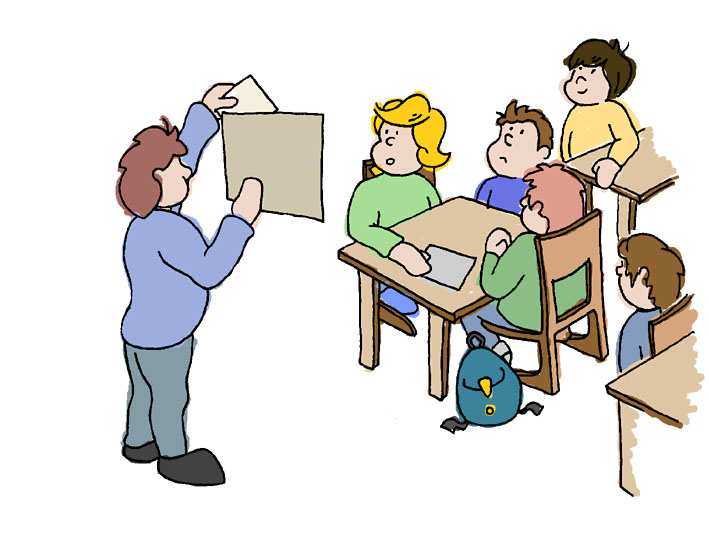
At the beginning of the school year, the principal called three teachers into his office to inform them: As a result of your teaching excellence over the last three or four years, we have come to the conclusion that you are the best teachers in this school. And as a special reward to you, we have identified three classes each with 30 of the brightest students in this school – the students with the highest IQs. And we're going to assign them to you to teach for the entire year. We don't want to be accused of discrimination, so it's very important that you do not tell these children in any way that you know that they've been selected for a screened class. And second of all, we're not going to tell their pa- rents, because we don't want to cause any difficulties there. I expect you to teach exactly the same way you normally do and use exactly the same curriculum, and I expect you to get very good results with these students.
 At the end of the school year, these students led not only the school, but the entire school district in academic accomplish-
Calling the three teachers into his office, the principal said: Well, you've had a very good year. Yes we have [...] it was so easy, replied the teachers. These children were so easy to teach. They were so eager to learn; it was such a pleasure to teach them. Well, maybe I'd better tell you the truth, said the school principal.
This has been an experiment, and those 90 children were chosen out of the school population at random. When I assigned them to your class at the beginning of the year, I had no idea what their IQs were at all. That's incredible! exclaimed the teachers. But how could it be that they scored so high? They did so well. They got such good grades. Ah hah! Yes! It must be because we are such excellent teachers.
To which the principal said, And I think I should also tell you the other side of the experiment. At the beginning of the school year, we put all the teachers' names in a hat, and yours were the first three names that were drawn.
The principal was Robert Rosenthal, the US American professor of psychology at the University of California, Riverside. He has studied the effect of teachers' expectations on students (known as the so called Pygmalion Effect) and took a special interest in the role of the self-fulfilling prophecy (coined by sociologist Robert K. Merton) in everyday life and in laboratory situations.
|
| See also: ► Moral corruption by the power of controlling others – Lord of the Flies effect |
| Siehe auch: ► Pygmalion-Effekt: Durchschnittliche Schüler werden Genies – Robert Rosenthal |
|
 Teacher-centered ⇔ Learner driven |
Links zum Thema Pädagogik und Erziehung / Pedagogic and educationLiteratur
Gleichwürdigkeit, Integrität, Authentizität, Verantwortung
Literature (engl.)
Literaturliste – Alice Miller
Externe Weblinks
Dokumentationen und Filme
98% aller Kinder kommen hochbegabt zur Welt. Nach Beendigung der Schulzeit sind nur noch 2% der Kinder hochbegabt. Trailer, Minute 00:24
External web links (engl.)
1. Critical thinking and problem solving Audio- und Videolinks
Das existierende Schulsystem vermittelt Gehorsam. Noten und Frontalunterricht führen zu Angst und Demotivation.
Linkloses Medienangebot
Bildungsreform als der Weg aus der Wirtschaftskrise
Audio and video links (engl.)
Three fundamental responses to the environment: 1. Reptilian brain: Freeze response; 2. Mammalian brain: Fight-or-flight response;
Linkless media offerings
Cultural dumbing down via standardized tests in the US school system; conformist education model adverse to critical thinking introduced by Movie links (engl.)
|
Englisch Wiki
Hawkins
1 Caution: Video documentary Historical Origins Of The Jesuit Order. The Diabolical Society Of Jesus & Knights Of Malta Exposed!, presented by "End Times Prophecies & Events", 4:11:02 duration, 30. October 2016 ⇑
2 Sexual theory by Sigmund Freud, Cognitive theory by Jean Piaget, Social theory by Karl Marx, Behavior theory by B.F. Skinner ⇑
3 The families related to the Committee of 300 include such notable names as Agnelli, Balliol, Beale, Bell, Bouvier, Bush, Cameron, Campbell, Carnegie, Carrington, Coolidge, Delano, Douglas, Ford, Gardner, Graham, Hamilton, Harriman, Heinz, Huxley, Kuhn, Lindsay, Loeb, Mellon, Montgomery, Morgan, Norman, Oppenheimer, Rhodes, Roosevelt, Russell, Savoy, Schiff, Seton, Spencer, Stewart/Stuart, Taft, and Wilson. ⇑