
Wiki / Paradox
Inhaltsverzeichnis: (verbergen)

Digital verstärkte Fotografie der Wandfliesen |
|
Ich komme, ich weiß nicht woher, |
|
The more I know, the more sure I am |
In Japan werden zerbrochene Schalen und Vasen nicht entsorgt, sondern an den Bruchstellen mit Urushi-Kittmasse, die mit feinstem Pulvergold versehen ist, repariert. Durch die vorgenommene Veredelung werden die angeschlagenen (unvollkom-

menen) Gefäße (wieder) heil, ganz, vollkommen. Diese im 16. Jahrhundert entstandene Praxis liegt der paradoxe Glaube zugrunde, dass die Dinge des alltäglichen Gebrauchs an Schönheit gewinnen, wenn sie beschädigt sind und eine Geschichte vorzuweisen haben.
Die metaphysisch begründete Wabi-Sabi-Philosophie und -Ästhetik wert-
schätzt und nährt Echtheit, Einfachheit, Schönheit und Fehlerhaftigkeit. Sie umfasst geistige Werte, moralische Vorschriften, die Kunst und Alltagsge-
genstände.
|
| Referenzen: de.Wikipedia-Einträge ► Wabi-Sabi und ► Kintsugi |
| Media reference: Video presentation by Dr. Alexa Altman, US American clinical psychologist, The Art of Kintsugi, produced by Buzzfeed Motion Pictures, presented by Goodful, YouTube film, 6:40 minutes duration, posted 9. December 2018 |
| Siehe auch: ► Vollkommenheit |
 Das letzte Abendmahl, berühmtes Wandgemälde (1494-1498) Leonardo da Vinci (1452-1519) italienischer Universalgelehrter, Maler
Die Zahl 9 ist die höchste, gefüllteste und zugleich demütigste der neun natürlichen Grundzahlen. Sie gilt als mystische und heilige Zahl, unter anderem deshalb, weil sie bei der Quersummenbildung aller Ergebnisse von Grundrechenarten nicht mitzählt. Somit ist sie sichtbar-unsichtbar im paradoxen Raum angesiedelt. Sie bildet die Summe der potenzierten Drei (32) (Dreieinigkeit).
Die Zahl 12 gilt als Zahl der Vollkommenheit, und es wurde sogar im Dutzend gerechnet.
Chaos – die instabile, neu ordnende Zwischenphase – ist der Vorläufer des Wandels.
König Artus und Christus sind von je 12 Rittern bzw. Aposteln umgeben. Ihre Rolle und Mission des Dreizehnten in der Runde ist/war die Hingabe des Einen zu Gunsten des Ganzen. Die unerwünschte 13. Fee im Dornröschen-Märchen spricht an Stelle der 12. Fee einen todbringenden Fluch aus, den die 12. an 13. Stelle in einen paradoxen Segen umwandelte. Er erfüllte sich, als die Zeit gekommen war und die Heldin 14 Jahre gelebt hatte und davor stand, ihr drittes Jahrsiebt zu be-
In der Zahl 100 sind 3 Zahlenebenen = Potenzen = Wachstumsstadien enthalten. Die 1000 – indirekt die Zahl der vierten Ebene – repräsentiert die Zeit und die Ewigkeit. Wenn die Zeit erfüllt ist, die vierte Potenz = die geistige Ebene erreicht ist, hebt sich der Fluch auf der 3er-Ebene = 100 auf, indem er durch die wandelnde Potenz der Zahl Vier = 1000 überstrahlt wird. Für Gott sind 1000 (4) Jahre wie 1 Tag. |
| Siehe auch: ► Gesetz 3:1 und ► Dutzend (12) – die vollkommene Zahl und ► Dichotomie der Zeitrechnungen 13:20⇔12:60 – 13⇔12 |
|
Die westliche Logik gründet sich im Wesentlichen auf dem Satz vom ausgeschlossenen Dritten. Der griechische Philosoph Aristoteles (384-322 v. Chr.) erklärte dieses Entweder-Oder-Prinzip, wonach eine Aussage entweder gilt oder nicht gilt unter Ausschluss eines Dritten (lat.: tertium non datur). Die westliche Ontologie der dualistischen Statik wurde erst durch die Entdek-
kungen der Quantenphysik im 20. Jahrhundert entkräftet – vor allem durch das Phänomen der Superposition [Überlagerung von zwei oder mehreren Eigenzuständen eines Objekts] sowie durch das paradox erscheinende Prinzip der nichtlinearen
Nichtlokalität, das die Interverbundenheit von Objekten jenseits von Raum und Zeit postuliert. Prozesse im mikrokosmischen Bereich scheinen weder an das kausale Denkmodell der Ursache und Wirkung noch an den Satz vom ausgeschlossenen
Dritten gebunden zu sein.
Die Philosophie des chinesischen Zen-Buddhismus und Taoismus und bedingt auch die westliche Dialektik nach Georg Wil-
helm Friedrich Hegel begrüßen das Dritte [tertium datur]. Taoisten und Buddhisten sehen Immanenz und Transzendenz als untrennbare Einheit: Samsara ist Nirvana, und Nirvana ist Samsara.
| Siehe auch: ► HuangPo und ► Tao und ► Paradigmale Bewusstseinsfelder ► Vierstufige Gebetseinsichten – Richard Rohr und ► Vier geschichtliche Entwicklungsbögen auf dem Weg zur Würdekultur |
Vertreter des Relativismus argumentieren beispielsweise mit der verallgemeinernden Aussage
Ein übliches Argument zur Entkräftung relativistischer Standpunkte ist deren intrinsische Widersprüchlichkeit.

Die relativistische Behauptung Alles ist relativ! beinhaltet folgendes Paradox:
Dem moralischen Relativismus, welcher die Wahrheit des Absoluten und spirituelle Prinzipien verneint, schreibt Dr. Hawkins den einsetzenden Niedergang der westlichen Gesellschaft und der Welt im Allgemeinen zu. Er erklärte, dass das antike Rom nicht durch äußere Machthaber besiegt wurde, sondern infolge der Dekadenz im Inneren untergegangen ist.
| Siehe auch: ► Relativismus |
|
"Zweideutigkeit", "Doppelsinn" und 'tolerare'' ("erdulden", "ertragen"), teilweise auch als Unsicherheits- oder Ungewissheits-
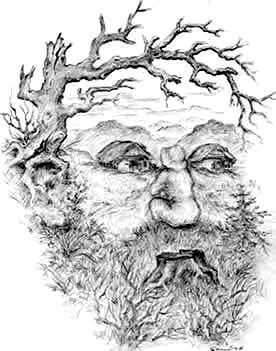 Biofeedback ist eine verhaltenstherapeutische computerisierte Methode zur Messung und Steuerung von Körperreaktionen. Die Biofeedback-Methode erzeugt Rückmeldungen von Körperreaktionen durch appara-
Unterschiedliche Gehirnaktivitäten erzeugen örtlich unterschiedliche Ge- |
| Referenzen: de.Wikipedia-Einträge ► Ambiguitätstoleranz und ► Ambitendenz |
| Siehe auch: ► Geduld und ► Meditation mit den Gralstafeln von Chartres |
| See also: ► Brain myths debunked |
 Skulptur nach einer Zeichnung des Grafikers M. C. Escher (1898-1972)
Sidney Coleman, der Vorsitzende der Fakultät für Physik in Harvard und Alan Guth, Physiker am Massachussetts Institute of Technology (MIT) |
 Till Eulenspiegel, Brunnenfigur in Magdeburg Till Eulenspiegel ging eines schönen Tages mit seinem Bündel an Habse- "Sag schnell – wie weit ist es bis zur nächsten Stadt?"
Till Eulenspiegel antwortete: "Wenn Ihr langsam fahrt, dauert es wohl eine halbe Stunde. Fahrt Ihr schnell, so dauert es zwei Stunden, mein Herr."
"Du Narr",
schimpfte der Kutscher und trieb die Pferde zu einem schnellen Galopp an
Till Eulenspiegel ging gemächlich seines Weges auf der Straße, die viele Schlaglöcher hatte. Nach etwa einer Stunde sah er nach einer Kurve eine Kutsche im Graben liegen. Die Vorderachse war gebrochen und es war just
Der Kutscher bedachte Till Eulenspiegel mit einem bösen und vorwurfsvollen Blick, worauf dieser nur sagte: "Ich sagte es doch: Wenn Ihr langsam fahrt, eine halbe Stunde."
|
| Quelle: ► Lothar J. Seiwert (*1952) deutscher Ratgeberautor, Wenn du es eilig hast, gehe langsam, S. 21, Campus Fachbuch Verlag, Amazon.de Sonderausgabe 17. April 2003 |
| Siehe auch: ► Geschichtensammlung und ► Perspektive und ► Zeit |
| See also: ► Paradox of deceleration |
|
|
|
| Quelle: ► Artikel Beispiele für das Oxymoron, präsentiert von dem Deutschportal Wortwuchs, undatiert |
| Referenz: de.Wikipedia-Eintrag ► Oxymoron |
| Artikel: ► Was ist ein Oxymoron?, präsentiert von der Plattform für Schreibende Pubikum, Elfriede Ammann, 15. Oktober 2020 |
| Siehe auch: ► Witze und ► Zen Geschichten |
|
|
O reiche Armuth! Gebend, seliges Empfangen! |
|
Finster war's, der Mond schien helle |
| ||||||||||||||||||
| Siehe auch: ► Linearitaet vs. Nichtlinearitaet und ► Witze ► Wo Gott (nicht) wohnt – Paradoxe Wortspiele |
| See also: ► Where God does (not) live – Paradoxical wordplays |
| ||||||
| Quelle: ► Dieter Hildebrandt (1927-2013) deutscher Kabarettist, Schauspieler, Buchautor, zitiert in: Artikel Kabarettist Hildebrandt: "Der Mensch ist Mittel. Punkt!", Rhein-Zeitung, 3. April 2012 |
Persönliche Bekenntnisse

Geständnis eines ehemaligen Normopathen: Abstandnehmend von einer Welt des Sollens
Selbsterkundung
Appelle
Empfehlungen
Zukunftsaussichten
Schlussfolgerungen
Einsichten
Huang-Po sagte: Es gibt eine Lehre des Zen, ohne dass Zen gelehrt werden kann.
Flüssige Unbeständigkeit = absoluter Zustand
Theodizee-Paradoxon3
Barth führt aus, dass der Mensch nicht dazu berechtigt sei, Gott hinsichtlich der Existenz des Bösen anzuklagen.
Teilung und Einheit – ganzheitlich bewerkstelligt
Finanzielle Unabhängigkeit macht nicht glücklich. Die Glücksforschung widerlegte diesen Irrglauben.
|
Die Trefferquote der Take-the-best-Strategie wird paradoxerweise durch das Weglassen von Informationen verbessert.
Entwicklungsschritte: 1. Blutige, schnitttiefe Chirurgie, 2. minimal-invasive Chirurgie durch die Arthroskopie (Siebziger Jahre),
3. Laparaskopische Chirurgie (~2010)
|
Every problem is caused by its solution. So therefore, let's go for it. Removed video interview with Dr. Victor Vernon Woolf, US American physicist, founder of the method "Holodynamics", Holodynamics, part 4, host Lita Cox, Holodynamics graduate, minute 11, 2009
Hinweise: Die Hühner und die dazugehörigen Eier sind schon da, ehe die Fragen danach entstehen. Das Ei war vor dem Küken da.

Literaturzitate
Gedicht
Humor
Weisheit
| ||||||||||||||||||||
Zirkelschluss – Gesuchtes sucht Sucher
Paradox der Existenz: Siehe englische Zitate


Das althochdeutsche Wort Mär heißt "Botschaft aus übersinnlichen Welten". Luthers Weihnachtslied Vom Himmel hoch, da komm ich her, ich bring euch gute neue Mär drückt genau das aus.
Die Handlungsbögen der Märchen beinhalten Erfahrungsmomente der vier Arten von Weltanschau-
ungen. Märchen spiegeln symbolische Inhalte, die schließlich in der zugespitzten Krise in eine so ge-
nannte Verschränkung einmünden, aus der wiederum eine zunächst unvorstellbare Lösung auftaucht. Wenn sich Sinn mit Widersinn, diesseitige Realität mit erweiterter Wirklichkeit, Verstand mit Seele ver-
schränken, gelingt es den Figuren im Märchen, sich aus dem archetypischen Dilemma der Märchen-
handlung zu lösen.
"Das Unmögliche ist die Regel im Märchen.' Nur unser Verstand kann die Ganzheit des Lebens, die paradox ist, nicht begreifen, indem er immer nur entweder-oder kennt. [...] Wer hat schließlich wen erlöst? Wieder haben zwei Hälften zusammengearbeitet. Die Seele spielt Schicksal, das Bewusstsein muss reagieren."
Ulla Wittmann, deutsche Autorin, Ich Narr vergaß die Zauberdinge. Was Märchen für das eigene Leben bedeuten'', Herder Verlag, S. 157, 1995
Paradoxe Situationen, Synchronizitäten, Koans und philosophische Fragen sind nicht kurzfristig zu be-
antworten und zu verstehen. Vielen gelingt es nur, sie anzunehmen oder gar zu lösen, wenn sie sie über einen unbestimmt langen Zeitraum im eigenen Feld der Ambivalenz halten können.
Das Möbiusband hat scheinbar wie jedes Band zwei Kanten (oben und unten) und zwei Seiten (vorne und hinten). Wenn man "mimetisch" – mit dem Finger – das Band entlang streicht, entdeckt man, dass es eigentlich nur eine Kante und nur eine Seite hat. 🔲 Das Möbiusband oder Möbiusschleife bezeichnet eine Fläche, die nur eine Kante und eine Seite hat. Als optische Täuschung 👀 ist sie nicht orientierbar. Man hat Mühe, zwischen unten und oben bzw. zwischen innen und außen zu unterscheiden.
Gemeint ist der Grundsatz der widerlegbaren Vermutung von Fahrlässigkeit oder Beweis des ersten Anscheins.
Sarkastischer pseudo-lateinischer Kommentar: Auch wenn eine Situation "für sich selbst spricht", muss man dennoch ihre Bedeutung erfassen.
| Referenz: de.Wikipedia-Eintrag ► Tautologie |
Personal avowals
Recommendations
Appeals
Conclusions

Insights
God's Will ⇔ personal will

C.G. Jung,''Psychology and Alchemy. Collected Works. Volume 12, 18
|

Alternative source: Jeremy Narby (*1959) Swiss-Canadian anthropologist, author, The Cosmic Serpent. DNA and the Origins of Knowledge, S. 79, Georg, 1998, Jeremy P. Tarcher/Putnam, 5. April 1999
Original meaning: "Emergent truth" ❄ Secondary meaning: "Falsehood"
The proper role of the humble civil leader is to serve as a conduit and steward of Divine power.

See also: Writings of Hermes Trismegistos
Misattributed to Abraham Lincoln (1809-1865)
|

Derailing approach: Self-righteous and violent anger can be derailed by the Paradoxical approach.
NOT TRUE: Orgasm is the only path to sexual satisfaction.
Obedience of cohesion and order ⇔ the obedience of cowardice and submission
Holding two opposed ideas in mind
Essay by Dr. Bob Moorehead, former pastor of the Overlake Christian Church, Redmond, Washington, "The Paradox of Our Age", written 1969, cited in: collection of prayers, homilies, and monologues Words Aptly Spoken, Overlake Christian Bookstore, 1st edition 1. December 1995; falsely attributed to George Carlin |
Referring to the Cabinet stuck in the Chamberlainian paradox
|
Literary quotes
Paradoxical, contradictory slogan of the Party that believed that they could endlessly engage in a war to keep peace in the country of Oceania. It promotes "double thinking."
Movie lines
Shangri-La, as described by James Hilton, is a haven of peace and tranquility for the world-weary diplomat Richard Conway (impersonated by actor Peter Finch). There is no crime, no war, no sickness, no pollution, no sadness and a lifetime may be in the 100s of years.
Humor
|
Jesus said to them: "When you make the two [i.e. brain hemispheres] into one, and when you make the inner like the outer and the outer like the inner, and the upper like the lower, and when you make male and female into a single one, so that the male will not be male nor the female be female, when you make eyes in place of an eye [i.e. mirror neurons], a hand in place of a hand, a foot in place of a foot, an image in place of an image, then you will enter [the kingdom]."
Gospel of Thomas, verse 22, part of the Biblical apocrypha, 50-140, 350 AD, rediscovered 1945
|
♦ · ♦◊♦ · ♦
|
Jesus said to them, "When you make the two one, and when you make the inside like the outside and the outside like the inside, and the above like the below, and when you make the male and the female one and the same, so that the male not be male nor the female female; and when you fashion eyes in the place of an eye, and a hand in place of a hand, and a foot in place of a foot, and a likeness in place of a likeness; then will you enter the kingdom."
The Gospel of Thomas, part of the Biblical apocrypha, 50-140, 350 AD, rediscovered 1945, Thomas O. Lambdin, translator, verse 22, The Gnostic Society Library, The Nag Hammadi Library, Harper Collins, San Francisco, 1990
|
| Source: ► Steven Wright (*1955) US American comedian, actor, writer, oneliner aphorisms |
| See also: ► Jokes |
| Siehe auch: ► Oxymoronische Witze |
Personal avowals
|
| ||||||||||||||||||||||||||||||||||||||||||||||||||||||||||||||||||||||||
| Source: ► Richard Farson, Ph.D. (1926-2017) US American psychologist, co-founder, president and chief executive officer of the Western Behavioral Sciences Institute, educator, author, Management of the Absurd. Paradoxes in Leadership, Free Press, 13. March 1997 |
|
|
|
|
| Source: ► Article 100 Awfully Good Examples of Oxymorons, presented by the publication ThoughtCo., updated 9. January 2016, updated 6. March 2020 |
| Reference: en.Wikipedia entry ► Oxymoron |
| See also: ► Jokes and ► Zen stories |
| |||||||||||||||||||||||||
| Paraphrased famous quote from: ► First they came... coined by Martin Niemöller (1892-1984) German Lutheran pastor, anti-Nazi theologian, Easter sermon and discussion with pastor Hans-Joachim Oeffler, community hall Kaiserslautern-Siegelbach, Easter 1976 |
| See also: ► Courage and ► Ethics |

James Bond Stockdale (1923-2005) was a most highly decorated officer in the history of the United States Navy, who had survived prison camps and continuous torture. Later he was a teacher of philosophy at Stanford Univer-
sity.
Setbacks, disappointments, accidents, disease, loss of love, inevitable difficulties are solved in the Stockdale Paradox, that implies a very important lesson:
| Source: ► Leadership |
Paradoxical situations, synchronicities, koans and philosophical questions cannot be solved in short term,
they can only be embraced by many for a prolonged period of ambivalence.
| See also: ► Collective Wisdom and ► Questions and ► Synchronicities and ► Koans |
| See also: ► Zarathustra |

One day Till Eulenspiegel was leisurely strolling to town.
All over sudden he heard the noise of a nearing vehicle on a road behind him. Soon after a coach came to a halt next to him on a road with pot-holes here and there. The coachman, in
a hurry, asked Till:
Till replied:
scolded the coachman churning the horses to a fast gallop. Not long after that the coach was out of sight.
About an hour later Till turned around a corner where he saw a coach lying in the ditch. Its leading axle was broken. Sure enough it was the hurried coachman from before bitching while trying to repair his coach. Addressed with a scornful glance the easygoing passenger repeated to the driver:
| Source: ► Stories |
| Siehe auch: ► Paradox der Entschleunigung |
Humpty Dumpty's paradoxical phrases

Alice said.
Humpty Dumpty smiled contemptuously.
Alice objected.
Humpty Dumpty said, in rather a scornful tone,
said Alice.
| Source: ► Lewis Carroll (1832-1898) English mathematician, logician, Anglican deacon, photographer, writer, Through the Looking-Glass, and What Alice Found There, Macmilan, 1871 |
|
Stillness is what creates love, |
| Source: ► Choe Yeong (1316-1388) Korean general during the Goryeo period, Sugi master Sugi = fishing tackle made from fluorocarbon instead of plastic monofilament |
| See also: ► Poems |
Links zum Thema Paradoxa und Paradoxie / Paradoxes and the paradoxicalParadoxe Bildeindrücke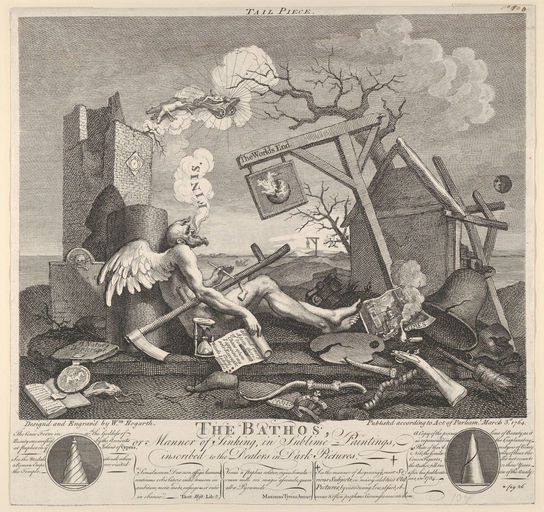 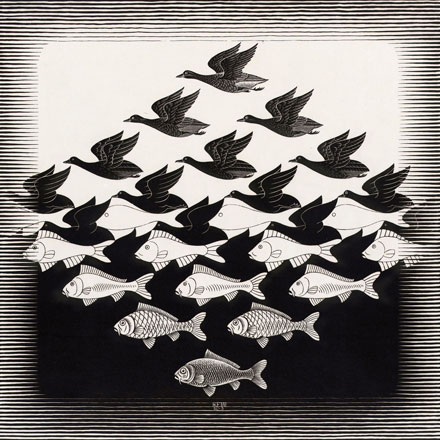  
Literatur
Sex und Gender sind Schlüsselbegriffe der Evolutionsbiologie. Sie werden jedoch zur Verbreitung einer radikal-feministischen "Geschlechter-Theorie", sprich der Politikagenda des "Gender Mainstreaming" (GM), eine "Frau-gleich-Mann-Ideologie", sinnentstellend verwendet. Gender Mainstream aka die soziologischen "Gender Studies" sind auf die Irrlehren des US-amerikanischen pädophilen Kinderschänders, klinischen Psychologen, Sexologen und Psycho-Erziehers John Money (1921-2006) zurückführbar. Moneys Vordenker war Alfred Kinsey, einer der Urväter der Frühsexualisierung. Kutschera stellt dem Moneyismus die Erkenntnisse der Geschlechtergerechten Biomedizin (GB) gegenüber,
Literature (engl.)
Based on interviews with 91 eminently creative people
Externe Weblinks
Weblinks zum Thema Paradox – QuoraBeiträge verfasst von Elfriede Ammann, präsentiert auf der kalifornischen Frage-und-Antwort Webseite Quora DE
External web links (engl.)
Referencing and quoting from: David Bohm, On Dialogue, Routledge, 1996, 2nd paperback edition 21. September 2004
Audio- und Videolinks
Das Spannungsverhältnis zwischen Volk und Eliten ist bekannt als das 'Paradoxon der Demokratie'. Aristoteles schlug vor, dass "die Armen, weil sie die Mehrheit bilden, das Vermögen der Reichen unter sich teilen." Aus Sicht der jeweils herrschenden Eliten sind Demokratien daher mit einem besonderen 'Stabilitätsproblem' behaftet.
Audio and video links (engl.)
Deleted media offering
|
Hawkins
1 Haftanstalt für Menschen mit Behinderung ⇑
2 Entnommen aus Friedrich Hölderlins Ode Heidelberg ⇑
3 Altgriechisch für "Rechtfertigung Gottes" ⇑
4 Referencing Carl Gustav Jung (1875-1961) Swiss psychiatrist, psychoanalyst, founder of a new school of depth psychology, author, Modern Man in Search of a Soul, Harcourt Harvest, 5th edition 4. August 1955, 1971 ⇑
5 Article Revisiting John Todd (1950-2007): "Rothschilds Rule with Druid Witches", 7. August 2013: Philippe de Rothschild (1902-1988) gave the plan to his mistress Ayn Rand for her novel Atlas Shrugged.
"[Ayn Rand's] writings are intellectually shallow econo-porn, part Krafft-Ebing and part Horatio Alger, possessing neither coherence nor philosophical depth. Rand's heroes [sociopath Ragnar, rapist Francisco, rough-trade cruiser Rearden] aren't just rapists, woman-beaters and thieves. They're also terrorists who freely blow up or burn properties for ideological reasons." Article What Happened When Some Libertarians Went Off to Build Ayn Rand's Vision of Paradise, presented by the US American left-leaning website AlterNet, Richard Eskow, 11. September 2014 ⇑
