
Wiki / Psychologie
Inhaltsverzeichnis: (verbergen)

Psyche |
|
Es ist durchaus möglich, überwältigend wahrscheinlich, könnte man vermuten, dass wir über das Leben und die Persönlichkeiten von Menschen stets mehr aus Romanen |
Die Übersetzung des Wortes "Psychologie" (aus dem Griechischen ψυχολογία) bedeutet "Lehre von der Seele" und ist als solche für alle spirituell interessierten Menschen von großer Bedeutung.
Im wissenschaftlichen Mainstream hat die Psychologie die Seele weitgehend verloren und wird als "die empirische Wissenschaft zur Beschreibung, Erklärung und Vorhersage (Prognose) vom Erleben und Verhalten des Menschen, deren Entwicklung in der Lebensspanne und deren inneren und äußeren Ursachen und Bedingungen" definiert.
Sich "angstfrei, akzeptiert, geliebt und liebevoll, achtenswert und geachtet zu fühlen" erfüllt nach dem Psychologen
Abraham Maslow die Anforderungen für seelische Gesundheit.
Abraham Maslow, der bekannte US-amerikanische Glücksforscher, übersuchte in den sechziger Jahren im Rahmen
einer Studie zur psychologischen Gesundheit dreitausend Collegestudenten, um festzustellen, ob sie die Kriterien für
psychische Gesundheit erfüllten. Unter allen Probanden entdeckte Maslow nur einen einzigen geeigneten Studenten,
der die Voraussetzungen für Gesundheit erfüllte.
Frederick S. Perls, der US-amerikanische Vater der Gestalttherapie, Autor von Büchern wie Das Ich, der Hunger und
die Aggression wollte auch in seiner Sterbestunde im Krankenhaus die Kontrolle behalten:
Eine Krankenschwester berichtet davon, dass sie dem sterbenskranken Perls geraten hatte, im Bett zu bleiben und die Bettpfanne zu benutzen, anstatt zur Toilette zu gehen, da ihm das Aufstehen gegenwärtig das Leben kosten könne. Ungeachtetdessen hievte er sich aus dem Bett und sagte:
Es waren seine letzten Worte, ehe er zu Boden fiel und starb.
| Referenzen: ► G. Krampen, IPC-Fragebogen zu Kontrollüberzeugungen, Hogrefe, Göttingen, 1981 ► U. Klages, Fragebogen irrationaler Einstellungen (FIE), Hogrefe, Göttingen, 1989 ► D. Beckmann, E. Brähler, H.-E. Richter, Der Gießen-Test (GT), 4. überarbeitete Auflage Verlag Hans Huber, Bern, 1990 ► Diagnostisches und Statistisches Manual Psychischer Störungen. DSM IV, 2. verbesserte Auflage Hogrefe, Göttingen, Herausgeber American Psychiatric Association, 1998 |
| Source: ► Article by Carol Giambalvo, Post-Cult Problems: An Exit Counselor's Perspective, published by "AFF News", volume 1, #2, 1995, cited in: Michael Langone, Ph.D., US American counseling psychologist specialized in research about "cultic" groups and psychological manipu- lation, executive director of the International Cultic Studies Association (ICSA), editor of the journal Cultic Studies Review, Recovery from Cults. Help for Victims of Psychological and Spiritual Abuse, W. W. Norton & Company, New York, 1st edition 17. June 1995 |
| Quelle: ► de.Wikipedia Eintrag Liste der klassischen Experimente in der Psychologie |
| Siehe auch: ► Kontrolle und ► Kulte |
| See also: ► Classic psychology experiments |
|
| Referenz: de.Wikipedia-Eintrag ►Persönlichkeitsstörung [Stand Mai] |
| Siehe auch: ► Narzissmus und ► Angst und ► Emotionen |
|
Anhand der bisher einzigen Studie [2001] in Deutschland hinsichtlich der Häufigkeit von Persönlichkeitsstörungen] leiden ~9,4% der deutschen Gesamtbevölkerung an einer Persönlichkeitsstörung, unter psychiatrischen Patienten ist der Anteil mit 40-60% deutlich größer.12 |
|
| Schriftliche Referenzen: ► Lizentiatsarbeit von Stefan J.W. Marti, eingereicht bei PD Dr. U. Fuhrer, Psychologische Effekte beim Gebrauch moderner Kommunikationstechnologien, PDF, Psychologisches Institut, Philosophisch-historische Fakultät der Universität Bern, 1993, 3. unveränderte Auflage Dezember 2001 ► Artikel Psychologische Effekte im Alltag, präsentiert von der Publikation "Achtung leben", undatiert ► Artikel Psychoeffekte: Diese sollten Sie kennen, präsentiert durch die Publikation Karrierebibel, Jochen Mai, Gründer und Chefredakteur der Karrierebibel, 3. Mai 2009 ► Artikel Diese Psycho-Phänomene sollten Sie kennen. Alltägliche Psychologie-Phänomene, präsentiert durch die Publikation Karrierebibel, Jochen Mai, Gründer und Chefredakteur der Karrierebibel, 4. Mai 2009 ► Blogartikel 4 bewährte psychologische Effekte für Ihr Marketing, präsentiert von der Publikation Konversionskraft, Julia Weisbecker, 7. Juli 2015 ► Facharbeit Der Mensch – ein rationales Wesen?, Marthe Dogan, Wirtschaftsgymnasium TBB, 13. Januar 2017 ► Artikel 5 psychologische Effekte, die jeder Eventmanager beachten sollte, präsentiert von der Publikation Event Brite, 1. März 2018 |
| Siehe auch: ► Coolidge-Effekt ► "Kleine-Welt"-Phänomen – Jeder kennt jeden über sechs Ecken. ► Begriffssammlung – Kollektive Zivilisationsneurose ► Pygmalion-Effekt: Durchschnittliche Schüler werden Genies – Robert Rosenthal ► Attraktorfelder – abgeschwächte Abbilder der Ursprungsquelle |
| See also: ► Bystander effect – withheld intervention due to diffusion of responsibility |
Dunning-Kruger-Effekt
Unrealistische Selbsteinschätzung mit mangelnder Fach- und Sachkenntnis eines Anfängers
Unterentwickelte Fähigkeit zur Selbsterkenntnis
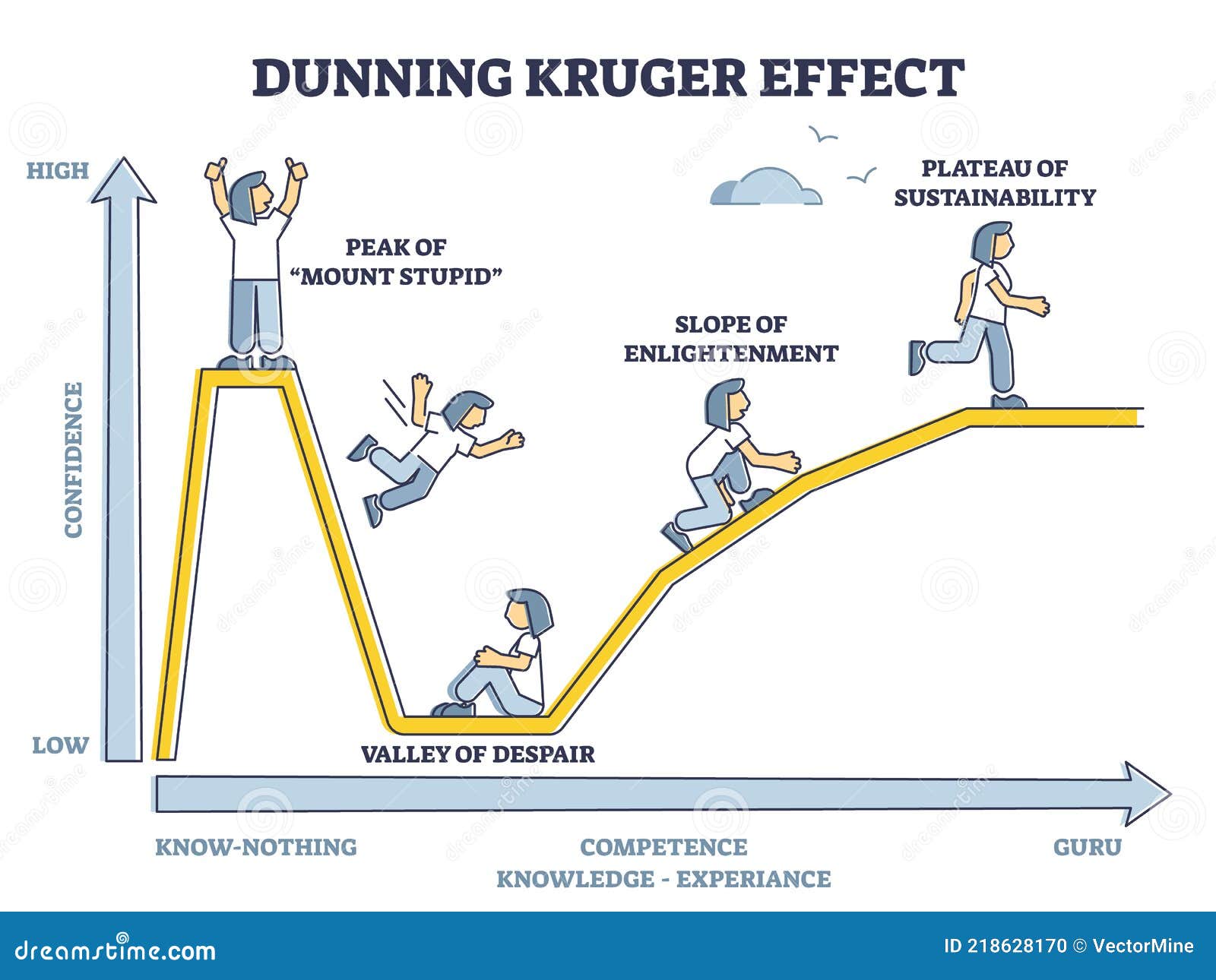
Verhältnis von Selbsteinschätzung / Selbstvertrauen ⇔ fundiertem Fachwissen / Können
= Unterentwickelte Selbsterkenntnis
Weh denen, die in ihren eigenen Augen weise sind und sich selbst für klug halten. Jesaja 5, 21 (NT)
| See also: ► Conscious competence learning model |
Empfehlungen
Sieben erlernbare Schlüsselkompetenzen der Resilienz

|
|
|
Buchbesprechungen
| Literatur: ► Dr. med. Peter Rutter, US-amerikanischer Jungscher Psychiater, Autor, Verbotene Nähe, Econ, Taschenbuchauflage 1. Januar 1991 |
| See also: ► Quotes on Sex in the forbidden zone – Peter Rutter |
Personal avowals
Fifty years after Ronald David Laing set up his experimental mental-health facility – without locks or drugs – a play and a film aim
to examine his legacy. Laing fathered a total of six sons and four daughters by four women.
The senior editor of PT described Dr. Eysenck as "one of the world's best-known and most respected psychologists."
When pregnant with their 1st child, Harry's wife Meghan was suicidal. The Royals refused to help her. Therapy helped Harry
to 'break the cycle.' Megxit was 'an awakening'. Harry insists on speaking out.
Recommendations
Critique on positive psychology
Hollingshead and Redlich, landmark book Social Class and Mental Illness, S. 237, 1958
Conclusions
Insights

Watch also: Video presentation Thomas Jefferson's Practice of Happiness, presented by the platform Optimal Living 101, YouTube film, 1:10 minutes duration, posted by Brian Johnson 24. November 2012
♦ A narcissist may project extremely powerful obliterating the distinction between self and other.
♦ Less disturbed personalities get rid of feelings and get help with them.
♦ An emotionally balanced person may use it as a bridge to empathy and intuitive understanding.
Culture deeply shapes human cognition.
Nine traits of Borderline Personality Disorder
|
| References: en.Wikipedia entries ► Dunning–Kruger effect ► Cognitive dissonance ► Curse of knowledge ► Four stages of competence ► Grandiose delusions ► Hanlon's razor ► Hubris ► Optimism bias ► Overconfidence effect ► Self-deception ► Self-serving bias ► Superiority complex ► Ultracrepidarianism |
Satire
The mind cannot possibly study itself.
|
|
Book reviews
| Siehe auch: ► Zitate über Sex zwischen Therapeut und Klient – Peter Rutter |
| |||||||||||||||||||||||||||||||||||||||||||||||||||||||||||||||||||||||||||
| Source: ► Chart III. Correspondences of Psychology, presented by the publication Alchemylab.com, undated |
| See also: ► Hermes Trismegistos |
| |||||||||||||||||||||||||||||||||||||||||||||||||||
| Reference: en.Wikipedia entry ► Classical conditioning |
| Written references: ► Article Why We Do Dumb or Irrational Things: 10 Brilliant Social Psychology Experiments, presented by the PsyBlog, 13. November 2007 ► Critique: Article The Stanford Prison Experiment was massively influential. We just learned it was a fraud.The most famous psychological studies are often wrong, fraudulent, or outdated., presented by the US American news and opinion website Vox owned by Vox Media, Brian Resnick, 13. June 2018 |
| Media offering: ► Audio assessment and interview with Gina Perry, Australian science historian, journalist, writer, Taking A Closer Look At Milgram's Shocking Obedience Study, presented by the non-commercial US American media organization National Public Radio (NPR), 8:00 minutes duration, aired 28. August 2013 |
| See also: ► Pygmalion effect – Average people may perform at genius level. ► Moral corruption by the power of controlling others – Lord of the Flies effect ► Cognitive dissonance |
| Siehe auch: ► Klassische psychologische Experimente |
| |||||||||||||||||||||||||||||||||||
| Source: ► Article Why we do dumb or irrational things: 10 brilliant social psychology studies, presented by the PsyBlog, Jeremy Dean, reissued by the online publication Sott.net, 11. November 2013 |
|
|
| Sources featuring Carol Tavris, Ph.D. (*1944) US American social psychologist, author, Elliot Aronson (*1932) US American psychologist, author ► Book: Mistakes Were Made (But Not by Me). Why We Justify Foolish Beliefs, Bad Decisions, and Hurtful Acts, Mariner Books, reprint edition March 2008 ► Audio interview Carol Tavris on Mistakes and Skeptics, episode #55, presented by the US American web radio station Skeptiko Science at the tipping point, host Alex Tsakiris, 50:12 minutes duration, 23 MB, aired 14. October 2008 ► Audio interview Mistakes Were Made, presented by the US American radio show For Good Reason in association with the skeptic James Randi Educational Foundation, host D. J. Grothe (*1973) US American speaker, writer, YouTube film, 57:43 minutes duration, posted 30. December 2011 ► Video interview Interview with Carol Tavris, presented by the Action Studies Institute, host, founder and director Ken Low, recording and editing by the "Hidden Story Productions", Vimeo film, 1:05:47, posted 14. June 2013 |
| Further written references: ► Book Shankar Vedantam, Indian US American science correspondent for the non-commercial US American media organization National Public Radio (NPR), The Hidden Brain. How Our Unconscious Minds Elect Presidents, Control Markets, Wage Wars, and Save Our Lives, Spiegel & Grau, 19. January 2010 ► Article Cognitive Dissonance: A Spiritual Perspective, presented by the publication Mediate, Barbara Stuart, 26. June 2001 ► Blog article Cognitive bias cheat sheet. Because thinking is hard., presented by the blogspot Better Humans, Buster Benson, 1. September 2016 1. We don't see everything. 2. Our search for meaning can conjure illusions. 3. Quick decisions can be seriously flawed. 4. Our memory reinforces errors. ► Article The Cognitive Biases Tricking Your Brain. Science suggests we're hardwired to delude ourselves., presented by the US American magazine The Atlantic, Ben Yagoda, September 2018 |
| See also: ► Classic psychology experiments and ► Listing cognitive biases ► Pygmalion effect – Average people may perform at genius level. ► Moral corruption by the power of controlling others – Lord of the Flies effect ► Plato's allegory of the cave ► Error |

self and not-self clashing
| |||||||||||||||||||||||||||||||||||||||||||||||||||||||||||||||||||||||||||||||||||||||
| Source: ► Article 58 Cognitive Biases that Screw up Everything We Do, presented by the US American business news website Business Insider, Drake Baer and Gus Lubinjun, 18. January 2014 |
| Written references: ► Article The Cognitive Biases Tricking Your Brain. Science suggests we're hardwired to delude ourselves., presented by the US American magazine The Atlantic, Ben Yagoda, September 2010 ► Article Here are 24 cognitive biases that are warping your perception of reality, presented by the publication of the Swiss nonprofit foundation World Economic Forum, Jeff Desjardins, 6. December 2018 ► Infographic Every Single Cognitive Bias in One Infographic, presented by the Visual Capitalist, Jeff Desjardins, 25. September 2017 |
| See also: ► Cognitive dissonance ► Classic psychology experiments ► Pygmalion effect – Average people may perform at genius level. ► Ten fallacies counter to rational debate ► Lord of the Flies effect – Moral corruption by the power of controlling others |
|
The Austrian psychotherapist and Nazi concentration camp survivor Viktor Frankl found meaning in his intense suffering. The spiritual / soul life strengthened the camp prisoners, helped them adapt, and so improved their chances of survival. It
Psychoanalyst, child psychologist, and Nazi concentration camp survivor Bruno Bettelheim (1903-1990) found the socio-
Bread and games keep the masses going. |
| |||||||||||||||||||||||||||||||||||
These recommentations conincide with the lower and middle rungs of the pyramid of needs created by the US American psychologist Abraham Maslow.
Austrian-born author Bruno Bettelheim suggested:
| Note: ♦◊♦ The Greek philosopher Socrates lived by the guidance of his inner voice (daemon). A two thirds majority of the committee in Athens sentenced him to death (by hemlock poison) in 399 BC. ♦◊♦ Two thirds of the US Americans favor prosperity over fairness [social justice]. [Status 2011] ♦◊♦ The apocalyptic Revelation (last book of the New Testament) refers to the 2/3 ⇔ 1/3 ratio: Two thirds of mankind will perish whereas a third of mankind will rise after having endured the shortened "tribulation" period. |
|
| References / critical biographies: ► Nina Sutton, British-French journalist, author, Bettelheim. A Life and a Legacy, Basic Books, 1996, 2nd edition 20. July 1997 ► Richard Pollak, US American author, The Creation of Dr. B. A Biography of Bruno Bettelheim, Simon & Schuster, 1st edition 1. January 1997, Touchstone, 6. April 1998 Definitive exposure of Bettelheim as a charlatan whose life was based on falsehood and self-aggrandizement |
| See also: ► Classic psychology experiments Solomon Ash (1950s) and Stanley Milgram (1961) found that two thirds of the subject were conforming with authority whereas one third of the test persons refused to take non-ethical orders from authority. They carried out the dictum of their inner value structure. ► Progression of addiction Two thirds remain in addiction mode, one third endures the sobering relearning process. |
| See also: ► Sociology and ► Consciousness-Tables and ► Bread ♦ games ♦ endurance – when exposed to extreme conditions |
| Siehe auch: ► Resilienz – Zwei Drittel ⇔ Ein Drittel-Verhältnis ► Krebsheilung – Zwei Drittel ⇔ Ein Drittel-Verhältnis [Healing of cancer – Ratio of two thirds ⇔ one third] |
| ||||||||||||||||||||||||||||||||||||||||||||||||||
| Source: ► Article 23 Signs You're Secretly An Introvert, presented by the US American liberal-oriented online newspaper HuffPost, Carolyn Gregoire, 20. August 2013, updated 2. November 2018 |
| Literature: ► Sophia Dembling, US American introvert, author, The Introvert's Way. Living a Quiet Life in a Noisy World, Perigee Trade, 4. December 2012 ► Susan Cain (*1968) US American former corporate lawyer, negotiations consultant, self-described introvert, lecturer, author, Quiet. The Power of Introverts in a World That Can't Stop Talking, Crown Publishing Group, 24. January 2012, Broadway Books, 29. January 2013 |
| Articles: ► 6 Illustrations That Show What It’s Like in an Introvert's Head, presented by quietrev.com, Liz Fosslien and Mollie West, February 2016 ► 'Introvert or Extrovert' Is the Wrong Way to Define Your Identity, presented by the publication The Cut, Drake Baer, 27. October 2016 ► 10 Remarkable Reasons Why Introverts Make Better Wives, presented by the publication YourTango, Michelle Horton, 26. January 2015 1. Faithfulness, 2. Great listeners, 3. Freedom, 4. Thoughtfulness, 5. Honesty, 6. Great communication, 7. Choices, 8. Intimacy, 9. Seeing the other side of life, 10. Unterstanding the mystery of life |
| ||
| ||||||||||||||||||||||||
| Source: ► Blog article 10 Myths About Introverts – blog post by Eli Bishop, presented by Ann Hoy [July 2011], reposted 10. September 2013 |
Following their calling allows them to step out.
| |||||||||||||||||||||||||||||||
| Written sources: ► Blog article Introvert or Extrovert? Everything You Need to Know About Them, presented by Lifehack, Chloe Chong, ~2014 ► Blog article Introvert, Extrovert, Ambivert Positives Denken Why Should You Care?, presented by Thomson Reuters, Jean Rakich, 7. September 2017 |
| Reference: ► Blog article Carl Jung on the misinterpretation by Americans of "Introvert" and "Extrovert.", presented by Carl Jung Depth Psychology, Lewis Lafontaine, 13. May 2014, reissued 13. May 2020 |
 |
|
Despite their reputations, English people are just as extrovert as Americans.
| Source: ► Article Different nationalities really have different personalities, presented by the British Broadcasting Corporation (BBC) publication BBC Future, Christian Jarrett, 13. April 2017 |
Optimists tend to be more stress-hardy, more happy, draw less illnesses and live longer.
Pessimists tend to be much less happy, draw more illnesses and die earlier.
|
| See also: ► Possibility |
Both optimists and pessimists contribute to society. The optimist invents the aeroplane, the pessimist the parachute. George Bernard Shaw (1856-1950) Irish politician, pacifist, satirist, dramatist, Nobel laureate in literature, 1925, unsourced
Personal avowal
|
Taming wild young elephants with ear flapping elders
Young bull elephants in South Africa's largest conservation area, Kruger National Park were acting strange- ly out of character – antisocial and aimlessly violent; they were stomping on VWs, pushing over trees for no reason, and even killing other small animals and baby elephants. [*]  African elephant with ears spread in a threat or attentive position Park rangers, among whom Pilanesberg Park's field ecologist Gus van Dyk, came in to study the problem [...] they discovered that there were no older bull elephants in that area. By some accident, all the older bulls had either died or been poached for their ivory, which left the teenage males to roam and forage out of control.
Their solution?33
They brought in some older bulls from other areas by helicopter, lowered them onto the scene, and in a matter of weeks, amazingly, the whole situation had changed. Apparently, all the old bulls did was wave their ears and make various sounds or small charges, and somehow the younger male elephants understood through these communications that their behavior was not exactly the way growing up elephant boys should act. It seemed to be just that simple. Things soon returned to normal once the elders operated as elders.
[*] The violent acting out of young elephant bulls is due to the so called musth. |
| Source: ► Father Richard Rohr O.F.M. (*1943) US American Franciscan friar, author, Adam's Return. The Five Promises of Male Initiation, Crossroad, 1. October 2004 |
| Reference: ► Article The Delinquents. A Spate Of Rhino Killings, presented by the US American television news program CBS News, program 60 Minutes, 22. August 2000 |
| Literature: ► Warren Farrell Farrell.com (*1943) US American political scientist, author, spokesman of men's liberation, men's rights activist, former director of the National Organisation for Women, speaker, author, John Gray (*1951) US American relationship counselor, lecturer, author, The Boy Crisis. Why Our Boys Are Struggling and What We Can Do About It, BenBella Books, 29. March 2018 |
| See also: ► Violence and ► Stories and ► Fairy tales and ► Men and ► Health ► Men's health within the domination system |
| Siehe auch: ► Aufmerksamkeitsdefizit Hyperaktivitätsstörung (ADHS) |
Minute 14:22: ADHD and Oppositional Defiant Disorder: 1. (General) Poor impulse control, 2. Physical hyperactivity 3. Poor attention skills

ADHD and Oppositional Defiant Disorder: 1. (General) poor impulse control, 2. Physical hyperactivity 3. Poor attention skills
Seven months before his death at age 87 Russian Jewish American psychiatrist and "scientific father of ADHD" Leon Eisenberg confessed in his last interview:
Motivational deficit, character failing rather and five underdeveloped brain regions
|
|
Hoffer called for a system's change at age 89: Holding doctors accountable for doing a lousy job
|
Literature
HIGHLY overdiagnosed, Saul calls ADHD "neurochemical distractability/impulsivity". |
|
Articles
Certain brain structures related to emotion and reward are smaller in people with the disorder, new research finds. |
|
Video links
Divergent thinking study – multiple answers to interperting a question
An underdeveloped anterior cingulate cortex in the brain of an ADHD patient results in poor emotional regulation of conflictuous social interaction.
Parental stress and its negative impact on children; autism and ADHD – Minute 4:07 and Minute 6:38
ADD i.e. absent-mindedness as a coping mechanism, recall and implicit memory, counter-will
Enormous rise of ADHD diagnosed US children, research into the origin of the perceived disorder = |
|
| Source: ► Overview Founding Fathers of Psychology, presented by Quizlet, undated |
| See also: ► Shifting the cultural zeitgeist in Western societies ► Consciousness and ► Purpose |
|
Shit happens.
ShiFt emerges.
Shitholes stink.
ShiFtWholes blink.
 Cow dung Johnny goes to modeling class in his school for special [mentally retarded] children and he gets his piece of putty and he's mode- "Hi, Johnny." And Johnny says, "Hi."
And the teacher says, "What's that you've got in your hand?"
And Johnny says, "This is a lump of cow dung."
The teacher asks, "What are you making out of it?"
He says, "I'm making a teacher."
The teacher thought, "Little Johnny has regressed."
So she calls out to the principal, who was passing by the door at that moment, and says, "Johnny has regressed."
So the principal goes up to Johnny and says, "Hi, son."
And Johnny says, "Hi."
 Cow dung And the principal says, "What do you have in your hand?"
And he says, "A lump of cow dung."
"What are you making out of it?"
And he says, "A principal."
The principal thinks that this is a case for the school psychologist. "Send for the psychologist!"
The psychologist is a clever guy. He goes up and says, "Hi."
And Johnny says, "Hi."
And the psychologist says, "I know what you've got in your hand." "What?" "A lump cow dung."
Johnny says, "Right."
"And I know what you're making out of it."
"What?"
"You're making a psychologist."
"Wrong. Not enough cow dung!"
|
| Source: ► Video lecture by Anthony de Mello SJ (1931-1987) Indian Jesuit priest, psychotherapist, spiritual leader, author, Anthony deMello, Wake up to Life '86 Part 1, presented by Tabor Publishing, 1986, Dailymotion film, minute 0:36, 56:30 minutes duration, posted 25. October 2013 |
| See also: ► Stories |
The Gestalt Prayer
I do my thing and you do your thing.
I am not in this world to live up to your expectations
And you are not in this world to live up to mine.
You are you and I am I.
And if by chance we find each other, it's beautiful,
If not, it can't be helped.
| Source: ► Fritz Perls (1893-1970) German-born US American psychiatrist, psychotherapist, Gestalt Therapy pioneer, Gestalt prayer, quoted in: Gestalt Therapy Verbatim, The Gestalt Journal Press, 1969, 2nd revised edition 1. January 1992 |
| See also: ► Individual and ► World |
Links zum Thema (Positive) Psychologie / (Positive) PsychologyLiteratur
Dr. Grandins autistische bild- nicht sprachorientierten Denkstrukturen ermöglichten ihr, die Gefühls- und Gedankenwelt der Tiere in menschliche Sprache zu übersetzen. Tiere denken auch in Bildern, nicht in Worten. Grandin betrachtet Autismus als Zwischenstadium zwischen Tier und
Robustheit, Widerstandsfähigkeit und Resilienz können den Status quo beibehalten, Antifragilität verbessert sich und ist immun gegenüber falschen Vorhersagen. - Erschütterung führt zu mehr Vor- als Nachteilen. - Stabilität ist ohne Volatilität nicht zu haben. - Posttraumatisches Wachstum.
Die Kultur des Gehorsams entmenschlicht. Gruens Plädoyer für mehr Mitmenschlichkeit zeigt Wege aus dem Kreislauf der Unterordnung.
Literature (engl.)
Jean Piaget is often considered to be one of the most important thinkers of the 20th century in the field of cognition. Callaway challenges Piaget's frequent dual use of the meanings of words within the same paragraph. Extensive comparisons and examples of this extraordinary phenomenon are presented. Conclusions are offered to explain Piaget's intent.
Psychology, psychotherapy, and psychiatry are heavily dependent on culture. Witchdoctors, who employ exorcisms and other magical practices within their culture, are just as effective as psychiatrists in Western civilizations.
Dawes claims to have done a meta-analysis of research into the success of psychotherapy. While in a few cases, such as anxiety disorders, a specific therapy can help, for the most part all therapies are equally successful, or unsuccessful, regardless of their theoretical underpinnings. Experimental research showed that after a short period of training, any intelligent person can produce therapy results equal to those of trained psychologists. They are also as good at predicting future behavior, all of which makes psychprofessionals dubious experts in legal matters.
Powerful critique of modern materialist psychiatry, offering an alternative vision of how the natural healing process can be encouraged with compassionate therapy instead of being suppressed with coercive "treatment"
Psychiatry as a profession and belief system dissected and scrutinized
Literature (engl.) – Robert JohnsonBibliography – Robert A. Johnson (1921-2018) US American Jungian analyst, lecturer, author
Externe Weblinks
Weblinks zum Thema Psychologie – QuoraBeiträge verfasst von Elfriede Ammann, präsentiert auf der kalifornischen Frage-und-Antwort Webseite Quora DE
Weblinks zum Thema Autismus – QuoraBeiträge verfasst von Elfriede Ammann, präsentiert auf der kalifornischen Frage-und-Antwort Webseite Quora DE
External web links (engl.)
On conflict resolution
Repression • Distortion • Reaction • Formation • Projection • Splitting • Groupthink • Idealization • Intellectualization • Rationalization • Displacement • Sublimation • Altruism • Humour as ego defense • Asceticism
Introverts tend to be a bit more empathetic than extroverts.
The condition known as "dissociative identity disorder" (formerly known as MPD) might provide an explanation of the fundamental nature of reality.
Witnessing helping behavior Web links on the topic psychology – QuoraQ&A contributions issued by Elfriede Ammann, presented on the Californian question-and-answer website Quora EN
Audio- und Videolinks
Besprechung der Inhalte von Gruens letztem Buch Wider den Gehorsam – Siehe Nachruf Warum sind wir so gerne gehorsam?, 2015
Aufruf zu Gruens Buch Wider den Gehorsam
Dokumentationen und Filme
Nach den gleichnamigen Büchern des kanadischen Psychiaters und Psychoanalytikers Dr. med. Norman Doidge, 2008 und 2015
Audio and video links (engl.)
Testing the dark side of authority-obedience: Milgram experiment and other harm-inducing human behavior experiments
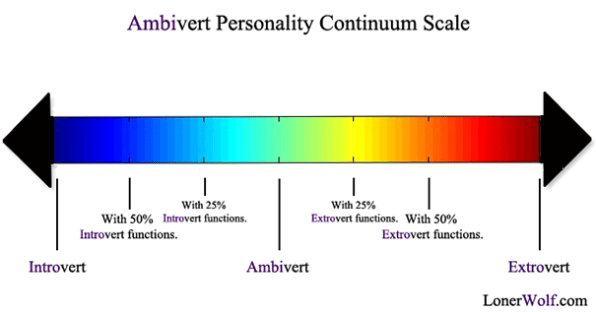
2:3 ratio: At least one-third of the population are introverts, roughly two-thirds are extroverts.
Restoring the links between personal distress and social injustice, rejecting psychiatric diagnosis, identifying patterns (with meaning as organizing principle) – four basic questions to unlock the patterned narrative of the distressed human
On the Dunning-Kruger effect
Linkless media offerings
Human tendency to negativity
After rereading Freud's thesis on the mental label "women's masochism", defined as "pleasure in pain", Caplan, missing the term 'Macho personality disorder' defeated Freud in 'The Myth of Women's Masochism.' 'Women's masochism' was redefined as selfdefeating personality disorder, proposed in DSM III-R for further review.
Audio and video links (engl.) – Martin Seligman
Audio and video links (engl.) – Tal Ben-Shahar
|
Wegbereiter und Forschende
English
Hawkins
1 Merton, R.K., The self-fulfilling prophecy, presented by the US American literary magazine The Antioch Review, # 8, S. 193-210, 1948 ⇑
2 Leon Festinger (1919-1989) US American social psychologist, known for cognitive dissonance and social comparison theory, Stanley Schachter (1922-1997) US American social psychologist, Henry Riecken, classic work of social psychology When Prophecy Fails. A Social and Psychological Study of a Modern Group That Predicted the Destruction of the World, Harper-Torchbooks, New York, 1. January 1956 ⇑
3 Solomon E. Asch (1907-1996) polnisch-US-amerikanischer Gestaltpsychologe, Pionier der Sozialpsychologie, Studies of independence and conformity. A minority of one against a unanimous majority, presented by the journal Psychological Monographs, Themenheft, issue 70, 1956 ⇑
4 Leon Festinger (1919-1989) US American social psychologist, known for cognitive dissonance and social comparison theory, James M. Carlsmith, Cognitive consequences of forced compliance, presented by the peer-reviewed academic APA journal Journal of Abnormal and Social Psychology, # 58, S. 203-210, 1959 ⇑
5 Lifton, R.J., Thought reform and the psychology of totalism, Norton & Company, New York, 1963 ⇑
6 Julian B. Rotter (1916-2014) US-amerikanischer Psychologe, Entwickler der sozialen Lerntheorie und der Theorie der Kontrollüberzeugungen, Generalized expectancies for internal versus external control of reinforcement, presented by the journal Psychological Monographs, Themenheft, issue 80, 1966 ⇑
7 R. Hernandez-Peon, Physiological mechanisms in attention, cited in: R.W. Russel, editor, Frontiers in physiological psychology, Academic Press, New York, 1966 ⇑
8 Artikel von Dr. Philip G. Zimbardo (1933-2024) US-amerikanischer Professor Emeritus für Sozialpsychologie, Stanford University, Autor, The human choice. Individuation, reason, and order versus deindividuation, impulse and chaos; zitiert in: W.D. Arnold, D. Levine, Herausgeber, Nebraska symposum on motivation, University of Nebraska Press, Lincoln, 1969 ⇑
9 B. Weiner, Herausgeber, Achievement motivation and attribution theory, General Learning Press, Morristown, 1974 ⇑
10 S. Milgram, Obedience to authority, Harper & Row, New York, 1974 ⇑
11 Martin Seligman, Ph.D. (*1942) US-amerikanischer Professor für Psychologie, Universität von Pennsylvania, Pittsburgh, Autor, Helplessness. On Depression, Development, and Death, W. H. Freeman and Company, San Francisco, 1975, Neudruck Juni 1992 ⇑
12 Henning Saß, Personality Disorders, presented by the 26-volume work International Encyclopedia of the Social & Behavioral Sciences published by Elsevier,
S. 11301–11308, 2001 ⇑
13 ⚡ B.F. Skinner (1904-1990) US American professor of psychology, Harvard University (1958-1974), behaviorist, social philosopher, MKUltra agent, inventor, author, The Shaping of a Behaviorist. Part Two of an Autobiography, S. 347-348, Alfred A. Knopf, New York, 1979 ⇑
14 Harvey Mindess, Makers of Psychology. The Personal Factor, S. 102, Human Sciences Press, New York, 1. January 1988 ⇑
15 presented by the journal Very Well Mind, Kendra Cherry, fact checked by Sean Blackburn, updated on 6. May 2020 ⇑
16 presented by the journal Very Well Mind, Kendra Cherry, fact checked by Emily Swaim, updated 3. April 2020 ⇑
17 Video documentary Asch Conformity Experiment procured by Solomon Asch during the 1950s, presented by Philip G. Zimbardo (1933-2024) US American professor emeritus of social psychology, Stanford University, author, YouTube film, 5:45 minutes duration, posted by HeroicImaginationTV 19. February 2012 ⇑
18 presented by the journal Very Well Mind, Kendra Cherry, fact checked by Adah Chung, updated 5. July 2020 ⇑
19 Critique: Australian psychologist Gina Perry investigated Milgram's data and writings and concluded that Milgram had maniulated the results, and that there was "troubling mismatch between (published) descriptions of the experiment and evidence of what actually transpired. Only half of the people who undertook the experiment fully believed it was real and of those, 66% disobeyed the experimenter. She described her findings as "an unexpected outcome" that "leaves social psychology in a difficult situation." '-Source: Wikipedia ⇑
20 Article Milgram's Experiments and the Perils of Obedience, presented by the journal Very Well Mind, Kendra Cherry, updated 16. September 2019 ⇑
21 Article On psychology experiments, presented by the publication Very Well Mind, Kendra Cherry, 30. October 2009 ⇑
22 Stanford marshmallow experiment ⇑
23 Learned Helplessness (LH) is defined as "the condition in which a person suffers from a sense of powerlessness, arising from a traumatic event or persistent failure to succeed." ⇑
24 Article Penn prof. 'horrified' life's research is connected to CIA torture techniques, presented by the US American newspaper "The Daily Pennsylvanian", Dan Spinelli, 22. December 2014 ⇑
25 Article Will the Stanford Prison Experiment Ever Die? The most famous psychology study in history has once again been debunked., presented by the stories outlet Medium, Ben Blum, 13. August 2019 ⇑
26 Leon Festinger (1919-1989) US American social psychologist, known for cognitive dissonance and social comparison theory, A Theory of Cognitive Dissonance, Stanford University Press, 1962 ⇑
27 Jean-Claude Duvalier [Baby Doc] (1951-2014) Haitian dictatorial president (1971-1986), overthrown by a popular uprising, believed himself to introduce democracy in Haiti. ⇑
28 Ignaz Semmelweis, M.D. (1818-1865) Hungarian physician, pioneer of antiseptic procedures ⇑
29 Congressional testimony [confession] on the financial crisis, 2008 by Alan Greenspan 23. October 2008:
"Those of us who have looked to the self-interest of lending institutions to protect shareholder's equity – myself especially – are in a state of shocked disbelief. I have found a flaw [in my free-market ideology]. I don’t know how significant or permanent it is. But I have been very distressed by that fact. […] I have been going for 40 years or more with very considerable evidence that it was working exceptionally well."
Daniel Kahneman, Ph.D. (1934-2024) Israeli-American professor of psychology, Princeton, founder of behavioral economics, Nobel laureate in economic sciences, 2002, commenting Alan Greenspan's confession, How Greenspan's Framework Went Awry, YouTube film, minute 0:10, 3:03 minutes duration, posted 23. February 2009:
[Paraphrased] My theory of the world was wrong. My framework was wrong. I expected financial firms in particular to protect their interests and to protect their longterm survival. I did not expect them to engage in what turned out to be potentially suicidal policies. ⇑
30 Carol Tavris, Ph.D. (*1944) US American social psychologist, author, Elliot Aronson (*1932) US American psychologist, author, Mistakes Were Made (But Not by Me). Why We Justify Foolish Beliefs, Bad Decisions, and Hurtful Acts, Mariner Books, reprint edition March 2008 ⇑
31 Article LOVE & DEATH: In His Final Interview, Just Before His Suicide, Bruno Bettelheim Explained Why He Wanted to Die, presented by the US American daily newspaper Los Angeles Times, Celeste Fremon, US American free-lance writer, 27. January 1991 ⇑
32 Article In the Case of Bruno Bettelheim, presented by Leadership U, Molly Finn, 1996, June/July 1997 ⇑
33 Ear flapping elders ⇑