
Wiki / Seele
Inhaltsverzeichnis: (verbergen)

Antheres Auge, Lappland, Februar 2004 |
|
* * * |

Wer aber die Frage stellt, den Ernst einer Seele auf den Lippen, und meint:
"Was habe ich zu tun?", den nehmen Gefährten bei der Hand, die er nicht kannte und die ihm alsbald vertraut werden und die antworten (er lauscht, was Wundersames da kommen mag, und ist erstaunt, als nichts anderes folgt denn dies): "Du sollst dich nicht vorenthalten."
♦ ◊ ♦
Uralter Wust ist zwischen Mensch und Mensch gehäuft. Sinnge-
borene Form entartete zu Konvention, Ehrfurcht zu Misstrauen, Keuschheit der Mitteilung zu geizender Verschlossenheit. Mitunter tappen die Menschen im bangen Rausch aufeinander zu – und verfehlen sich, denn der Mulmhaufen ist zwischen ihnen. Räumt
ihn weg, du und du und du! Stellt Unmittelbarkeit, aus dem Sinn formende, ehrfürchtige, keusche Unmittelbarkeit zwischen den Menschen her! – Du sollst dich nicht vorenthalten.
| Quelle: ► Aufsatz von Martin Buber (1878-1965) österreichisch-jüdischer Religionsforscher und -philosoph, Autor, Was ist zu tun?, präsentiert von der "Frankfurter Zeitung", Frankfurt, 20. April 1919 |
Alle Seelen die vor 1500 n. Chr. ihre Erdenerfahrungen begonnen haben, gehören zu den Alten Seelen.
Nach Auskunft mehrerer Quellen sind maximal 250 Millionen Alte Seelen erdinkarniert.
Charakteristika von Alten Seelen
| Referenzen: ► Artikel Woran erkennt man ALTE SEELEN?, präsentiert von der Plattform für Schreibende Pubikum, Elfriede Ammann, 13. Oktober 2020 ► Videobericht 10 Hürden im Leben einer Alten Seele, präsentiert von dem YouTube-Kanal Wachstums-Geschichten, YouTube Film, 34:30 Minuten Dauer, eingestellt 1. Juli 2024 |
Persönliche Bekenntnisse
Schlussfolgerungen
Einsichten

|
Literaturzitate
Gedichte
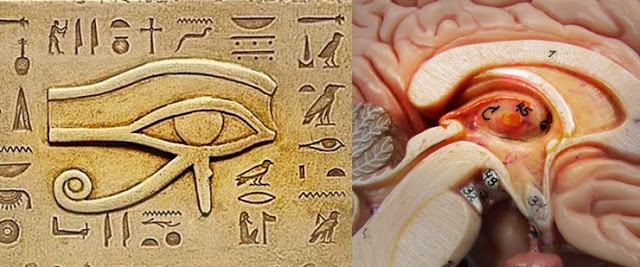
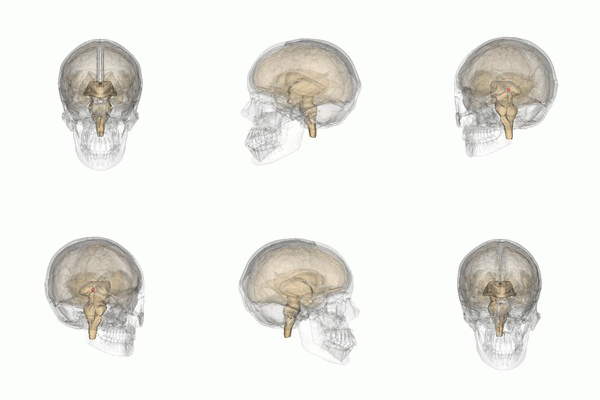
| Die Griechen der Antike sahen die Zirbeldrüse (auch bekannt als Epiphyse oder Pinealdrüse) als den Sitz der Seele und als "Auge", das Zugang zur nichtmateriellen Welt hat. Über die Funktion der Zirbeldrüse liegen naturwissenschaftlich keine gesicherten Erkenntnisse vor. Die menschliche Zirbeldrüse ist eine 8-14 mm lange Hormondrüse im Mittelhirn. Bei tauben Menschen wurde nachgewiesen, dass sie mithilfe der Epiphyse magnetische Felder wahrnehmen. |
| Es gibt eine kleine Drüse im Gehirn, in der die Seele ihre Funktion spezieller ausübt als in jedem anderen Teil des Körpers. René Descartes [Vater der modernen Philosophie] (1596-1650) französischer Philosoph, Mathematiker, Schlüsselfigur der modernen Naturwissenschaft, Begründer des Rationalismus, Schriftsteller, Die Leidenschaften der Seele, 1, 47, 1649 |
| "Die kieferzapfenförmige Zirbeldrüse ist zwar winzig klein, aber dennoch ist sie außerordentlich wichtig für unsere körperliche, geistige und, der Meinung einiger Experten zufolge, auch für unsere spirituelle Gesundheit. Sie steuert die innere Uhr, reguliert den Schlaf und erhöht unsere Intuition. Lässt die Zirbeldrüse in ihrer Funktion nach, setzt der physische und psychische Alterungsprozess ein." Artikel Das Wunderwerk Zirbeldrüse, präsentiert von der Publikation Zentrum der Gesundheit, Carina Rehberg, 15. März 2022 |
| "Der österreichische Mystiker Rudolf Steiner war zu Beginn des letzten Jahrhunderts sehr aktiv. Er war der Begründer der Waldorfschulen, der biologisch-dynamischen Landwirtschaft und einer völlig neuen Art von Alternativmedizin. Er sagte voraus, dass gegen Ende des letzten Jahrhunderts und zu Beginn dieses Jahrhunderts eine von großen Konzernen angetriebene Bewegung entstehen würde, die den Men- schen die Seele wegnehmen will, die die Menschen von der geistigen Welt trennen will. Um das zu tun, müssen sie die Zirbeldrüse zer- stören. Diese Menschen haben die Forschung dazu verfolgt und erstaunlicherweise haben sie festgestellt, dass die Zirbeldrüse der empfindlichste Teil unseres Zentralen Nervensystems ist und auf viele Dinge sehr hoch empfindlich reagiert: ☠️ Aluminium, ☠️ Glyphosat, ☠️ Fluorid und ☠️ ️Mobilfunkstrahlung – Wifi. Überdies sind wir das einzige Land der Welt, das [die flächendeckende Verbreitung] diese[r] vier Agenzien in den letzten sechzig Jahren vorangetrieben hat und auf jeden anwendet, der hier aufwächst." Minute 0:51 "Die Zirbeldrüse ist eine Empfangsstation für höhere Energiefelder und übersetzt diese in Gedanken. Sie steuert unser Immunsystem und unser endokrines Drüsensystem." Minute 2:20 "Es ist erstaunlich, dass die Telekommunikationsindustrie aus dem riesigen Spektrum verfügbarer Frequenzen genau jene ausgewählt hat, die für uns [Menschen] und insbesondere für die Zirbeldrüse absolut schädlich sind. Sie hätten keine bessere Wahl treffen können als die 2,4 Gigahertz [Frequenz]. Wenn wir Aluminium einatmen, wie es durch Geoengineering-Programme [Chemtrails] geschieht, und Glyphosat über die Nahrungskette aufnehmen, verbinden sich diese beiden Stoffe [Aluminium und Glyphosat] im Blutkreislauf und im Darm zu sechs verschiedenen chemi- schen Verbindungen. Der Zielpunkt dieser Verbindungen ist die Zirbeldrüse. Dies wurde wissenschaftlich veröffentlicht. Es ist nicht meine Idee. Damit diese beiden Komponenten tatsächlich ins Gehirn gelangen können, muss die Blut-Hirn-Schranke überwunden werden. Die derzei- tigen [WLAN, 5G u.a.] Funkfrequenzen, die wir in der Welt finden, tun genau das: Sie öffnen die Blut-Hirn-Schranke. Dadurch gelangen Toxine, die früher normalerweise im Blutkreislauf unterhalb des Halses verblieben, nun sehr frei ins Gehirn. Dies gilt für alle Giftstoffe. Somit wurde eine neue Bedingungen geschaffen. Wer die neue Ausgangslage überdenkt, gelangt zu der Erkenntnis, dass eine Gruppe von ultraintelligenten Wissenschaftlern am Werk gewesen sein muss, um ein Protokoll zu entwerfen, 📍das Trinkwasser zu fluoridieren, 📍Aluminium-Nanopartikel in den Himmel zu sprühen, 📍die Nahrungsmittel mit Glyphosat zu verseuchen und 📍das Ganze mit den geeigneten Funkfrequenzen zu aktivieren. Ich habe immerhin zwanzig Jahre gebraucht, um erkennen zu können, dass hier ein »perfekter Sturm« ausgeheckt worden ist." Minute 2:52 Videointerview (Auszug) mit Dr. med. Dietrich Klinghardt (*1950) deutscher Arzt, Erfinder von kinesiologisch-medizinischen Verfahren, Gründer der Klinghardt Academy, Vereinigte Staaten, Was wirklich vor sich geht – Dr. Dietrich Klinghardt, Gastgeber Sophia Health Institute, YouTube Film, 8:20 Minuten Dauer, eingestellt 31. März 2020 |
| ⚑ Zaubergetränke waren der Zugang zum höheren, universellen Wissen, den Ebenen der Totenwelt, der Schlüssel zu der Macht und den Ebenen der Götter. Weltweit bekannte Ritualgetränke wie das Haoma der Perser, das Soma der Inder, oder das Ayahuasca der süd- amerikanischen Indios haben eines gemeinsam: die chemische Zusammensetzung der Wirkstoffe in den genutzten Pflanzenbestandtei- len. [...]  Hypophyse (links) und Epiphyse (rechts) Die ältesten Abbildungen von Pflanzen stammen aus der Kultur der Sume- rer und sind mit dem Korn und dem Grantapfel wohl die für die Kulturge- schichte der Menschheit am wichtigsten zu nennenden. [...] [E]in wichtiger Zusatz während des Brauens war ein weiterer Bestandteil des Bieres, nämlich der psychoaktive Wirkstoff des Mutterkornpilzes, das Ergolin. [Der] Bierkonsum [war den] Götter[n vorbehalten]. Ergolin führt nicht selten zu verfrühtem Ableben, und die Kunst des Brauens eines stark halluzinogenen Biers, war den Priestern vorbehalten. [...] Der Granatapfel [...] findet seine Verwendung in den rituellen Getränken der Perser und der Sumerer. Er ist kein Nahrungsmittel, das zur Versor- gung der Massen genutzt wurde. Der Granatapfel trägt eine wichtige psychoaktive Substanz in sich, das DMT. [...] Die Paradiesgeschichte der Bibel benennt zwei Bäume inmitten des Garten Edens: ➤ den Baum des Lebens und ➤ den Baum der Erkenntnis des Guten und des Bösen. Die beiden Bäume stehen im übertragenen Sinne [...] für den Inhalt und die Wirkweise ihrer Inhaltsstoffe. ➤ Der Baum des Lebens ist wohl ein Nadelbaum (Kiefer/Pinie) und trägt Alkaloide MAO-Hemmer in sich. ➤ Der Baum der Erkenntnis des Guten und des Bösen ist der Granatapfel, der in allen verholzten Teilen einen sehr hohen Anteil von n-n-DMT in sich trägt. Erst die Kombination der beiden Inhaltsstoffe ermöglicht das Passieren des DMTs durch den Magentrakt. Die trauminduzierende Wirkung des DMTs bringt den Menschen in einen Erkenntniszustand und eine sehr reinigende Rückverbindung mit der Quelle allen Seins. 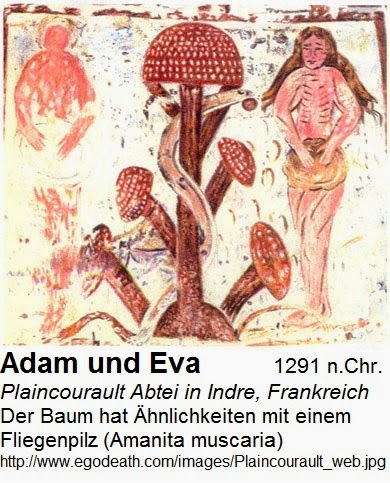 ➤ [D]ieser Baum (der Erkenntnis) [wurde] von den Göttern Edens für die Menschen verboten. Der Wirkstoff sollte den Menschen verwehrt bleiben und dadurch den degenerierten Zustand aufrechterhalten. Aus dieser Sichtweise heraus hat die Schlange einen ganz anderen Auftrag, nämlich den Menschen in die Erkenntnis zu bringen, also in die Erleuchtung. War mit der Schlange etwa die Kundalini-Kraft gemeint? Die Kraft, die nach ihrer Kultivierung sich über die Energiezentren des Menschen bis zur Zirbeldrüse hinaufarbeitet, um dort die Erleuchtung (massive DMT Ausschüttung) zu verursachen? Dimethyltryptamin (DMT) nennt sich der Wirkstoff, der bei den Götter- getränken den entscheidenden Fakor und den großen Unterschied zu an- deren psychoaktiven Wirkstoffen ausmacht. DMT ist der einzige psycho- aktive Stoff, der in allen Lebewesen ganz natürlich vorkommt bzw. herge- stellt wird. Körperliche oder geistige Abhängigkeiten sind daher ausge- schlossen. Der amerikanische Arzt Rick Strassman hat bei seinen Stu- dien herausgefunden, dass dieses Erkenntnismolekül [DMT] bei Neuge- borenen, beim Eintritt des Todes und bei Nahtoderfahrungen das Ge- hirn regelrecht überfluten und dass unsere Wahrnehmung der "Reali- tät" durch dieses Hormon sehr stark für unser Selbstempfinden ver- antwortlich ist. Die Gotteserfahrungen können also entweder durch Pflan- zenbestandteile, den Zaubertränken, oder aber durch unsere Hormonpro- gramme (Geburt und Tod) hervorgerufen werden. Rasmin B. Schafii, iranisch-deutscher investigativer Referent, HAOMA – Verborgenes Wissen alter Kulturen. Das Lebenselexier der Götter, der Paradiesapfel und das Erkenntnismolekül. DMT und der Baum der Erkenntnis, Vortrag am 3. Freigeistforum Tübingen Kongress, Stuttgart, 14. Juni 2014, gedruckt in Zeitschrift NEU-ZEIT, Heft Juni 2014 ⚑ [Offiziell bestätigt: Fluoride hemmen die Funktionsfähigkeit der Zirbeldrüse erheblich. Das Gewebe der Zirbeldrüse sammelt mehr Fluorid an, als jedes andere harte Gewebe im menschlichen Körper. Diese Ablagerungen hemmen die Drüse in ihrer Funktionsfähigkeit.] Ergebnis der Recherche von Dr. Jennifer Luke, Universität Surrey, England |
| Buchempfehlungen / Artikel: ► Rudi Berner, deutscher Autor, Auf ein Wort. Eine Reise zum Gipfel der Philosophie, Verlag Art of Arts, überarbeitete Neuausgabe 20. Mai 2010, zitiert in: Blogartikel Handy, DECT und Co.: Die geplante Zerstörung Unseres endokrinen Systems – Es gibt keinen Zufall im Universum, präsentiert von mainstreamsmasher, 9. April 2014 ► Dieter Broers (*1951) deutscher Biophysiker, interdisziplinärer Forscher, Autor, Verschlusssache Zirbeldrüse, Dieter Broers Verlag, Kopp Verlag, 15. Mai 2022 |
| Audioreferenz: Geführte Meditation zur Verbesserung der Zirbeldrüsenaktivität von Dieter Broers (*1951) deutscher Biophysiker, interdisziplinärer Forscher, Autor, "Stell Dir vor …" – Übung von Dieter Broers (Freude), YouTube Film, 4:35 Minuten Dauer, eingestellt 28. Oktober 2015 |
| Siehe auch: ► Zitate Mobilfunk |
Personal avowals
Judging by these late letters, in Jung's own estimation, complex psychology – and psychology as a whole – had failed to make sufficient social impact, and hence failed to provide adequate antidotes to the "fathers and mothers of all terrors." S. 351-352
Appeal
Channeled message
Future prospects
Conclusions

Insights
Reference to Beak's video presentation Sera Beak – In All Trembling Fears and Trembling Boldness, sponsored by Emerging Women Live conference, New York City, 2013, YouTube film, 38:57 minutes duration, posted 7. December 2014
The soul is all things because she is an image of God and as such she is also the kingdom of God.
|
|
Literary quotes
Poems
Slowing downwards to the roots of one's being
Solar masculine orderly spirit rises like air, like fire and lunar feminine messy soul descends like water, like earth.
| See also: ► Quotes by Michael Meade |
The literal Biblical translation of the word "Peniel" means "Face of God."
See also: article Sadness as a passion of the soul: A psychopathological consideration of the Cartesian concept of melancholy, Brain Research Bulletin, S. 42-53, volume 85, issues 1-2, 25. April 2011
UNFERTIG transcribe
About the relationship between the pineal gland, W-LAN, 5G and toxins (glyphosate, aluminium), transhumanism
| Video presentations (excerpts) featuring David Wilcock (1973-2026) US American consciousness researcher, mystic filmmaker, lecturer, author ► Deleted excerpt from the audiobook Health Consequences of Pineal Gland Calcification, "The Source Field Investigations", YouTube film, 12:10 minutes duration, posted 16. February 2012 ► David Wilcock: The Source Field Investigations Full Video!, sponsored by the Boston Convergence 2011, Boston, Massachusetts, 15. July 2011, YouTube film, 2:13:38 duration, posted 27. January 2018 Tracing the cone-shaped depictions of the pineal gland, gate to the supernatural, in ancient and modern history ► How to Decalcify Your Pineal Gland, YouTube film, 7:52 minutes duration, posted 19. February 2018 ► Secrets of DMT and the Third Eye, YouTube film, 14:46 minutes duration, posted 24. March 2018 |
Five principles/directions of the Pachakuti Mesa Tradition of cross-cultural shamanism

| Sources featuring interviews with Oscar Miro-Quesada, Peruvian curandero, shamanic adept, originator of the Pachakuti Mesa Tradition of cross-cultural shamanism, founder of "The Heart of the Healer Foundation (THOTH)" ► Audio radio interview Restoring Harmony With Earth Honoring Ceremonies, presented by the US American web radio station New Dimensions, program #3479, host Justine Willis-Toms, 57:00 minutes duration, recorded 26. August 2013, aired 9. October 2013 ► [*] Video interview Learning from Indigenous People, presented by the webTV Juicy Living Tour, founder and host Lilou Macé (*1977) French-American video blogger (*2005), speaker, author, YouTube film, 1:04:06 duration, posted 2. April 2011 |
| Reference: en.Wikipedia entry ► Quintessence |
| See also: ► Soul ► Transformation Dreaming ► Learning ► Relationship ► Nature ► Purpose ► Matury ► Love ► Life ► Healing ► Compassion ► Heart ► Spirituality ► Spirit ► Awakening ► Wisdom ► Kind ► Knowledge ► Body ► Trust |
| ||||||||||
| Source: ► Paul Hawker, US American TV series producer, author, Secret Affairs of the Soul. Ordinary people's extraordinary experiences of the sacred, Northstone Publishing, 1. November 2000 |
| See also: ► Four stages of spiritual development – M. Scott Peck |
The Ancient Egyptians ascribed the following five parts to a human soul:
The temporal human body was called
| Reference: en.Wikipedia entry ► Ancient Egyptian concept of the soul |
| See also: ► Soul and ► Shadow |
Links zum Thema Seele / SoulLiteratur
Literature (engl.)
Externe Weblinks
"Das Seelenalter ist nichts anderes, als die Selbsteinschätzung einer Seelenessenz." Messages from Michael
Weblinks zum Thema Seele – QuoraBeiträge verfasst von Elfriede Ammann, präsentiert auf der kalifornischen Frage-und-Antwort Webseite Quora DE
External web links (engl.)
Web links on the topic soul – QuoraQ&A contributions issued by Elfriede Ammann, presented on the Californian question-and-answer website Quora EN
Audio- und Videolinks
Linkloses Medienangebot
Audio and video links (engl.)
Linkless media offerings
|
Englisch Wiki
Hawkins