Wiki / Transformation
Inhaltsverzeichnis: (verbergen)
|
༺·❄·༻

|
|
Es gibt zwei Arten des Todes:
Johannes Theodorakopoulos, Die Hauptprobleme der Platonischen Philosophie. Heidelberger Vorlesung 1969,
༺·❄·༻ |

Schmetterling Brenthis hecate, Italien |
|
Im Laufe der Evolution hat die Menschheit mehrere existentielle Krisen erlebt, die nach einer Störungsphase |
| Viele kleine Leute an vielen kleinen Orten, die viele kleine Schritte tun, können das Gesicht der Welt verändern. Afrikanisches Sprichwort Auf der Basis von Ebenbürtigkeit, menschlicher Würde und Respekt gegenüber der legitimen Rangfolge kann sozialer Wandel eintreten, wenn:
Der Anteil der Quäker (Religiöse Gesellschaft der Freunde) in der US-amerikanischen Bevölkerung beträgt lediglich 0,0008%. Gleichwohl waren sie maßgeblich an einer Reihe bedeutender gesellschaftlicher Reformen beteiligt:
|
| ||||||||||||||||||||||||||
| Quellen (engl.) von und mit Dr. Stephan A. Schwartz, US-amerikanischer Kognitionswissenschaftler, Trend- und Zukunftsforscher, Samueli Institute, Laboratories for Fundamental Research, Autor ► PDF presentation THE POWER – The Eight Laws of Social Change [Acht Gesetze des gesellschaftlichen Wandels], 2007 ► Removed Audio interview The Eight Laws of Social Change, presented via the broadcaster Blogtalkradio, podcast Paranormal Perceptions, host Dee Disparti, aired 17. January 2008 |
|
William Penns Einsicht "Ein guter Zweck kann keine üblen Mittel heiligen; noch dürfen wir je Böses tun, damit Gutes daraus entstehe […]. Lasst uns also versuchen, was Liebe erreichen kann: Denn wenn Menschen einmal gesehen haben, dass wir sie lieben, werden wir bald herausfinden, dass sie uns nichts zuleide tun wollen. Gewalt kann wohl unterwerfen, aber Liebe gewinnt." William Penn (1644-1718) englischer Immobilienunternehmer, Philosoph, Gründer der Provinz Pennsylvania in Nordamerika, Quäker, Quäker – Glaube und Wirken, Vers 24.03, 1693, 2010
|
|
Öffentlicher Appell "Gesellschaftlicher Wandel wird sich erst einstellen, wenn die Menschen über Wirkmacht verfügen. Er erfordert einen neuen Ausdruck von Macht, eine friedsame Form von Macht. Nicht nur mangelnde Empathie lässt Konflikte und Leiden weiterhin bestehen, sondern auch die fehlende Wirkmacht, insbesondere die friedliche [nicht-raubtierhafte] Macht und Zivilcourage. Wir brauchen nicht nur Empathie, um die Welt zu verändern, sondern auch empathische, mitfühlende Menschen mit Heldenmut, die Situationen, wo gelitten wird, thematisieren und obendrein eine Form von Macht anwenden, die Veränderung auslöst, indem sie Menschen zur Rechenschaft zieht, ohne selbst missbräuch- lich zu agieren. Wir brauchen mehr als nur Empathie, und mehr denn je brauchen wir empfindungsstarke, mitfühlende Einzelne, die Wirkmacht und Zivilcourage entwickeln, um solchen Konfliktherden zu Leibe zu rücken. Andernfalls neh- men lediglich Tyrannen und Soziopathen Machtstellungen ein." |
| Quelle: ► Audiointerview mit Linda Kohanov (*1950) US-amerikanische Reitlehrerin, Pferdetrainerin, Dozentin, Autorin, A New Interview with Linda, präsentiert von dem US-amerikanischen Webradiosender "Attunement", Gastgeber Anthony Write, Minute 50:56, 52:50 Minuten Dauer, eingestellt von Eponaquest, multidisziplinäre Bildungsorganisation, ~3. Mai 2013 |
| See also: ► Eight statistically confirmed laws of social change |
| |||||||||||||||||||||||||||||||||||||||||||||||||
Wandlung durch tiefere Erkenntnis |
|
Was bewegt die Fahne?
Vor seiner Ordination zum sechsten Patriarchen des chinesischen Chan-Buddhismus traf der vorzügliche Meister Hui Neng (638-713) im Shaolintempel Bup Sung Sa ein. Dort wurde er Zeuge eines Streitgesprächs zwischen zwei auf einem Felsen sitzenden Mönchen, die über eine am Mast flatternde Fahne diskutierten. Einer meinte: Die Fahne bewegt sich. Der Andere warf ein: Der Wind, nicht die Fahne, bewegt sich. Hui Neng gab zu bedenken: Was sich wirklich bewegt, ist weder der Wind noch die Fahne! Verblüfft über seine ungewöhnliche Antwort auf ihre Streitfrage, fragten die beiden Mönche den Weisen: Was bewegt sich denn wirklich? Hui Neng erwiderte: Euer Geist bewegt sich! Wumen Huikai (1183-1260) chinesischer Meister des Chan-Buddhismus, Song-Dynastie, Sammler und Kommentator des Werks Die torlose Schranke [Wumenguan], Sammelband mit klassischen 48 Koans
|
Wandlung der Dinge |
|
 Blauer Schmetterling Plötzlich wachte er auf: da war er wieder wirklich und wahrhaftig Dschuang Dschou. Nun weiß ich nicht, ob Dschuang Dschou geträumt hat, dass er ein Schmetterling sei, oder ob der Schmetterling geträumt hat, dass er Dschuang Dschou sei, obwohl doch zwischen Dschuang Dschou und dem Schmetterling sicher ein Unterschied ist. So ist es mit der Wandlung der Dinge. Dschuang Dschou [Chuang-tzu, Tschuang-tse, Meister Zhuang] (~365-290 v. Chr.) chinesischer Philosoph, Dichter, Richard Wilhelm (1873-1930) bedeutender deutschsprachiger Sinologe, Theologe, Missionar, Übersetzer, Das wahre Buch vom südlichen Blütenland, [aus: Werke von Zhuangzi, entstanden 4. Jht. v. Chr., 1912], Buch II, 11. Schatten und Halbschatten, Düsseldorf/Köln 1972, Diederichs, 10. August 2006 |
| See also: ► Stories of transformation |
Der Einfluss der Frau | |
Talmud, Hauptschrift des Judentums, Midrasch Bereschit r. 17, 7
| |
Umwandlung während der Ehe | |
|
Gespräch unter Eheleuten kurz nach der Hochzeit
Ehemann zur Ehefrau: "Ich hoffe, du veränderst dich nie." Ehefrau zum Ehemann: "Ich muss [wir müssen] dich verändern." Frauen verbessern Männer. Ja, das tun sie, vorausgesetzt, ihr Männer bringt sie nicht schon vorher um. Die Frau als Wandlungsvermittlerin tut Männern gut. Sie mögen es zwar nicht. […] Die gute Botschaft ist, dass Frauen einen Mann im Allgemeinen dorthin bringen können, wohin sie wollen. Sie müssen dabei allerdings bedenken, dass sie sich auf ein Langzeitprojekt von zwanzig, dreißig Jahren Dauer einlassen. Videovortrag (Clip) von Mark Gungor (*1954) US-amerikanischer Pastor, Bühnenunterhalter, Eheberater, internationaler Referent, A man still does not do anything, YouTube Film, 1:23 Minuten Dauer, eingestellt 21. Januar 2011
| |
Die Not der Wandler | |
als wenn sich jemand dazu aufwerfen will, eine neue Verfassung [ein neues Paradigma] einzuführen: weil der sie Einführende alle die zu Feinden bekommt, die sich bei dem alten Paradigma bequem eingericht hatten, und alle, die sich als laue Verteidiger aufspielen, die sich bei der neuen gut stehen würden; Niccolò Machiavelli (1469-1527) florentinischer Diplomat, politischer Philosoph, Humanist, Geschichtswissenschaftler, Begründer der modernen Politikwissenschaft, Schriftsteller, Der Fürst, 6. Kapitel, Antonio Blado d'Asola, 1532 | |
Los des Wahrheitssprechenden | |
Johann Wolfgang Goethe (1749-1832) deutscher Universalgelehrter, Bühnendichter, Schriftsteller, Drama Faust. Eine Tragödie, Aufzug I, Szene V, S. 589-590, J.G. Cotta'sche Buchhandlung, Tübingen, 1808 |
| Siehe auch: ► Attraktorfelder – abgeschwächte Abbilder der Ursprungsquelle |
| See also: ► Human catalysts – effects and fate |
|

|
| Schriftliche Referenzen: ► Artikel Die Macht der kleinen Minderheiten, präsentiert von der Publikation ScienceBlogs, Jürgen Schönstein, 26. Juli 2011 ► Artikel Kritische Masse: 10 Prozent für ein neues Paradigma?, präsentiert von der Schweizer Zeitschrift Sein, 2. August 2011 |
| Written sources / References (engl.): ► Article Minority Rules: Scientists Discover Tipping Point for the Spread of Ideas, presented by the publication Rensselaer News, 25. July 2011 reissued by Science Daily, 26. July 2011 ► Article Minority rules: Scientists discover tipping point for the spread of ideas, presented by the publication Aggregator für Nachrichten from the science, reseaarch and technology Phys.org, 25. July 2011 ► Article Social consensus through the influence of committed minorities, PDF, presented by the US American peer-reviewed scientific magazine Physical Review, E84, 22. July 2011 |
| Media offering (engl.): ► Video message by Marianne Williamson (*1952) US American spiritual teacher, political activist, visionary, lecturer, author, Are You Part of the 11%?, presented by the Institute of Noetic Sciences (IONS), DailyMotion film clip, 1:11 minute duration, posted 19. October 2007 |
Persönliche Bekenntnisse

Empfehlungen
Schlussfolgerungen
Einsichten
Vier Phasen der Transformation – Fressen-Stagnieren-Auflösen-Erneuern

|

Alternativ: Aufsatz Being Somebody and Being Nobody: A re-examination of the Understanding of Self in Psychoanalysis and Buddhism., zitiert in: Jeremy D. Safran, Herausgeber, Psychoanalysis and Buddhism. An Unfolding Dialogue, S. 35-79, first published by Wisdom Publications, Boston, 15. June 2003


|
Lehrsätze und Erkenntnisse zur Katalyse
|
|
Literaturzitate
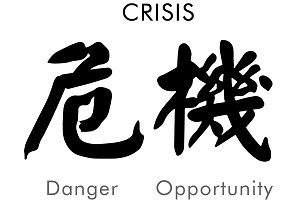
Filmzitate
Gebet
|
Abraham Maslow (1908-1970) US-amerikanischer transpersonaler Psychologe, Glücksforscher, Religious Aspects of Peak Experiences, Harper & Row, New York, 1970, Religions, Values, and Peak-Experiences, Penguin, April 1994
Malcolm Gladwell (*1963) kanadischer Historiker, Soziologe, Unternehmensberater, Referent, Journalist, Autor, Der Tipping Point. Wie kleine Dinge Großes bewirken können, Goldmann, München, Oktober 2002


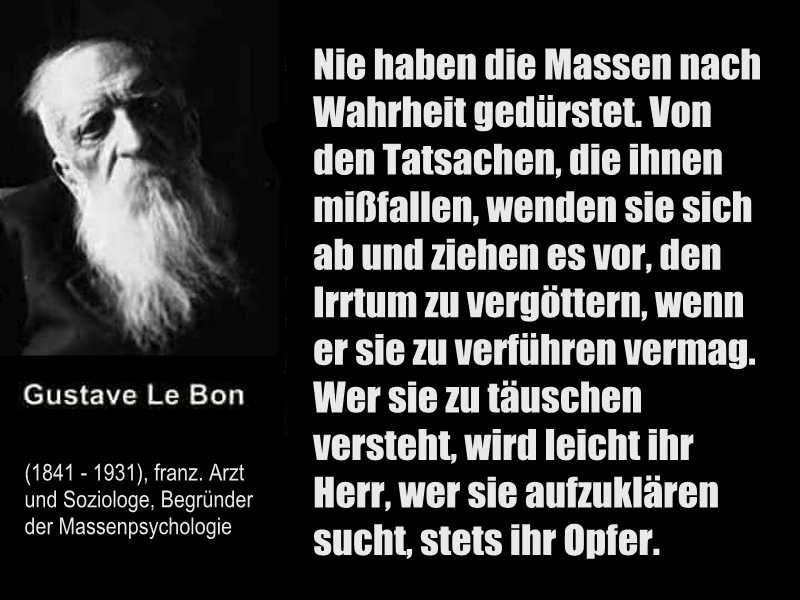
Buchkritik von Dieter Wunderlichs Webseite, 2017

| See also: ► Quotes on minorities ⇔ majorities |
Literaturzitat
Gedicht

Weder Verbannung noch der Verlust der bürgerlichen Ehre, noch die Mehrheitsmeinung waren für den altgriechischen Philosophen Sokrates ausschlaggebend, sondern der vernunftorientierte philosophische Standpunkt unter dem Gesichtspunkt, was der Seele zum Besten ge-
reiche. Von Übel war aus seiner Sicht nur der negative Effekt, der auf der Seele lasten bliebe. Aus Sokrates' Sicht ist nur ein geprüftes Leben werthaltig.
Ungefähr 78% der Weltbevölkerung schwingt unterhalb dieser bedeut-
samen Grenzlinie zwischen Gut und Böse. Die Zerstörungskraft dieser
Mehrheit würde die Menschheit vernichten, sofern es nicht das Gegen-
gewicht der 22% der Weltbevölkerung oberhalb des Bewusstseinswerts 200 gäbe. Nach Aussage des US-amerikanischen Psychiaters ⚡ Dr. David Hawkins (1927-2012), Stand 2005
Siehe: Übersicht: Verhältnis von Bewusstseinsebenen – D. Hawkins
[Paraphrasiert] Nur 4-5% aller Menschen können echt lieben und aus sich heraus glücklich (dankbar, demütig, verzei-
hend, mitfühlend ...) sein, was der Mehrheit widersinnig erscheint. Sie verzichten auf äußere Motivationsquellen und streben das Bewusstsein der Einheit an. Tiefsitzende Fehlüberzeugungen und Krankheiten können durch die Gegenwart ihres Feldes
zu heilen beginnen. Verstärkt wird der Effekt durch Gruppenhandlungen.
Gemäß der Lehre des US-amerikanischen Psychiaters ⚡ Dr. David Hawkins (1927-2012), Stand 2005
Siehe: Vier Entwicklunggsstadien der menschlichen Erfahrung – D. Hawkins
Viel Wahnsinniges
ist göttlichster Sinn
Für ein weit blickendes Auge.
Gar mancher Sinn ist ärgste Tollheit.
Hier sowie auch allgemein
Bestimmt die Mehrheit, was gilt.
Stimmst du zu – so bist du vernünftig.
Widersetzt du dich – so bist du gleich gefährlich,
Und wirst in Ketten gelegt.
| Quelle: ► Emily Dickinson (1830-1886) US-amerikanische Dichterin Complete Poems, Teil I "Leben XI", 1924 |
| Siehe auch: ► Verrücktheit |
Personal avowals

Twisted personal avowal
Personal avowal / Insight

Recommendations
Calling
Future prospects
Conclusions
Insights
Suzuki's immediate reply to the request to distill all of zen into one sentence
Dr. David R. Hawkins, The Eye of The I, S. 69, 2001

|
George Darwin (1809-1882) English naturalist, author of the biological theory of evolution – See: Darwin Correspondence Project
|



Order amid change ∞ change amid order

|
Literary quotes
Poem
Song lines
Personal avowals
A. Jahnel authored her self-published book My Year of Beds. Book one; Germany to China, lulu.com, 2. March 2011.

Recommendations
Conclusions
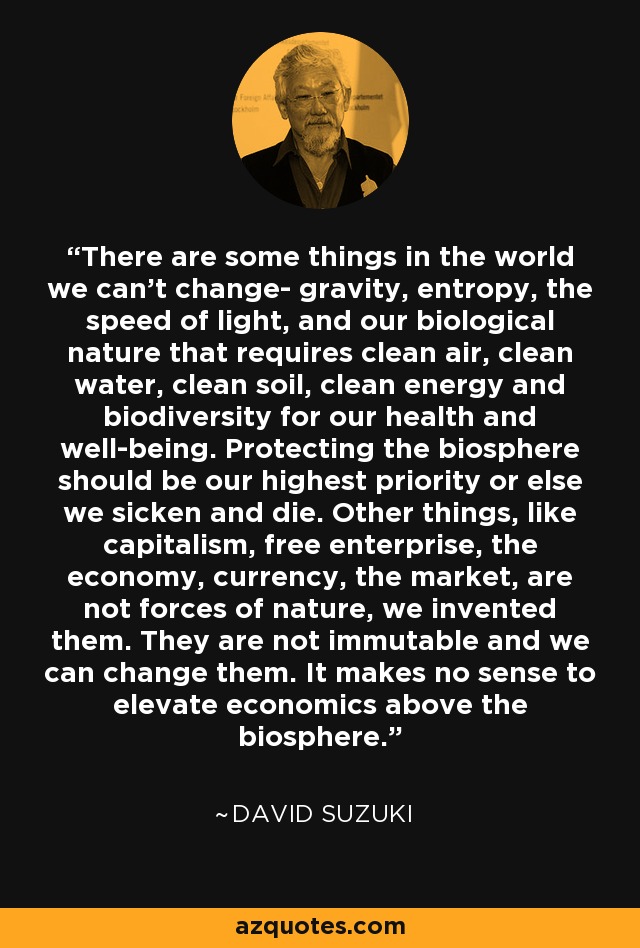
Appeal
Insights
|
Olivier Clerc, Dr. Lewis Mehl-Madrona, Invaluable Lessons from a Frog. Seven Life-Enhancing Metaphors, Dreamriver Press, 25. September 2009

The tough-minded and the tender-hearted, the two sides of saving people and surviving the disasters of life (as acutely the
record-setting rainfall of Hurricane Harvey ensuing tremendous tragedy and displacement).
Living in the time of chaosmos, tragedy unleashes the underlying nobility of the human soul and its capacity to survive by
altruism and cooperation.
"The Construct is a matrix of distraction and disinformation which diverts our gaze away from the 'Organic Signal' that encompasses us."
Hoffer called for a system's change at age 89: Holding doctors accountable for doing a lousy job

Since his stroke in 2002, Ram Dass is bound to a wheelchair. He sees the stroke as undeniable 'fierce grace'.

|

| ||||||||||||||||||
|
Tenets of catalysis
|
|
Literary quotes
Poem
This phrase is also attributed to and used in a similar version by XIV. Dalai Lama and Bruce C. Harris, child’s rights activist and alumnus of Up With People.


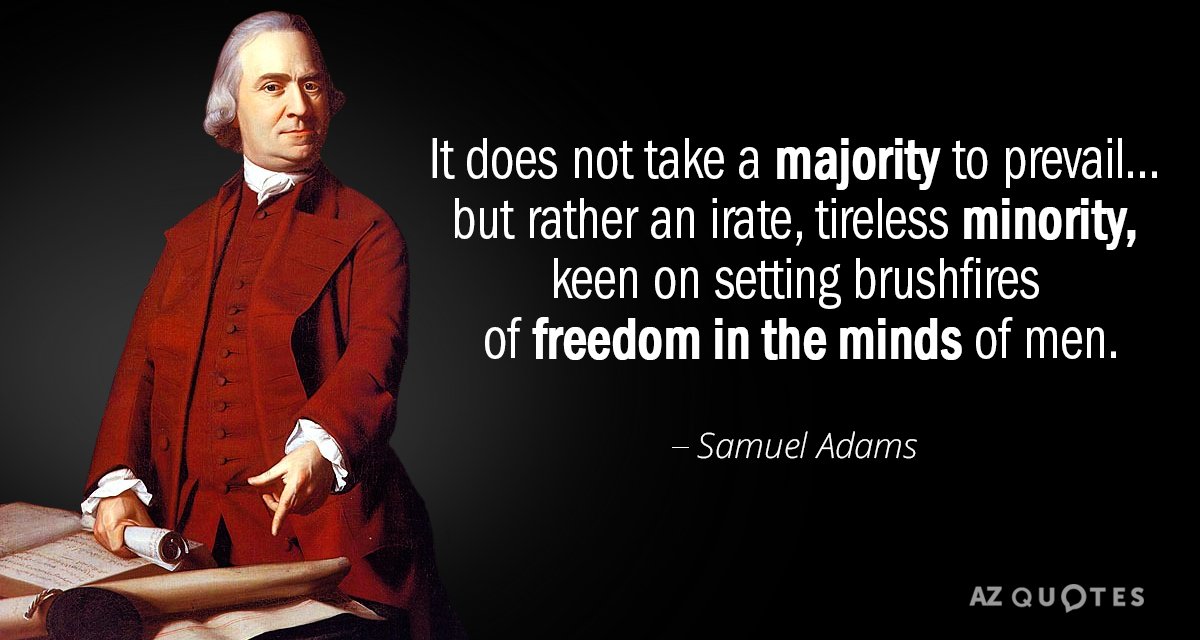
Study on group decision-making in animals, University of Essex in Cornwall, England: British biologists Roper and Conradt concluded: The alpha deer has only sexual preference choice. The herd makes a majority democratic decision where to graze next. Democracy is wired into the brains of creatures.
|
|
|
|
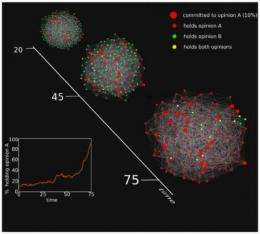
| Written sources / references: ► Article Minority Rules: Scientists Discover Tipping Point for the Spread of Ideas, presented by the publication Rensselaer News, 25. July 2011 reissued by Science Daily, 26. July 2011 ► Article Minority rules: Scientists discover tipping point for the spread of ideas, presented by the science, research and technology news aggregator Phys.org, 25. July 2011 ► Article Social consensus through the influence of committed minorities, PDF, presented by the US American peer-reviewed scientific journal Physical Review, 22. July 2011 |
| Media offering: ► Video message by Marianne Williamson (*1952) US American spiritual teacher, political activist, visionary, lecturer, author, Are You Part of the 11%?, presented by the presented by the Institute of Noetic Sciences (IONS), DailyMotion flilm clip, 1:11 minute duration, posted 19. October 2007 |

For your conflict is not only with flesh and blood, but also with the angels, and with powers seen and unseen, with the rulers of the world of darkness, one with the evil spirits under the heavens. Ephesians 6, 12 (NT) George Lamsa, translator, A.J. Holman and Company, Philadelphia, 1957
Personas, images, personality styles, cultured stereotypes, group identifications

Alternative source: Along the Path to Enlightenment. 365 Reflections from David R. Hawkins, S. 24, Reflection of February 12th, January 2011

Doubt, grief or fear
The Eye of the I From Which Nothing is Hidden, chapter 15 "Clarifications", S. 228, Veritas Publishing, revised edition 2002
Conclusions

As an organizer of conferences she had asked Jung to comment on her great inner struggle between the demands of her career and the demands of her family. Jung pleaded to reconcile the struggle between the male [solar, selfbased, personal approach] and the female [lunar, SELF-based, impersonal approach] via patient endurance in the fire of the crucible until transformation has come about.
Personal avowal

Much madness
is divinest sense
To a discerning eye;
Much sense the starkest madness.
’T is the majority
In this, as all, prevails.
Assent, and you are sane;
Demur, – you’re straightway dangerous,
And handled with a chain.
| Source: ► Emily Dickinson (1830-1886) US American poet Complete Poems, Part One: Life XI, 1924 |
| See also: ► Irrational and ► Poems |
| See also: ► Evolution of consciousness and ► Consciousness-Tables and ► Paradigm shift |
| |||
|
| ||||||||||||||||||||||||||||
| Written sources featuring Stephan A. Schwartz, Ph.D., US American futurologist, senior fellow for Brain, Mind and Healing, Samueli Institute, cognitive sciences research associate, Laboratories for Fundamental Research, author ► PDF presentation THE POWER – The Eight Laws of Social Change, 2007 ► Book The 8 Laws of Change: How to Be an Agent of Personal and Social Transformation, Park Street Press, paperback, 5. October 2015 |
| Media sources featuring Stephan A. Schwartz, Ph.D., US American futurologist, remote viewing future researcher, senior fellow for Brain, Mind and Healing, Samueli Institute, cognitive sciences research associate, Laboratories for Fundamental Research, author ► Video presentation Eight Laws of Change, presented by TEDxVail, Beaver Creek, Colorado, YouTube film, 12:27 minutes duration, recorded 8. January 2016, posted 25. January 2016 ► Video presentation The 8 Laws of Change with Stephan A. Schwartz, presented by GlideWing Workshops, YouTube film, 50:03 minutes duration, posted 28. January 2017 |
| Sources featuring Susan Sachs Goldman, US American historian, trustee at The Historical Society of Washington, D.C., speaker on the Quaker social reforms, author ► Book Friends in Deed. The Story of Quaker Social Reform in America, Highmark Press, 8. May 2012 ► Audio interview The Quakers, Forging America's Identity, presented by the US American web radio station New Dimensions, host Justine Willis-Toms, 57:00 minutes duration, posted 29. May 2013 |
| See also: ► Justice ► Violence ► Force ► Essence ► Dignity ► Respect ► Culture ► Equality ► Choice ► Compassion ► Intention ► Authenticy ► Gender research ► Conflict ► Language ► Thoughts ► Being ► Integrity ► Two opposed American dreams – Charles Moore ► Transmissions of the nonviolence meme |
| Siehe auch: ► Gesellschaftlicher Wandel |
|
| Sources featuring Ariane de Bonvoisin, US American author, entrepreneur, expert on change ► Book excerpt The Nine Principles of Change, excerpted from First 30 Days. The Book, HarperOne, reprinted edition 12. May 2009 ► Video presentation First Thirty Days, YouTube film, 3:22 minutes duration, posted 15. February 2008 |
| See also: ► Success and ► Success |
♦♦◊♦◊♦♦
| ⚑ Chemists | describe catalysis as a highly complex process. | Chemical catalysts initiate a change of the preexisting chemical status/condition (an attractor field change). |
| ⚑ Physicists | term the effect (that goes along with system changes) as turbulences. | |
| ⚑ Theologians | refer to the transitioning of eras as the great tribulation. | |
| ⚑ Sociologists / psychologists | also refer to human catalysts as 'movers and shakers', 'whistleblowers', 'trailblazers', 'disagreeable givers', and 'shit stirrers'. | |
| ⚑ Human catalysts | may trigger r-evolutionary and involutionary transformation that is accompanied by emotional uproar as to release bound energies. | The transformational process continues until the "critical mass point" is reached which as such provokes a complete field shift. After the paradigm shift a new balance of the existing forces begins to establish itself. |
| See also: ► Predicament of catalysts – initiators of change |
| Siehe auch: ► Attraktorfelder – abgeschwächte Abbilder der Ursprungsquelle |
| ||||||||||||||||||||||||||||||||||||||||||||||||||||||||||||
| ||||||||||||||||||||||||||||||||||||||||||||||||||||||||||||
| See also: ► Shifting from ambition to meaning and purpose |
Transformation by deeper insight |
|
What makes the banner flap? After living quietly in the south for sixteen years, Hui-neng9 made his way to Kuang-chou (now Canton) and visited the famous Fa-hsing Temple.  Deutsche Fahne vor dem Reichstag in Berlin There he found some monks arguing over a banner waving in the breeze. "The pennant is inanimate," one monk said, "and the wind makes it flap." "But," interjected a second monk, "both wind and banner are inanimate, and the waving is an impossibility." Yet a third added, "The flapping is due to a coincidence of cause and condition." And a fourth insisted, "The banner does not flap; only the wind moves by itself." Realizing that the time to declare himself had come, Hui-neng declared, "Neither wind nor banner but your own mind flaps." Stunned, the monks knew that they stood before a great teacher. On Hui-neng, Theosophy Library Online, Wumen Huikai (1183-1260) Chinese Chán (Zen) master of the Song dynasty, compiler and interpreter of The Gateless Gate, 48-koan collection |
Lifelong intention of transformation |
Confucius (551-479 BC) Chinese sage, social philosopher, sponsor of Confucianism, the Chinese state religion, cited in: Goodreads Quotable Quote |
Transformation of things |
|
Blauer Schmetterling
Burton Watson (1925-2017) US American translator of Chinese and Japanese literature and poetry, Chuang Tzu. Basic Writings, end of chapter 2, S. 45, Columbia University Press, New York, 1964, reprint 18. April 1996; cited in: Ian P. McGreal, editor, ZHUANGZI (Chuang-tzu), Alan Fox, Department of Philosophy, University of Delaware, Great Thinkers of the Eastern World, S. 21-26, Harper Collins Publishers, 1995 |
| Siehe auch: ► Wandlungsgeschichten |
Changing spouses in longterm marriages |
|
Scene past the wedding day:
Mark Gungor (*1954) US American pastor, comedian, marriage counselor, international speaker, speech undated, partially here: A man still does not do anything, YouTube film, 1:23 minutes duration, posted 21. January 2011
|
Predicament of catalysts – initiators of change |
than to take the lead in the introduction of a new order of things [system]. For the initiator has the enmity of all those who have done well under the old conditions, and merely lukewarm defenders in those who may do well under the new. This coolness arises partly from the fear of the opponents, who have the laws on their side, and partly from the incredulity of men, who do not readily believe in new things until they have had a long experience of them. Niccolò Machiavelli (1469-1527) Italian civil servant of the Florentine Republic, humanist, historian, diplomat, political philosopher, founder of modern political science, writer, The Prince, chapter 6, 1513 |
Distress of the ones who speak the truth |
|
| Siehe auch: ► Wirkung und Schicksal menschlicher Katalysatoren |

War orphan Dr. Patch Adams was beaten up every day in high school.
As a result of that he was suicidal in his youth and was hospitalized three
times in one year.
He finally got the message of changing what is into a loving world.
He became a scientist for joy, a doctor for the poor.
Humorous visionary Adams promotes "a revolution of love and
compassion" since he was 18.
| Source/References featuring Patch Adams, M.D. (*1945) US American physician, social activist, citizen diplomat, author, YouTube films ► Video interview End of Capitalism – Revolution of Love, hosted by Italian financial newspaper Il Sole 24 Ore, ~November 2009, Patch Adams – Single clip interview, 12:17 minutes duration, posted 7. July 2011 ► Video presentation Patch Adams Healthcare Speech Clip, 7:33 minutes duration, 10. June 2010 |
| See also: ► Humor |
|
US American transhumanist and trend researcher ⚡ Ray Kurzweil (*1948) is an inventor since childhood and a
Kurzweil made these terms known:
Kurzweil predicts the acceleration of change rates:
|
| See also: ► Future research ► Audio and video links – ⚡ Ray Kurzweil and ► Audio and video links – ⚡ Ray Kurzweil (Ken Wilber) |
Links zum Thema TransformationLiteratur
Change Management – einfach erklärt
Literature (engl.)
Initiation into adulthood
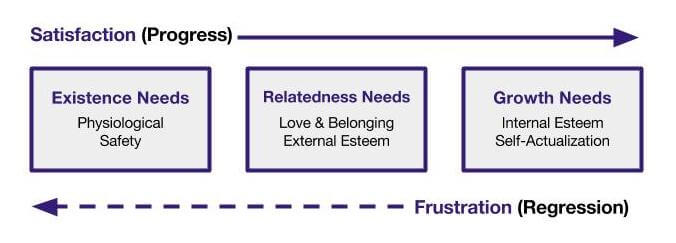
Within the societal structure of the power/dominator system there were five stages of human consciousness correlating with Abraham Maslow's Hierarchy of needs model: 1) Magical thinking – Physiological
New economic frameworks, methods and tools that can help leaders and change-makers guide this transformation
Externe Weblinks
Buchauszug
Links zum Thema Transformation – QuoraBeiträge verfasst von Elfriede Ammann, präsentiert auf der kalifornischen Frage-und-Antwort Webseite Quora DE
External web links (engl.)
Importance of imaginal cells
1. Suffering is necessary. Audio- und Videolinks
Audio and video links (engl.)
Discussing the importance of stubbornness and collaboration in problem-solving, the 10,000 hours of practice to master any challenge, example given by role model Andrew Wiles
Empathic therapists have the highest success rate with alcohol addicts.
The concept of integration, mindfulness techniques are one way to monitor and modify our internal states and create integration, thus facilitating transformation into better states of health.
Thriving in the Transformational Era by Robb Smith
These eight science-based strategies of behavior enable any person or small group – even ordinary people without great wealth, Linkless media offerings
Audio and video links – ⚡ Ray Kurzweil
Audio and video links (engl.) – Michael Meade
Audio and video links (engl.) – Hans RoslingAudios und Videos featuring Hans Rosling, M.D., Ph.D. (1948-2017) Swedish professor of global health, medical doctor, statistician, data visionary, Karolinska Institute, Stockholm, public speaker
Inspirational short movie
Miracle and beauty of the life cycle of the butterfly Ideopsis similis, native to Okinawa, Japan, condensed and captured on video
| |||||||||||||||||||||||||
Englisch Wiki
Hawkins
1 Boleslaw K. Szymanski, J. Xie, Sameet Sreenivasan, G. Korniss, W. Zhang, C. Lim, Social consensus through the influence of committed minorities, präsentiert von dem US-amerikanischen peer-überprüften wissenschaftlichen Zeitschrift Physical Review, E84, 22. Juli 2011 ⇑
2 Boleslaw K. Szymanski, J. Xie, Sameet Sreenivasan, G. Korniss, W. Zhang, C. Lim, Social consensus through the influence of committed minorities, präsentiert von dem US-amerikanischen peer-überprüfte wissenschaftliche Zeitschrift Physical Review, E84, 22. Juli 2011 ⇑
3 Chaosmos, a term coined by James Joyce (1882-1941), describes "a cosmos at the verge of chaos, one that is surging toward the exciting possibility of going out of existence, struggling onward at the edge of the existential abyss." ⇑
4 Carl Gustav Jung (1875-1961) Swiss psychiatrist, psychoanalyst, founder of a new school of analytical depth psychology, author, The Archetypes and the Collective Unconscious, chapter "Psychological Aspects of the Mother Archetype", 1938, Princeton University Press, 1. August 1981 ⇑
5 Narrated video summary of the French social psychologist Gustave Le Bon (1841-1931)'s classic Gustave Le Bon: The Nature of Crowds, presented by Academy of Ideas, YouTube film, 8:41 minutes duration, posted 28. July 2013 ⇑
6 Boleslaw K. Szymanski, J. Xie, Sameet Sreenivasan, G. Korniss, W. Zhang, C. Lim, Social consensus through the influence of committed minorities, presented by the US American peer-reviewed scientific journal Physical Review, E84, 22. July 2011 ⇑
7 Boleslaw K. Szymanski, J. Xie, Sameet Sreenivasan, G. Korniss, W. Zhang, C. Lim, Social consensus through the influence of committed minorities, presented by the US American peer-reviewed scientific journal Physical Review, E84, 22. July 2011 ⇑
8 The Quakers (Society of Friends) comprise 0.0008% of the US population. ⇑
9 Huineng (638-713) sixth Chinese Chan Buddhism patriarch ⇑
10 Zhuangzi [Chuang Tzu] ) (~365-290 BC) influential Chinese philosopher during the Warring States Period ⇑