SpiritualWiki

Wiki / Tugend

Hawkins-Menu:


Wiki-Menu:  

2·2012


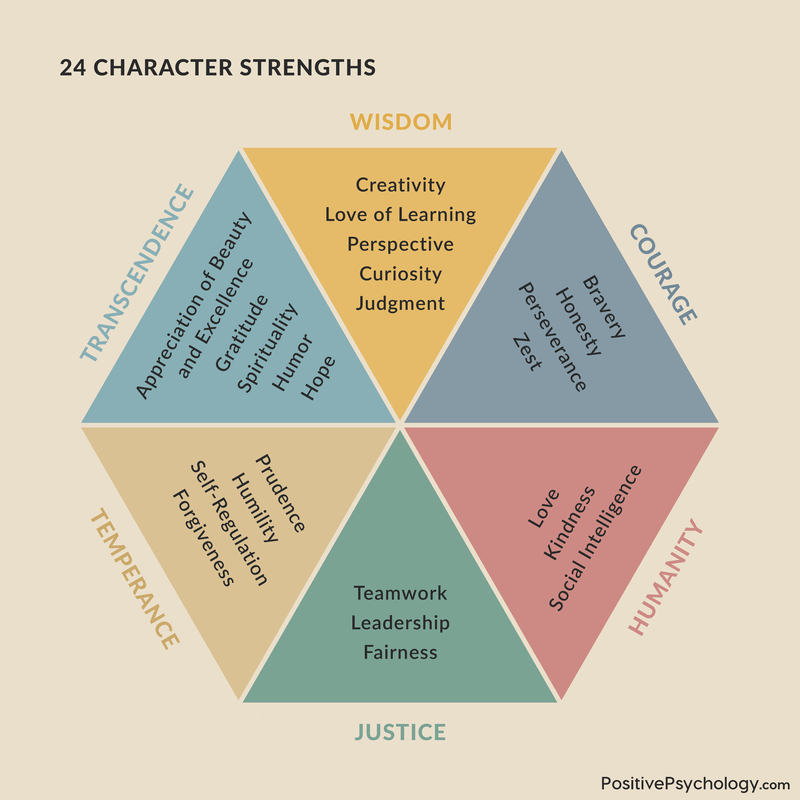
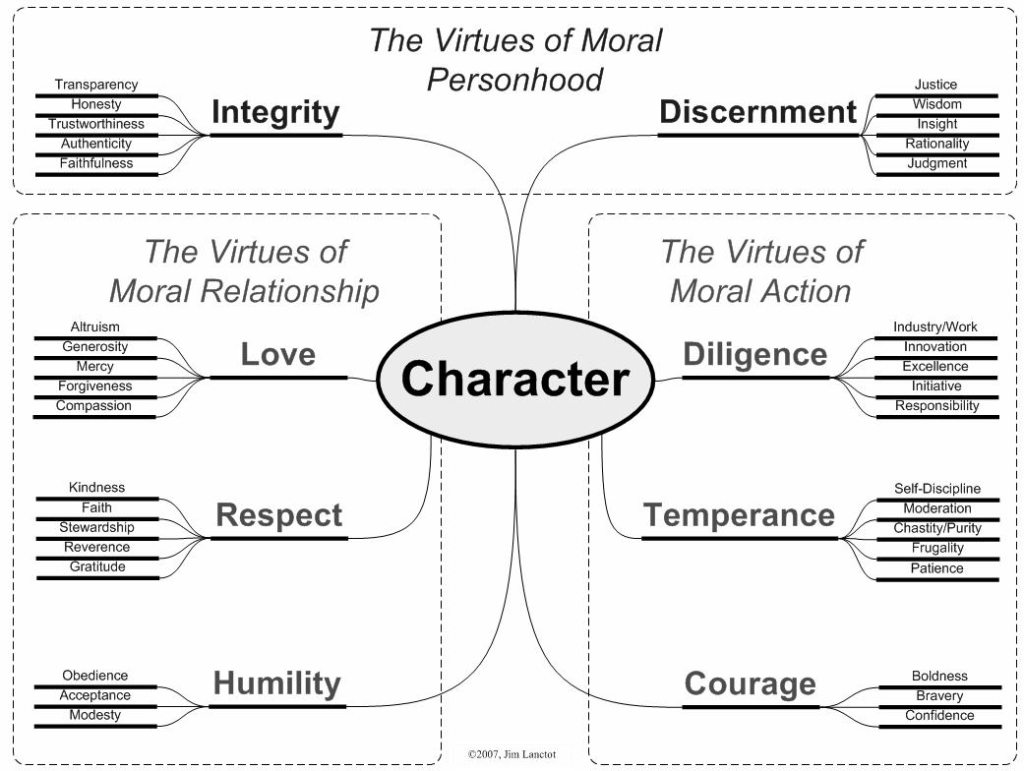
Tugenden


Glasfenster: Kampf der Tugenden mit dem Laster
Nördliches Seitenschiff der Stiftskirche Niederhaslach, Elsass


.
Dr. David Hawkins, ?, S.


X

Vier Vereinbarungen

Der mexikanischer Autor, Schamane und Toltekenmeister Don Miguel Ángel Ruiz (*1952) war ursprünglich Chirurg. Eine Nahtoderfahrung bewegte ihn, sich wieder mit den Lehren seiner toltekischen Vorfahren zu beschäftigen. Er lernte von seiner Mutter Sarita, einer curandera (Heilerin), und seinem Großvater, einem Schamanen. Berühmt wurde er mit seinem Buch Die vier Versprechen, im englischen Original veröffentlicht 1997, das der Integrität, Selbstliebe und dem Frieden der Menschen gewidmet ist.


Die vier Versprechen, dienen als Wegweiser, den Traum der Hölle in einen Traum des Himmels auf Erden zu verwandeln. Sie lauten:

  1. Wähle deine Worte mit Bedacht und spreche einwandfrei. [Wahrhaftige Sprache]
  2. Nimm' nichts persönlich.
  3. Ziehe keine voreiligen Schlüsse. [Unterstelle nichts.]
  4. Tu' stets dein Bestmögliches.


Don Miguel Ángel Ruiz, Die vier Versprechen. Ein Weisheitsbuch der Tolteken, Ariston, 1. Auflage, 15. Februar 2005

Zitate zum Thema Tugenden / Virtues

Zitate allgemein

(↓)

Früchte des Geistes: Neun Tugende im 9. Buch des Neuen Testaments

Der Geist Gottes dagegen lässt als Frucht eine Fülle von Gutem wachsen, nämlich: Liebe, Freude und Frieden, Geduld, Freundlichkeit und Güte, Treue, Bescheidenheit und Selbstbeherrschung. Gegen all dies hat das Gesetz nichts einzuwenden. Galater 5, 22-23 (NT)


  • Die Tugend ist ihre eigene Belohnung. Sprichwort

Zitate (engl.) allgemein

(↓)

Nine virtues of the Spirit named in the 9th book of the New Testament

The fruit of the Spirit is love, joy, peace, forbearance, kindness, goodness, faithfulness, gentleness and self-control. Against such things there is no law. Galatians 5, 22-23 (NT) New International Version (NIV)


  • The Real Work
    The mind that is not baffled is not employed.
    The impeded stream is the one that sings.
Wendell Berry (*1934) US American man of letters, academic, cultural and economic critic


(↓)

Brain research ⇒ science of virtuous qualities ⇒ enhancing the quality of human life.

  • In the future ...
    - mental exercise will be accepted and practiced in the same way as physical exercise today.
    - We will have a science of virtuous qualities.
    - We will incorporate the mind back into medicine and better understand how the brain can modulate peripheral biology in ways that affect health. This will allow us to take more responsibility for our own health by changing the mind in ways that can impact the brain in healthy directions.
    - We'll be able to develop a secular approach to provide methods and practices from contemplative traditions to
    • teach teachers and children ways to better regulate emotions and attention and cultivate qualities like kindness and compassion.
    • increase awareness of interdependence upon others and upon the planet and be more responsible caretakers of the environment and the planet.
    • promote their widespread adoption into the public discourse and major institutions of culture thereby restoring civility, humility, gratitude and other virtues in human life.
Video presentation by Richard Davidson, Ph.D. (*1951) US American Vilas professor of psychology and psychiatry, Waisman Laboratory for Brain Imaging and Behavior, University of Wisconsin–Madison, 2011 UW-Madison Big Learning Event, YouTube film, minute 18:06, 20:44 minutes duration, posted 20. June 2011


(↓)

Practical wisdom – master virtue

  • The virtue that we need most of all is the virtue that Aristotle called practical wisdom. Practical wisdom is the moral will to do the right thing and the moral skill to figure out what the right thing is. [...] [The] stonemasons working on the Isle of Lesbos [...] need to measure out [...] round columns using a ruler. [...] They created a ruler that bends [...] a tape measure – a flexible rule, a rule that bends. [...] And Aristotle said often in dealing with other people, we need to bend the rules.
    Dealing with other people demands a kind of flexibility that no set of rules can encompass. Wise people know when and how to bend the rules. Wise people know how to improvise. […] the rules are like the notes on the page, and that gets you started, but then you dance around the notes on the page, coming up with just the right combination for this particular moment with this particular set of fellow players. So for Aristotle, the kind of rule-bending, rule exception-finding and improvisation that you see in skilled craftsmen is exactly what you need to be a skilled moral craftsman. And in interactions with people, almost all the time, it is this kind of flexibility that is required. [...] And most important, a wise person does this improvising and rule-bending in the service of the right aims.
    If you are a rule-bender and an improvisor mostly to serve yourself, what you get is ruthless manipulation of other people. So it matters that you do this wise practice in the service of others and not in the service of yourself. And so the will to do the right thing is just as important as the moral skill of improvisation and exception-finding. Together they comprise practical wisdom, which Aristotle thought was the master virtue. -> Video presentation by Barry Schwartz, US American psychologist, professor of social theory, author of Practical Wisdom, Riverhead, 30. December 2010, Using our practical wisdom, Transcript: Using our practical wisdom, presented by TED Talks, YouTube film, minute 5:38, 23:08 minutes duration, posted 3. January 2011


  • Rules and incentives are no substitutes for wisdom. [...] there is no substitute for wisdom. [...]
    You need to have rules. You need to have incentives. [...] the problem with relying on rules and incentives is that they demoralize professional activity [...] in two senses.
    1. First, they demoralize the people who are engaged in the activity. [...]
    2. And second, they demoralize the activity itself. The very practice is demoralized, and the practitioners are demoralized. It creates people – when you manipulate incentives to get people to do the right thing – it creates people who are addicted to incentives. That is to say, it creates people who only do things for incentives.
Video presentation by Barry Schwartz, US American psychologist, professor of social theory, author of Practical Wisdom, Riverhead, 30. December 2010, Using our practical wisdom, Transcript: Using our practical wisdom, presented by TED Talks, YouTube film, minute 12:54, 23:08 minutes duration, posted 3. January 2011


  • Virtue is its own reward. Saying

Englische Texte – English section on Virtue

Four Agreements

  1. Be Impeccable with Your Word.
    Speak with integrity. Say only what you mean. Avoid using the word to speak against yourself or to gossip about others. Use the power of your word in the direction of truth and love.
  2. Don't Take Anything Personally.
    Nothing others do is because of you. What others say and do is a projection of their own reality, their own dream. When you are immune to the opinions and actions of others, you won’t be the victim of needless suffering.
  3. Don't Make Assumptions.
    Find the courage to ask questions and to express what you really want. Communicate with others as clearly as you can to avoid misunderstandings, sadness and drama. With just this one agreement, you can completely transform your life.
  4. Always Do Your Best.
    Your best is going to change from moment to moment; it will be different when you are healthy as opposed to sick. Under any circumstance, simply do your best, and you will avoid self-judgment, self-abuse and regret.


Source: Don Miguel Ángel Ruiz, The Four Agreements. A Practical Guide to Personal Freedom (A Toltec Wisdom Book),
Amber-Allen Publishing, November 1997

Developmental stages of sexual union – Lao Tzu


Three types of integrating Yin and Yang

Stage
_____
Quality
Expressing Divinity
Divine Mother
Location
__________
Quality of union
Type of integration of
Yin and Yang

__________
Action
Biblical commandment
__________
Results
Status
1.
_____
Nonin-
tegrous
Fertile reproductive valleyMother's womb
__________
Ordinary intercourse
Biological impulse
Union of
sperm and egg

__________
Effortful
Diffusing
Be fruitful!Mortality

Transitory
2.
_____
Integrous
Fertile reproductive valleyBiological impulse
Male sex organ and
female sex organ

__________
Ordinary intercourse
Sexual union
of mature male and female partners

__________
Effortful
Diffusing
Multiply!Mortality

Transitory
3.
_____
Nonlinear
Immeasurable heart
Allknowing mind
__________
Allness
Inner being of the refined individual
Yin and Yang fired upward

__________
Union of
spirit with spirit,
mind with mind,
every cell with every cell of both bodies
__________
Angelic mutual cultivation
1
Practice of the integral way
Selfawareness without ego
Refining of gross energy
to subtle light energy
In the body, not attached to it

__________
Calm, relaxed, quiet, natural
Integrating
Be stewards to the Earth!
––––––––––
Improved health,
Harmonized emotions,
Healing of addictions
Appeasing of negative impulses
Transcendent integration of the entire energy body
Mastery, Whole, virtuous
__________
Mutual uplifting and transformation, bliss
Immortality

Imperishable

Timelessness

Field for the
conception of higher life


Source: Lao Tzu (604-531 BCE) Chinese taoist philosopher, founder of Taoism,
On sacred sexuality, excerpted from Hua Hu Ching around 300 CE
Quotes on Karezza

Z


Links zum Tugenden / Virtues

Literatur

Literatur (engl.)

Externe Weblinks


Externe Weblinks (engl.)


Audio- und Videolinks

Audio- und Videolinks (engl.)

  • John Bradshaw, US American educator, counselor, theologian, motivational speaker,
  • Video interview with John Bradshaw, US American author of Reclaiming Virtue, educator, counselor, theologian, motivational speaker, on Moral Intelligence, presented by Living Smart, Houston PBS, host Patricia Gras, YouTube film, 26:32 minutes duration, posted 11. August 2010
    Definition of virtue and how to live life with moral intelligence


Interne Links

Englisch

Hawkins


1 Quotes on Karezza